Choosing the Right RTLS Tech Mix: Where the Latest Technology Fits + Why Multi-Tech Matters

2/24/2026
Hospitals are juggling a hard mix right now: patients arriving sicker than they did a decade ago, more equipment living at the bedside, ongoing staffing shortages and rising clinician burnout. Against that backdrop, location-driven workflows are shifting from “nice to have” to foundational. Real-Time Locating System (RTLS) adoption is accelerating fast with the healthcare RTLS market projected to more than double from about $2.25B in 2025 to $5.12B by 2030.1
Health systems are already investing in technology to relieve pressure: staff duress solutions, asset tracking tools, nurse call enhancements, patient flow systems. Each solves a real problem. But without an enterprise strategy for location-based solutions, those decisions often result in a patchwork of disconnected systems and duplicate investments that stall after a single use case.
A holistic RTLS strategy changes the equation. Instead of one-off projects, hospitals start with a scalable foundation for real-time location—one that supports multiple solutions, integrates location intelligence into systems clinicians already use and provides precision locating capability where—and when—it matters.
In this post, we’ll cover:
• What RTLS does for real workflows
• How Bluetooth® Low Energy (BLE) technology is simplifying scalable RTLS
• Why multi-technology RTLS is a smarter, more connected approach to real-time locating that provides precision for clinical automation
RTLS 101: What It Is and How It Works
At its core, RTLS is simple:
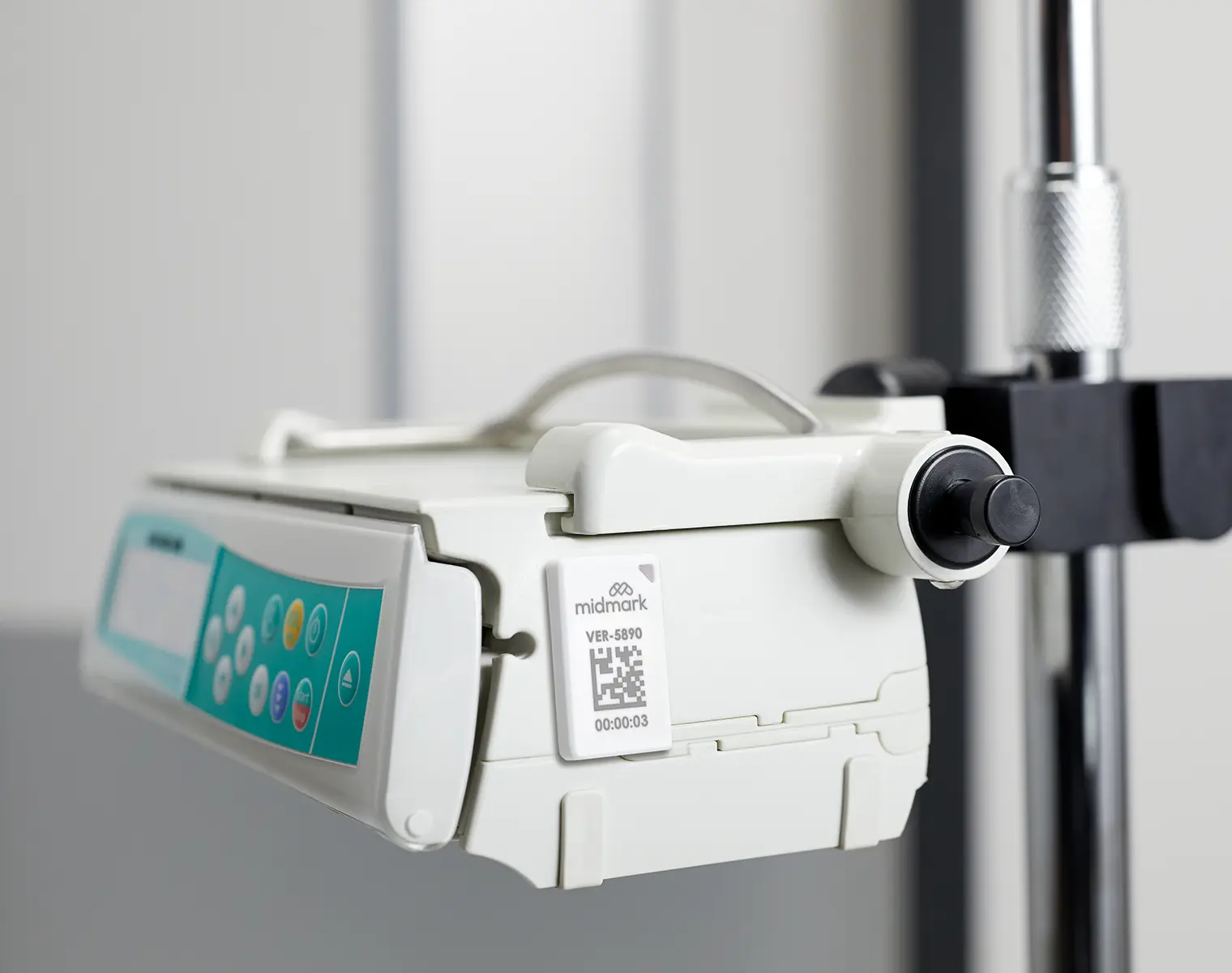
Badges worn by staff and tags on equipment emit signals → sensors or network infrastructure read them → software translates that into real-time location data + timestamps → workflows automate based on location events.
The real value isn't seeing locations of people or equipment on a map. It’s what location enables:
• Automation of manual tasks
• Location-based safety alerts
• Operational analytics leaders can actually act on
RTLS becomes exponentially more impactful when it integrates with existing hospital systems, such as:
• EMRs
• Nurse call and alarm management CMMS/biomed maintenance systems Security platforms and mobile devices
• Patient engagement systems and digital whiteboards
When RTLS is embedded into daily tools, it stops being “another system” and starts being invisible infrastructure that makes everything else smarter.
The Human Problem RTLS Solves: Task Burden and Device Overload
Often, nurses and other clinicians resist RTLS technology because they don't want to be "tracked." But tracking isn't (or shouldn't be) the point. The right RTLS partner relieves clinician burden. Clinician burden isn’t theoretical—it’s a shift-by-shift reality. Across care settings:
• Patients are more acute than 10–15 years ago,2 which means more monitoring, more coordination and more time in room.
• The bedside is equipment-dense: pumps, monitors, mobility devices, specialty beds, supplies… and they move constantly between patients and units.
• Documentation and clinical tasks keep rising, while alarms and interruptions fragment attention.
One of the clearest examples: nurses routinely lose an average of 30 minutes per 10-hour shift searching for equipment,3 which adds up to billions in productivity loss.
That time loss fuels burnout—burnout fuels turnover—and turnover is brutally expensive. The average cost of bedside RN turnover rose to about $61,110 per nurse in 2024.4
RTLS helps by removing friction:
• Fewer steps to complete routine work
• Location-assisted documentation in the EMR
• Less “hunt and gather” time
• Smarter alarms
• Faster safety response
• Smoother coordination
And there’s another, underrated win: reduced device overload. If teams adopt separate point solutions—for example, staff duress and nurse call automation—staff end up wearing multiple badges or carrying extra devices. A unified RTLS program consolidates those workflows into a single badge experience.
Bottom line: RTLS adoption sticks when it’s framed as:
“This protects your time and safety.”
Not: “This tracks you.”
High-Value Clinical Use Cases (and Why Staff Care)
1) Nurse Call Automation
What it does: Automatically clears a patient call when a caregiver enters the room—no manual button press.
Why clinicians care:
• Saves meaningful time each shift
• Prevents multiple staff from responding to the same call
• Makes response-time KPIs accurate (no “button delay bias”)
2) Alarm Suppression/Alarm Fatigue Reduction
What it does: If your clinical communication system knows, thanks to RTLS, that a nurse is already in room, alarms don’t unnecessarily route to phones.
Why clinicians care:
• More focused patient care
• Less cognitive load
• Supports safer prioritization when every interruption competes for attention
3) Asset Tracking + Utilization
What it does: Shows where equipment is right now and whether it’s in a patient room or clean supply closet.
Why clinicians care:
• No more scavenger hunts
• Less hoarding “just in case”
• Reduced patient care and discharge delays due to missing equipment
4) Staff Duress + Safety
What it does: Badge duress buttons trigger alerts with the location of the event routed to security, charge staff and mobile devices.
Why clinicians care:
• Faster response in high-risk situations
• Better situational awareness
• A tangible safety net staff can trust
5) EMR-Integrated RTLS Automation
RTLS gets even more powerful when location data flows into EMR workflows clinicians already live in. For example, the Epic Toolbox-designated CareFlow™ Interface to Epic supports:
• Real-time patient, staff and asset location updates
• Automated patient status changes in ED and peri-op
• Automated bed assignments/transfers
• EVS triggers for room turnover
• Patient-provider co-location documentation
• Device “near patient” and “available on unit” reporting
The big payoff is no duplicate data entry and no extra system for staff to learn—RTLS becomes a silent layer that powers throughput, documentation accuracy and care-team coordination inside the EMR.
New Technology Changes the Game: Near-Room Accuracy at Much Lower Cost
Historically, hospitals have had to choose between:
1) Highly precise RTLS (IR/UWB/ultrasound)
• Room/bed-certain accuracy
• Essential for automation
• But expensive and harder to scale
2) Wi-Fi RTLS
• Lower cost, leveraging existing infrastructure
• But offers only zone-level accuracy (5–15 meters)
• Helpful for narrowing searches for biomed—but not reliable enough to benefit clinician workflow
3) BLE RTLS (today’s sweet spot)
• Near-room accuracy within 3–5 meters
• Lower cost, often leveraging existing infrastructure
• Faster install when a separate network is necessary
• Long battery life on tags/badges
Where BLE shines:
• Fast equipment searches for both nurses and biomed
• Spotlighting the vicinity of a staff duress alert
• Broad patient/staff visibility across units Operational visibility to effectively redistribute equipment
• Scalable, facility-wide coverage
BLE gives most hospitals the accuracy they need for a huge percentage of workflows—without the historic RTLS price tag.
Why One RTLS Technology Is Not Enough
Here’s the trap: different workflows require different precision.
• Near-room BLE is perfect for scalable, affordable facility-wide visibility for critical use cases such as asset tracking and staff duress.
• Room/bed-certain tech (IR/UWB/ultrasound) is non-negotiable when automation depends on certainty—like nurse call automation, alarm suppression, EMR triggers and precise patient-flow events.
• Zone-level Wi-Fi still works for broad context where exactness isn’t critical, but only solves a small piece of the puzzle.
If a health system chooses only one technology, it either:
• Overspends for precision it doesn’t need, or
• Falls short where accuracy is required.
That’s why the future of RTLS is hybrid: BLE for scale, plus room-certain precision only where it drives high-value automation.
A well-designed hybrid approach should allow hospitals to:
• Start with BLE across the facility
• Layer in room-certain wireless (or wired, if desired) only in targeted areas
• Keep everything unified in one platform, not multiple parallel systems
Adoption Is the Hidden Make-or-Break Factor
Even a perfectly designed RTLS program fails without adoption. The biggest barriers tend to be simple beliefs:
• “I’m not sure what this badge does.”
• “I wear it so I don’t get in trouble.”
Adoption improves when leaders make RTLS personal:
• “This saves you steps.”
• “This reduces unnecessary alarms.”
• “This helps you find what you need, right now.”
• “This gets help to you faster.”
A people-and-process-first rollout prevents RTLS from becoming an underused expense.
Measuring Value: RTLS ROI
RTLS value is measurable—and easiest to defend when hospitals baseline early and optimize over time.
Common ROI themes include:
Time savings
• Fewer minutes spent searching for equipment
• Fewer manual nurse call actions
• More time at the bedside
Asset spend reduction
• Utilization data shows what’s truly needed
• Prevents unnecessary purchases and rentals
Quality + safety
• Accurate nurse call response-time data
• Improved alarm management
• Faster duress response
• Smoother patient flow and throughput
Conclusion: Get the Tech Mix Right, Then Scale with Confidence
BLE delivers a new sweet spot of accuracy and affordability that lets hospitals roll out RTLS quickly and broadly. But the real long-term win is multi-tech RTLS—matching locating precision to workflow value.
With the right multi-technology RTLS partner, hospitals can:
• Reduce task burden and device overload
• Improve staff safety and satisfaction
• Consolidate point solutions into one platform
• Unlock automation that meaningfully changes clinical work
• Protect the patient experience while improving operational efficiency
Wondering which RTLS tech mix makes the most sense for your organization?
Our eBook, Smarter Visibility to Power Care, provides a deeper dive into building a cost-effective, scalable RTLS roadmap—and how hybrid locating delivers precision where you need it, when you need it. Download the Download the eBook or contact an RTLS Specialist to learn more.
Epic is a registered trademark of Epic Systems Corporation.
Bluetooth is a registered trademark of Bluetooth SIG, Inc.
Sources
1 “Real-Time Location System (RTLS) In Healthcare Market Size & Share Analysis (2025–2030).” Mordor Intelligence. February 2025.
2 “Hospitalized Patients Have Become More Complex Over Time.” Medscape Medical News. January 2024.
3 Acceptable industry average; Midmark RTLS customer feedback.
4 “The cost of nurse turnover in 24 numbers.” Becker’s Hospital Review. April 2025.


 Nurse Call AutomationAutomatic call cancellation to lighten the nurse workload and give more time back to the patient care experience.
 Staff SafetyDiscreet, accurate and real-time alerts through a wearable duress button that helps provide an efficient response and protect staff against workplace violence.
 Asset TrackingIn-the-moment equipment locating to support safe and timely patient care and controlled costs.
 Patient FlowEnhanced communication designed to optimize operations, enrich patient experiences and improve staff satisfaction.
 AnalyticsDerived from actionable insights at your fingertips, accurate location information drives informed decision making.
 Contact TracingQuick, accurate information at your fingertips for your contact tracing efforts.
 Temperature MonitoringA partnership of best-in-class solutions, available through an interface with Primex environmental monitoring.
 InterfacesA seamless architecture that exchanges data automatically between your RTLS and other enterprise applications in real time.
 RTLS TechnologyMidmark CareFlow™ RTLS uses multiple locating technologies designed to help guide your operations.
 Customer SuccessSeasoned clinical expertise—both in-house and from regionally certified System Integrators—to support your RTLS journey.
 RTLS SimplifiedSmarter RTLS starts with existing systems. Discover how CareFlow™ RTLS simplifies healthcare locating technology, providing reliable facility-wide visibility through a streamlined, scalable approach.




 RTLS System Integrator ResourcesDiscover our library of sales and marketing resources.
 Case StudiesSee how we’ve helped our customers design better, more efficient care.
 Webinars + PodcastsListen to the latest from Midmark RTLS here.
 BlogThink differently and solve problems with new ideas to enhance patient care.