

















-
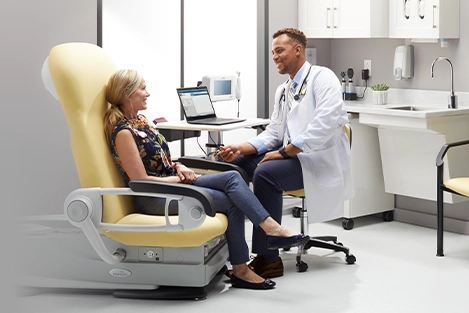
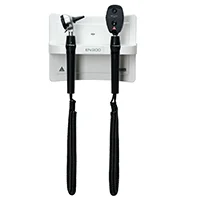
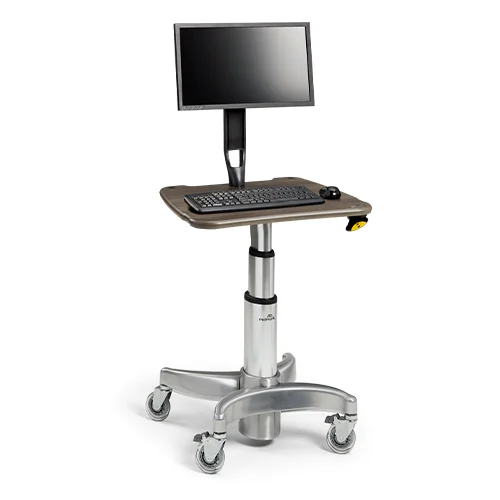
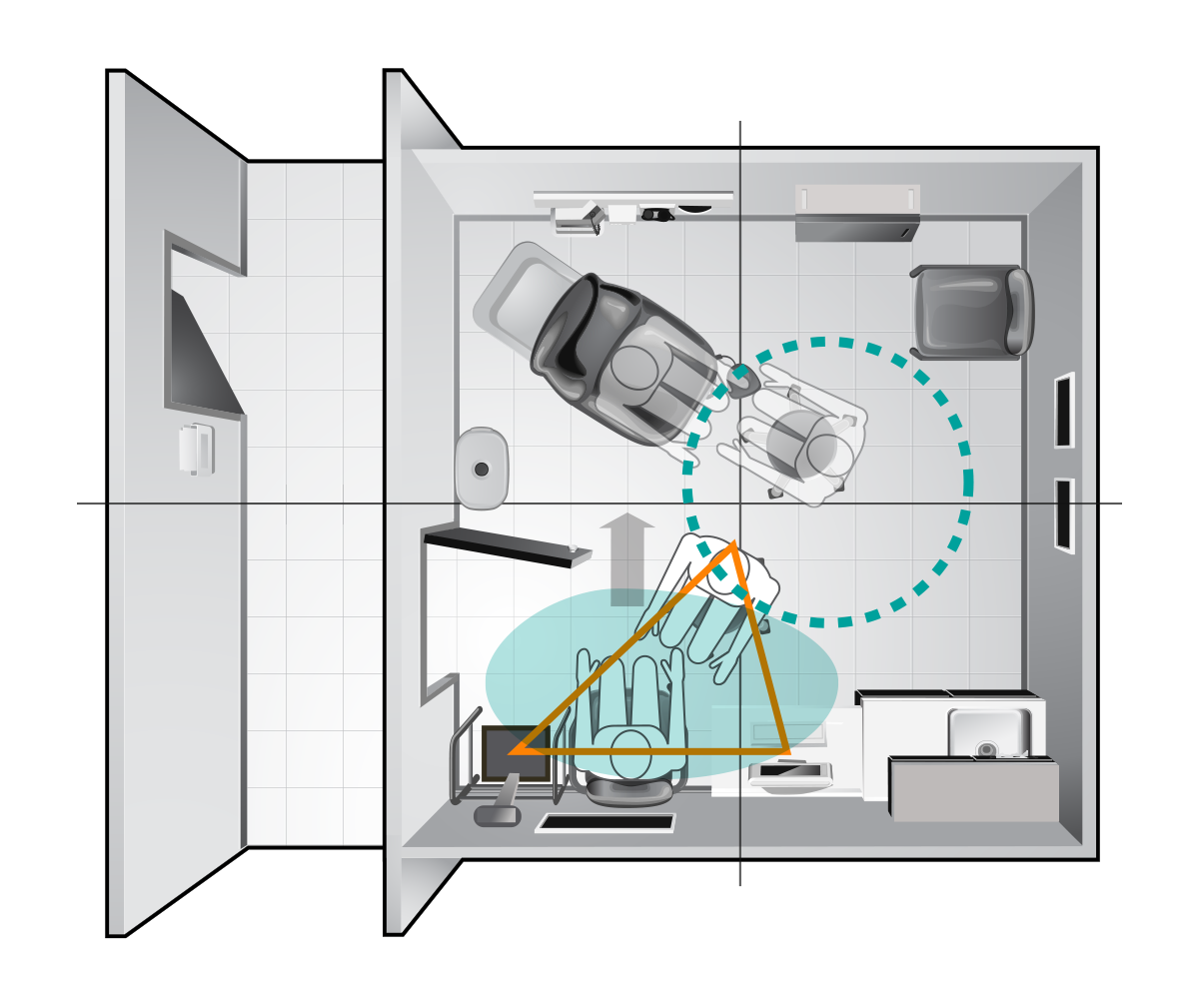 Basic In-Room Vital SignsUpon entering the exam room, weight and height are captured. The patient is then seated in a side chair to support proper posture next to a work surface or workstation to gather patient vital signs and health information. All patient-related health information can be discussed during this process.
 -
 Time SavingsThe basic in-room workflow, when compared with the triage nook, saves 22 seconds in conveyance time by moving all vital signs capture to the exam room.
 -
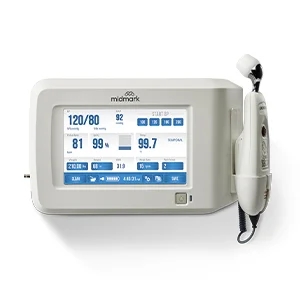
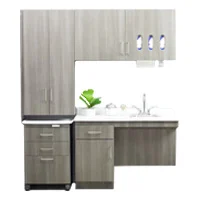
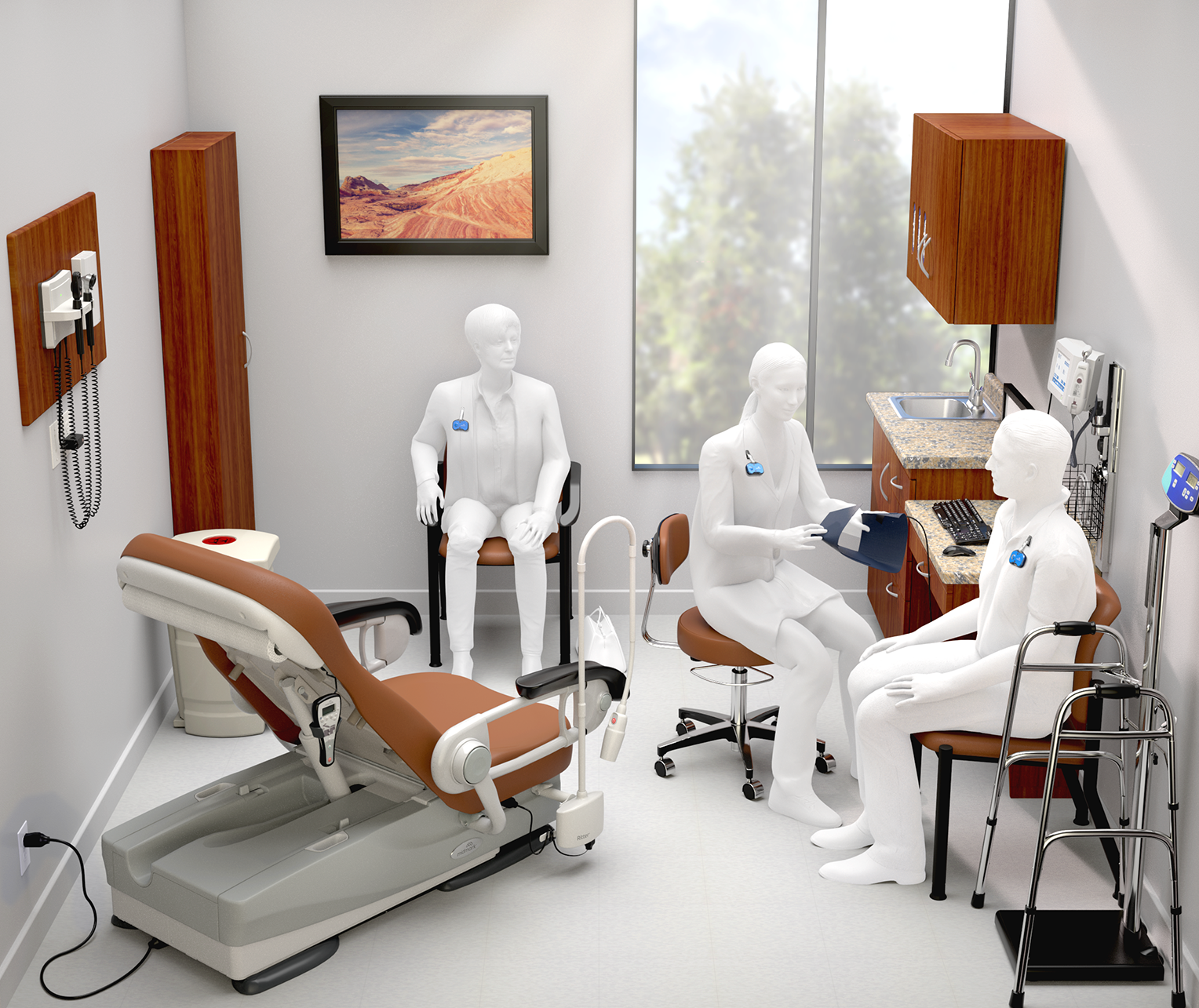 Basic In-Room WorkflowThe basic in-room workflow is set up to assess and capture all vital signs in the exam room and can include a scale as well as an automated blood pressure and pulse device. The patient is directed to a side chair to support proper posture. Depending on the design of the exam room, the patient is seated next to a work surface or workstation that has a computer and/or an automated vital signs device.
- Better Blood Pressure
- Vital Signs
- Clinical Process Improvement
- Real-Time Locating System
- Infection Prevention
- Americans with Disabilities
-
 Clinical Process Improvement
-
 Vital Signs
-
 Real-Time Locating System
-
 Better Blood Pressure
-
 Americans with Disabilities
-
 Infection Prevention
The side chair allows close to 50% (according to BIFMA standards) of patients to place their feet flat on the floor with their back supported.
Save close to a minute per patient simply by bringing all vital signs acquisition to the point of care including weight and using an automated device.
As compared to the triage nook workflow, you save 22 seconds in conveyance time per patient.
Use of RTLS for a patient flow optimization and self-rooming can reduce waste and eliminate bottlenecks.
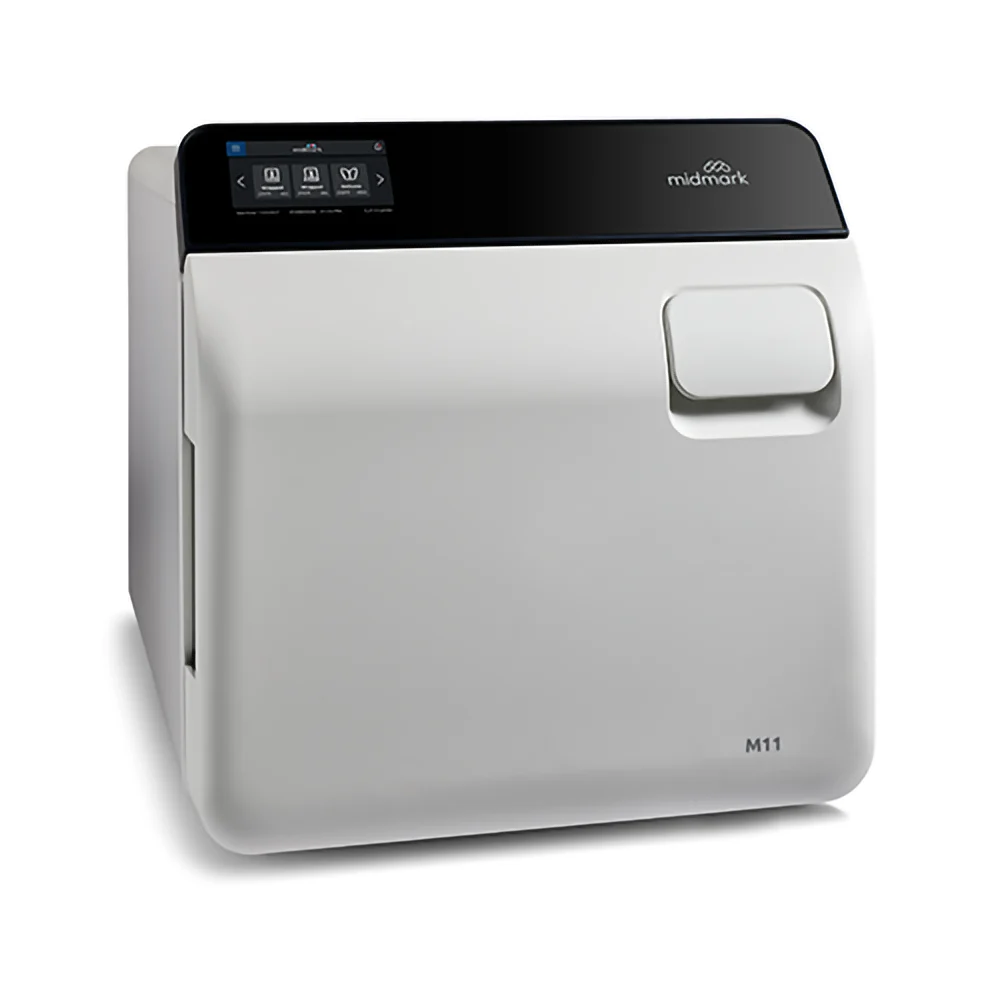
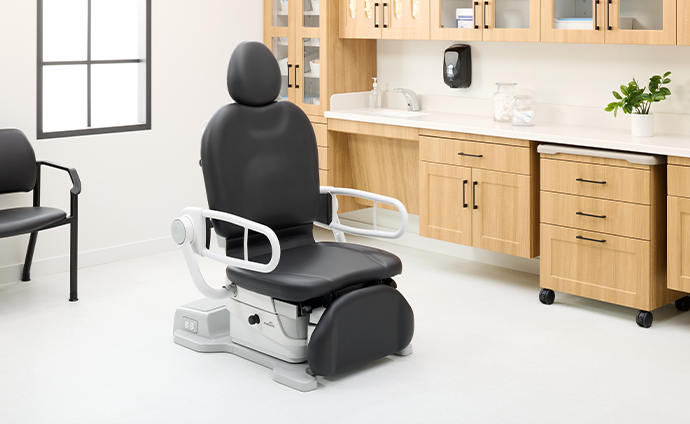
Use of a self-rooming workflow as well as capturing all vital signs and weight in one location reduces exposure to contagions. RTLS automates contact tracing. The exam chair with a retractable roller base can be easily moved for cleaning and disinfecting.
As compared to the triage nook workflow, you save 22 seconds in conveyance time per patient.