

























Don't Get Caught Off Guard: Know the Standards That Shape Accessibility in Care
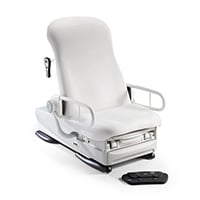
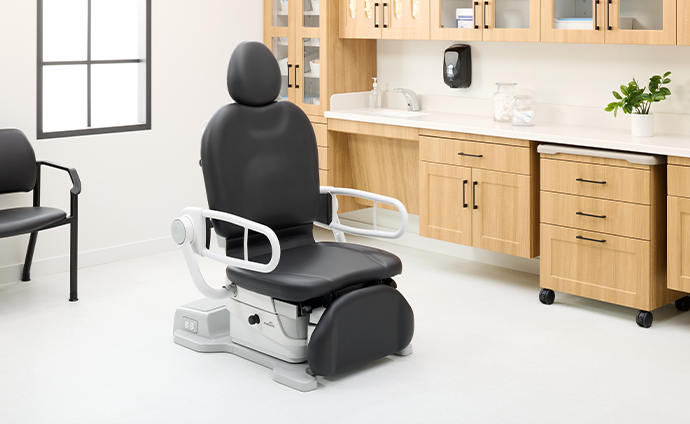
The ADA set the legal requirement. The US Access Board defined the standard. We're bringing it to you. Midmark is the first and only manufacturer in the market to have both a procedure and examination chair that complies with the US Access Board Standards.
Familiarize yourself with the standards and see what they could mean for your facility.
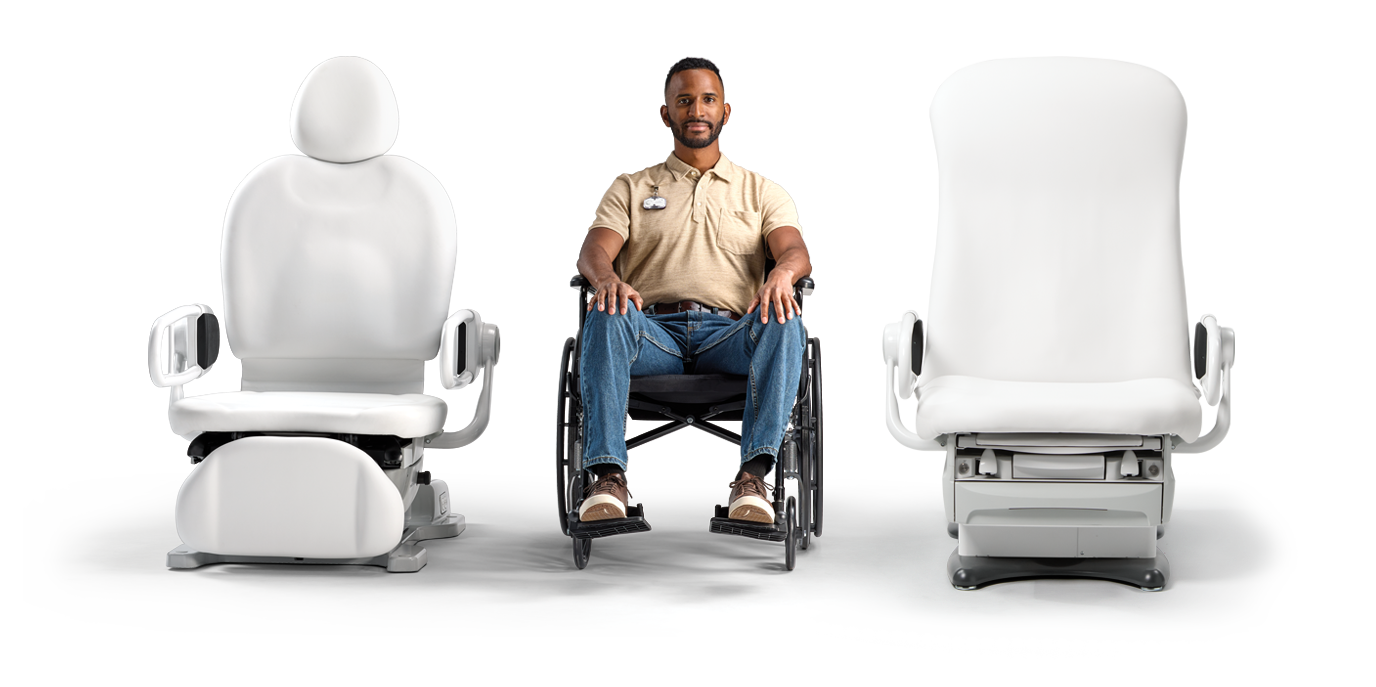
Our Compliant Portfolio
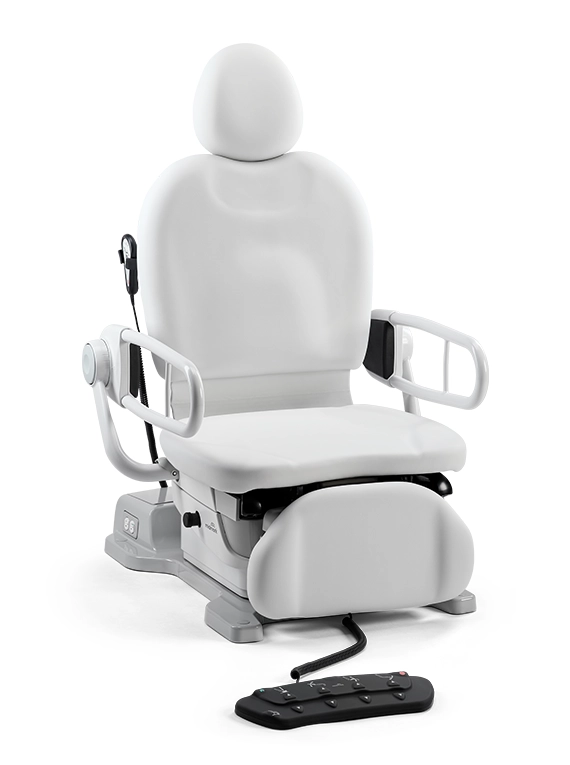
Seat Height
US Access Board Requirements
Transfer surfaces shall be adjustable in height measured from the floor to the top of the uncompressed transfer surface and shall provide the following:
- A low transfer position at 17 inches maximum
- A high transfer position at 25 inches minimum
- At least 4 additional transfer positions located between the low and high transfer positions separated by 1 inch minimum
- 17" low seat height
- 37" high seat height
- 20" of adjustability
Transfer Surface
US Access Board Requirements
The seated transfer surface shall be:
- 21 inches wide minimum
- 17 inches deep minimum
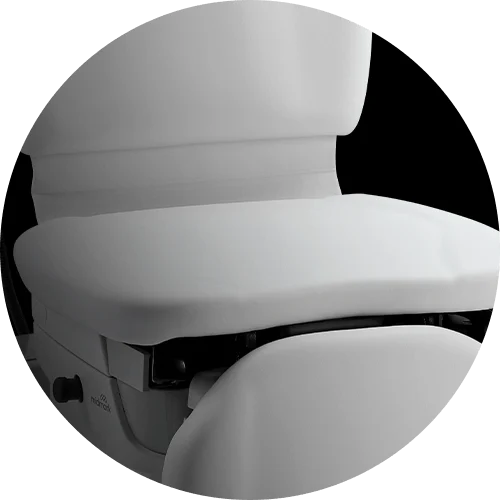
- 28" wide transfer surface
- 19½" deep
Base Clearance
US Access Board Requirements
The width of the base permitted within this clearance shall be 26 inches wide maximum at the edge of the examination surface.
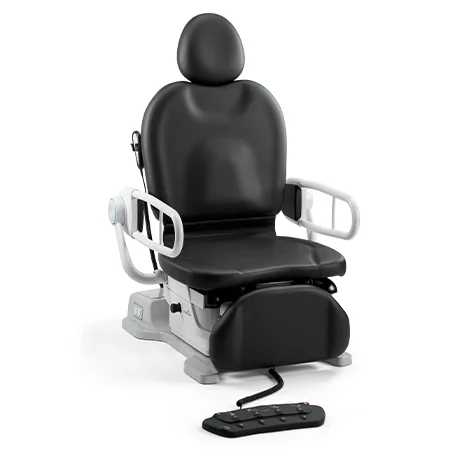
Midmark® 631 Procedure Chair- 19" base compatible with patient lifts
Transfer Supports
US Access Board Requirements
Transfer supports shall be/have:
- Located 1½ inches maximum measured horizontally from the plane defined by the nearest edge of the transfer surface
- Capable of supporting transfer on each side of the transfer surface
- 15 inches long minimum
- 6 inches to 19 inches in height (higher than the top of the associated uncompressed transfer surface) during use
- An outside diameter of 1¼ inches minimum and 2 inches maximum (circular cross section)
- A gripping surface continuous along their length and shall not be obstructed along their tops or sides
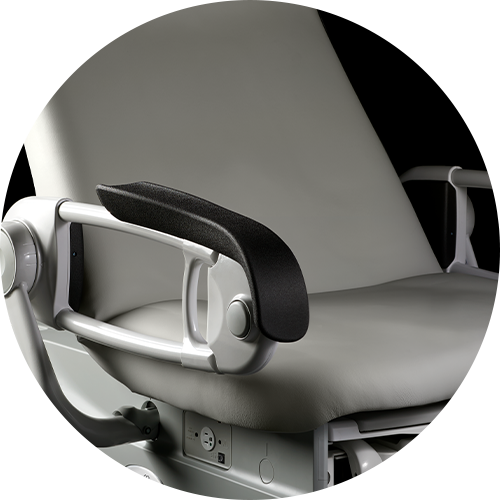
- Compliant to the standards.
- Midmark Patient Support Rails and Patient Support Rails+ assist patients in accessing the exam chair and provide a stable gripping surface while repositioning on the chair.
Leg Supports
US Access Board Requirements
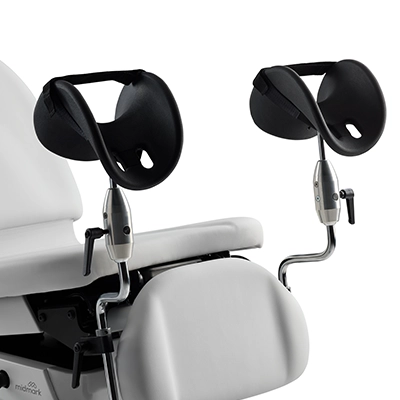
- Where stirrups are provided, leg supports shall also be provided
- Leg supports shall provide a method of supporting, positioning and securing the patient’s legs.
- Compliant to the standards.
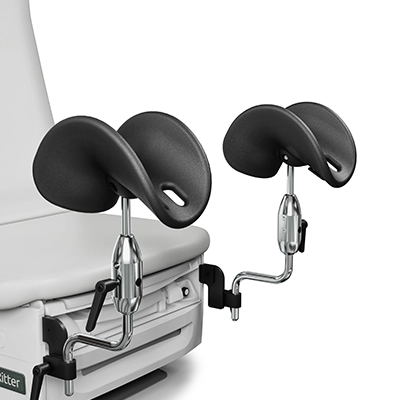
- Midmark Articulating Knee Crutches support the patient's thigh, knee and calf during lower body exams and procedures.
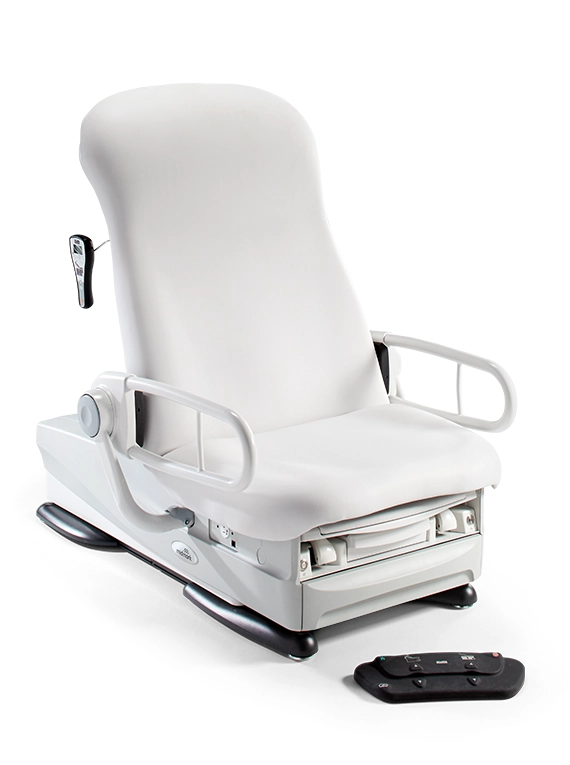
Seat Height
US Access Board Requirements
Transfer surfaces shall be adjustable in height measured from the floor to the top of the uncompressed transfer surface and shall provide the following:
- A low transfer position at 17 inches maximum
- A high transfer position at 25 inches minimum
- At least 4 additional transfer positions located between the low and high transfer positions separated by 1 inch minimum
- 17" low seat height
- 37" high seat height
- 20" of adjustability
Transfer Surface
US Access Board Requirements
The seated transfer surface shall be:
- 21 inches wide minimum
- 17 inches deep minimum
- 28" wide transfer surface
- 19½" deep
Base Clearance
US Access Board Requirements
The width of the base permitted within this clearance shall be 26 inches wide maximum at the edge of the examination surface.
Midmark® 626 Barrier-Free Exam Chair- 19" base compatible with patient lifts
Transfer Supports
US Access Board Requirements
Transfer supports shall be/have:
- Located 1½ inches maximum measured horizontally from the plane defined by the nearest edge of the transfer surface
- Capable of supporting transfer on each side of the transfer surface
- 15 inches long minimum
- 6 inches to 19 inches in height (higher than the top of the associated uncompressed transfer surface) during use
- An outside diameter of 1¼ inches minimum and 2 inches maximum (circular cross section)
- A gripping surface continuous along their length and shall not be obstructed along their tops or sides
- Compliant to the standards.
- Midmark Patient Support Rails and Patient Support Rails+ assist patients in accessing the exam chair and provide a stable gripping surface while repositioning on the chair.
Leg Supports
US Access Board Requirements
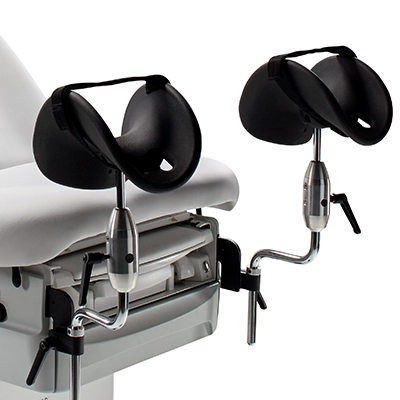
- Where stirrups are provided, leg supports shall also be provided
- Leg supports shall provide a method of supporting, positioning and securing the patient’s legs.
- Compliant to the standards.
- Midmark Articulating Knee Crutches support the patient's thigh, knee and calf during lower body exams and procedures.
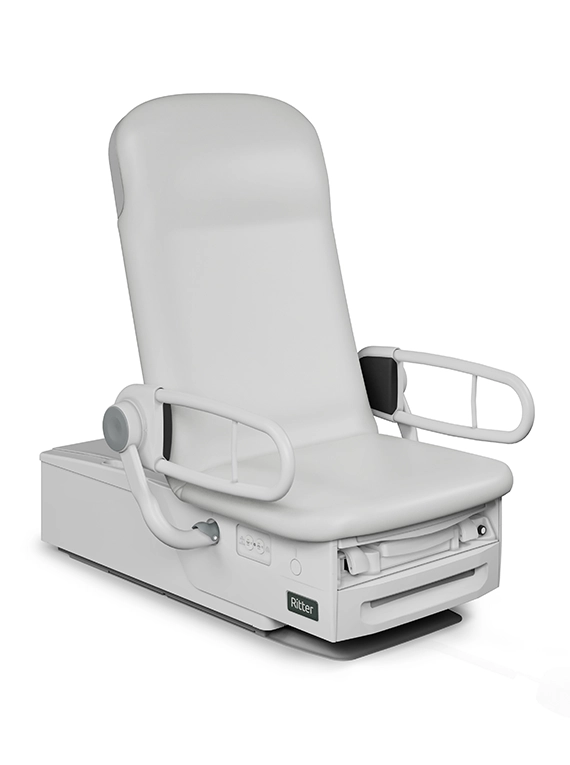
Seat Height
US Access Board Requirements
Transfer surfaces shall be adjustable in height measured from the floor to the top of the uncompressed transfer surface and shall provide the following:
- A low transfer position at 17 inches maximum
- A high transfer position at 25 inches minimum
- At least 4 additional transfer positions located between the low and high transfer positions separated by 1 inch minimum
- 17" low seat height
- 37" high seat height
- 20" of adjustability
Transfer Surface
US Access Board Requirements
The seated transfer surface shall be:
- 21 inches wide minimum
- 17 inches deep minimum
- 28" wide transfer surface
- 19½" deep
Base Clearance
US Access Board Requirements
The width of the base permitted within this clearance shall be 26 inches wide maximum at the edge of the examination surface.
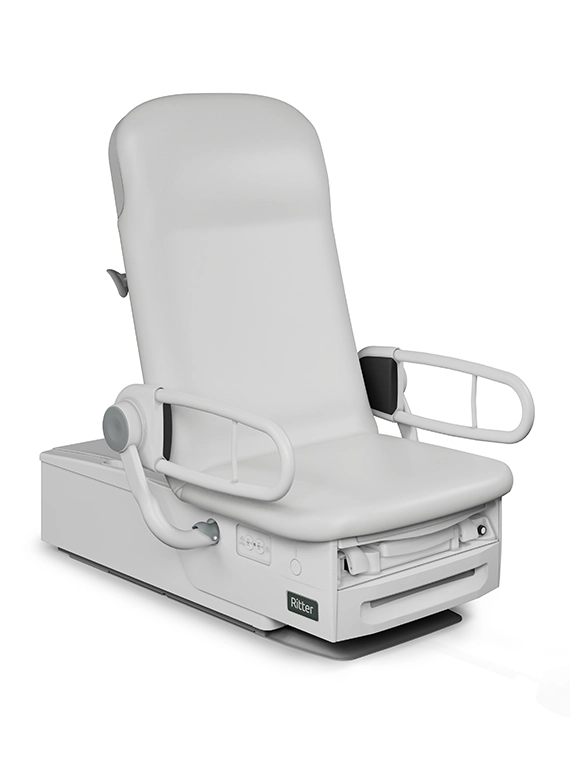
Ritter 229 Barrier-Free® Exam Chair- 19" base compatible with patient lifts
Transfer Supports
US Access Board Requirements
Transfer supports shall be/have:
- Located 1½ inches maximum measured horizontally from the plane defined by the nearest edge of the transfer surface
- Capable of supporting transfer on each side of the transfer surface
- 15 inches long minimum
- 6 inches to 19 inches in height (higher than the top of the associated uncompressed transfer surface) during use
- An outside diameter of 1¼ inches minimum and 2 inches maximum (circular cross section)
- A gripping surface continuous along their length and shall not be obstructed along their tops or sides
- Compliant to the standards.
- Midmark Patient Support Rails and Patient Support Rails+ assist patients in accessing the exam chair and provide a stable gripping surface while repositioning on the chair.
Leg Supports
US Access Board Requirements
- Where stirrups are provided, leg supports shall also be provided
- Leg supports shall provide a method of supporting, positioning and securing the patient’s legs.
- Compliant to the standards.
- Midmark Articulating Knee Crutches support the patient's thigh, knee and calf during lower body exams and procedures.
Seat Height
US Access Board Requirements
Transfer surfaces shall be adjustable in height measured from the floor to the top of the uncompressed transfer surface and shall provide the following:
- A low transfer position at 17 inches maximum
- A high transfer position at 25 inches minimum
- At least 4 additional transfer positions located between the low and high transfer positions separated by 1 inch minimum
- 17" low seat height
- 37" high seat height
- 20" of adjustability
Transfer Surface
US Access Board Requirements
The seated transfer surface shall be:
- 21 inches wide minimum
- 17 inches deep minimum
- 28" wide transfer surface
- 19½" deep
Base Clearance
US Access Board Requirements
The width of the base permitted within this clearance shall be 26 inches wide maximum at the edge of the examination surface.
Ritter 228 Barrier-Free® Exam Chair- 19" base compatible with patient lifts
Transfer Supports
US Access Board Requirements
Transfer supports shall be/have:
- Located 1½ inches maximum measured horizontally from the plane defined by the nearest edge of the transfer surface
- Capable of supporting transfer on each side of the transfer surface
- 15 inches long minimum
- 6 inches to 19 inches in height (higher than the top of the associated uncompressed transfer surface) during use
- An outside diameter of 1¼ inches minimum and 2 inches maximum (circular cross section)
- A gripping surface continuous along their length and shall not be obstructed along their tops or sides
- Compliant to the standards.
- Midmark Patient Support Rails and Patient Support Rails+ assist patients in accessing the exam chair and provide a stable gripping surface while repositioning on the chair.
Leg Supports
US Access Board Requirements
- Where stirrups are provided, leg supports shall also be provided
- Leg supports shall provide a method of supporting, positioning and securing the patient’s legs.
- Compliant to the standards.
- Midmark Articulating Knee Crutches support the patient's thigh, knee and calf during lower body exams and procedures.

2026 Procedure Chair Trade-In to Trade-Up Promotion
Receive up to $850 back on a new Midmark Procedure Chair.
2026 Examination Chair Trade-In to Trade-Up Promotion
Receive up to $500 back on a new Midmark Barrier-Free® Examination Chair.
Who Enforces the Standards? Understanding Department of Health and Human Services and Department of Justice Oversight
Beginning July 8, 2024, the Department of Health and Human Services (HHS) began enforcing new accessibility standards across healthcare settings that receive federal financial assistance. Shortly after, on October 8, 2024, the Department of Justice (DOJ) issued a final ruling stating that the Access Board Standards for Medical Diagnostic Equipment will be enforced, requiring state and local government entities to comply. These rulings ensure that medical diagnostic equipment nationwide meets consistent design and usability requirements to better serve people with disabilities. See what these enforcement changes mean for your facility below.
Explore More Resources on This Topic
Want to dive deeper into accessible design? Explore these resources for expert insights, standards and practical tips to make your spaces more inclusive.

Patient Accessibility
Take a moment to watch this brief video and share it with your colleagues to help raise awareness.
WATCH VIDEO
Designing for Accessibility
Watch this video for a quick overview of the design principles that can help you improve patient care and meet ADA requirements.
WATCH VIDEO

WHAT YOU NEED TO KNOW ABOUT HHS + DOJ REQUIREMENTS
Learn more about the steps your facility can take to support accessible care.
VIEW INFOGRAPHIC

Exam Room Workflow Solutions
Explore ways to optimize your care environments for greater efficiency and improved patient experiences.
VISIT PAGE

Accessible Design Guide
Accessibility is required by the ADA, but state and Federal regulations can be complicated and cause confusion for health systems.
LEARN MORE

ADA Tax Credit Calculator
Invest in accessible, ADA-compliant equipment to see savings—calculate your IRC 44/179 tax credit and explore inclusive, efficient care solutions.
LEARN MORE
Connect with us.
Curious about our products and services or have a general inquiry? Do you have questions about what these rulings mean for your facility? We’re here to answer your questions and provide assistance.
Complete the form below or call 1.800.MIDMARK to get started.