







When 7 mmHg Changes the Diagnosis: Why Medicare ACCESS Depends on Blood Pressure Accuracy

By:
Vice President of Clinical Affairs and Chief Medical Officer












We See It

Rethinking the Exam Room - AIA Credit
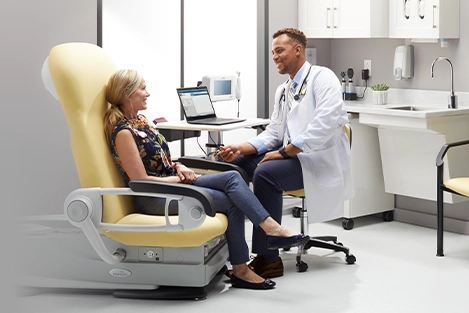
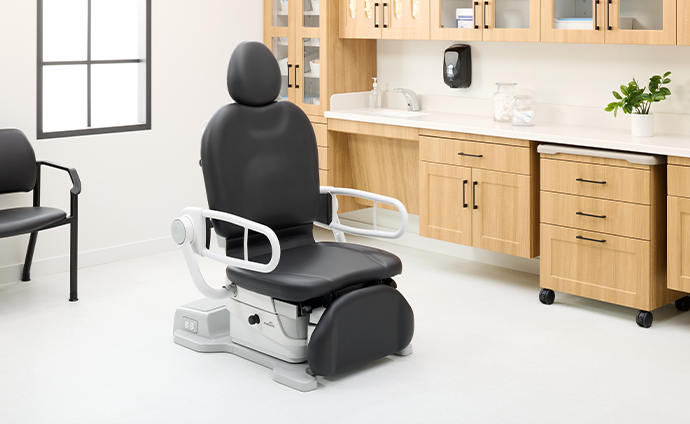
The right procedure room equipment can make a crucial difference in both patient outcomes and caregiver safety. Particularly for patients...
Explore the 631 Procedure Chair











By:
Vice President of Clinical Affairs and Chief Medical Officer
The CMS Innovation Center’s Medicare ACCESS model is a step forward in the trend toward value-based care, with its emphasis on outcome-aligned payment for chronic condition management. For clinicians and health systems, this framing makes blood pressure (BP) measurement accuracy, point-of-care clinical data fidelity, and protocol standardization central—not ancillary—to performance. Accurate, reproducible measurement underpins baseline risk stratification, interpretation of home BP data, therapeutic decision-making, and evaluation of longitudinal outcomes.
Conceptually, ACCESS shifts provider accountability from documentation of delivered services toward demonstrated change in clinical status. In an outcome-aligned payment construct, reimbursement is determined less by the completion and reporting of processes and more by whether patients achieve clinically meaningful improvement in targeted measures.
Accordingly, measurement validity becomes a core operational requirement. When BP control is used to determine clinical performance and payment, the BP value is not simply a documentation artifact; it functions as a determinant of both clinical decision-making and programmatic assessment. Systematic measurement error can bias baseline classification, attenuate or exaggerate apparent change over time, and lead to inappropriate treatment intensification or therapeutic inertia.
ACCESS—Advancing Chronic Care with Effective, Scalable Solutions—is a new 10-year CMS Innovation Center model starting in the summer of 2026 designed to evaluate whether outcome-aligned payment can expand access to technology-supported chronic care while improving outcomes, enhancing patient choice, and reducing Medicare expenditures.1 Prior quality and payment initiatives have often emphasized measurement, reporting, and process adherence; these functions remain necessary but are insufficient for an outcomes-based construct. ACCESS raises the evidentiary threshold by focusing not only on whether clinical attributes were measured and submitted, but on whether those attributes improved and were brought under control over time.
At first glance, ACCESS may be interpreted primarily as an effort to extend chronic disease management beyond the clinic through technology-enabled services, home monitoring, and patient-directed care. These capabilities will likely be necessary for scale. However, technology-supported care still requires a solid and reliable clinical starting point.
Before care is extended into the home, clinicians need an accurate in-clinic assessment, a defensible baseline, and confidence that subsequent values reflect true physiologic change rather than measurement variation. A systematic review conducted for the U.S. Preventive Services Task Force (USPSTF) supports this sequence: office BP measurement remains the pragmatic screening entry point, while out-of-office measurement—particularly ambulatory BP monitoring, with home monitoring as a practical alternative—is used to confirm elevated readings and support ongoing management.2
This framing is not an argument against home monitoring. Home-generated data can contribute to diagnosis, treatment adjustment, longitudinal surveillance, and patient engagement. However, absent a reliable in-clinic professional baseline, home readings may be more difficult to interpret, compare over time, and use confidently within an outcome-aligned payment environment.
Blood pressure is a useful illustrative case. It is among the most frequently obtained physiologic measurements in clinical practice and remains foundational to cardiovascular risk assessment. Within ACCESS, BP control is an outcome-aligned payment measure for the early cardio-kidney-metabolic (eCKM) and advanced cardio-kidney-metabolic (aCKM) tracks, alongside lipids, weight, and hemoglobin A1c.1
BP measurement is highly susceptible to pre-analytic and procedural variation. Common sources of error include improper patient positioning, inadequate rest prior to measurement, incorrect cuff size, insufficient arm support, patient talking during acquisition, and documentation or data-transfer errors. In programs that emphasize reporting, these factors may primarily degrade record accuracy. In outcome-aligned models, they carry greater consequence by biasing baseline values, obscuring true longitudinal trends, and misrepresenting whether a patient has improved.
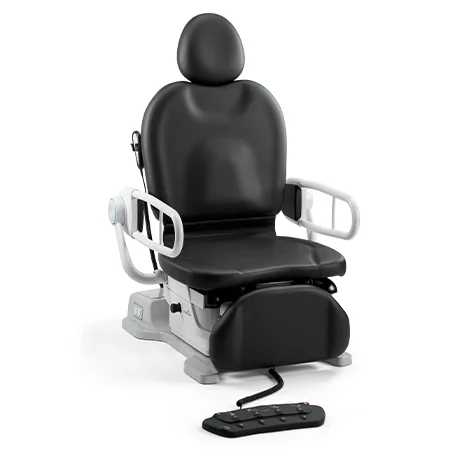
The clinical impact of technique-related variation is well documented. In the CORRECT BP study, investigators compared readings obtained using American Heart Association (AHA)-recommended positioning with readings obtained under conditions typical of routine clinical care. Measurements taken on a fixed-height exam table were, on average, 7.0 mmHg systolic and 4.5 mmHg diastolic higher than measurements obtained in a position-adjustable exam chair with appropriate support.3 Both differences were statistically significant.
A 7 mmHg difference in systolic BP is clinically meaningful and can influence hypertension diagnosis, treatment initiation, therapy intensification, and assessment of control. Recent National Health and Nutrition Examination Survey (NHANES) data indicate that hypertension affects nearly half of U.S. adults, with the Centers for Disease Control and Prevention (CDC) and National Center for Health Statistics (NCHS) reporting a prevalence of 47.7% among adults age 18 and older.5 When measurement bias is systematic rather than random, misclassification can occur at scale. A persistent +7 mmHg systolic bias is sufficient to inappropriately shift large numbers of individuals across diagnostic and treatment thresholds, resulting in inappropriate labeling and escalation of severity categories.
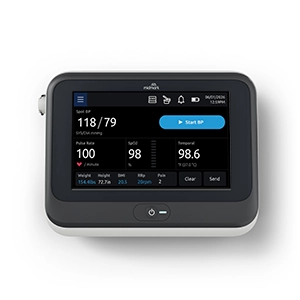
The operational implications are straightforward: accurate BP measurement requires more than a clinical-grade FDA-cleared device. It requires a clinical environment and workflow that reliably support the recommended acquisition protocol, including appropriate cuff selection, no clothing beneath the cuff, minimal conversation, proper positioning, and an adequate rest period prior to measurement.4
In practice, accuracy reflects the interaction of device performance, patient preparation, room setup, workflow design, staff training, and data capture. When workflows necessitate workarounds or the physical environment constrains proper positioning, protocol adherence declines and variability increases. Manual transcription and inconsistent data transfer further introduce documentation error, increasing measurement noise.
Technology-supported chronic care commonly incorporates home monitoring, digital engagement, remote coaching, and longitudinal data capture. While these modalities can add value, they increase—rather than diminish—the need for a clinically reliable anchor. Home BP devices vary, as do patient techniques. Measurements may be obtained at different times, under inconsistent conditions, and with variable adherence to recommended positioning and other protocol elements.
A high-quality office BP measurement—obtained using a standardized protocol in an environment that supports proper technique—provides that anchor. It enables interpretation of home values, helps differentiate physiologic change from measurement artifact, and supports treatment decisions grounded in data the care team can trust.
Health systems preparing for ACCESS or similar value-based payment models should treat measurement integrity as a core element of care-delivery design rather than an administrative afterthought. A practical readiness framework includes five components.
Discussion of ACCESS should extend beyond program mechanics. Participation criteria, included conditions, payment design, and the role of technology-enabled care all warrant attention. However, the central operational question is whether clinical environments can generate reliable point of care data suitable for outcomes-based accountability.
The issue is not merely the presence of a device, platform, or dashboard; it is whether workflows can consistently produce measurements that clinicians, patients, and care partners can interpret and trust. Analytic sophistication cannot compensate for poor measurement, and more frequent data are not inherently higher-quality data. In this context, the clinical environment becomes a determinant of value-based chronic disease management.
As healthcare increasingly shifts toward longitudinal outcome assessment, another challenge also emerges: chronic disease management often occurs across fragmented care environments where no single organization has complete visibility into the patient journey. In that setting, standardized BP measurement becomes even more important because clinicians and health systems must be confident that observed variability reflects true physiologic change rather than measurement inconsistency. This broader challenge of distinguishing true physiologic change from clinical “noise” across fragmented care settings will be explored further in a future blog.
ACCESS is expected to shift chronic disease management from measurement and reporting toward demonstration of clinically meaningful improvement. For hypertension and cardio-kidney-metabolic care, that means BP measurement standardization is not a technical detail; it is part of the infrastructure required to perform credibly under outcome-aligned payment. Organizations best positioned to perform under this construct will operationalize a fundamental principle: outcomes are only as reliable as the measurements used to define them. Without measurement integrity, apparent improvement cannot be interpreted with confidence, and performance comparisons become less valid.
Midmark funded the CORRECT BP study cited in this article. This article is intended solely as clinical and health care delivery commentary.
As Vice President of Clinical Affairs and Chief Medical Officer for Midmark Corporation, Dr. Tom Schwieterman has a profound understanding of the trends and issues driving the healthcare industry through significant change and evolution. His experience as a private practice physician for 12 years in a rural community gives him a unique perspective on problems and opportunities facing physician practices, especially at the point of care. “Dr. Tom” helps lead the company’s focus on innovative technology and new approaches that enrich experiences between caregivers and their patients at the point of care. Much of his time is focused on advising the development of clinical solutions, recognizing and understanding market trends, monitoring and providing insight on government regulations, and identifying and quantifying new innovations in the medical, dental and animal health markets. He also targets optimal ways health information technology can improve caregiver efficiency and patient outcomes. Dr. Tom holds a Bachelor of Science in software engineering from Miami University, Ohio, a Doctor of Medicine degree from The University of Cincinnati College of Medicine and a Master of Business Administration from Xavier University. He is board certified in family practice.