









When One Blood Pressure Reading Changes Everything: The Clinical and Economic Consequences of Blood Pressure Inaccuracy

By:
Clinical Solutions Advisor, Midmark












We See It

Rethinking the Exam Room - AIA Credit

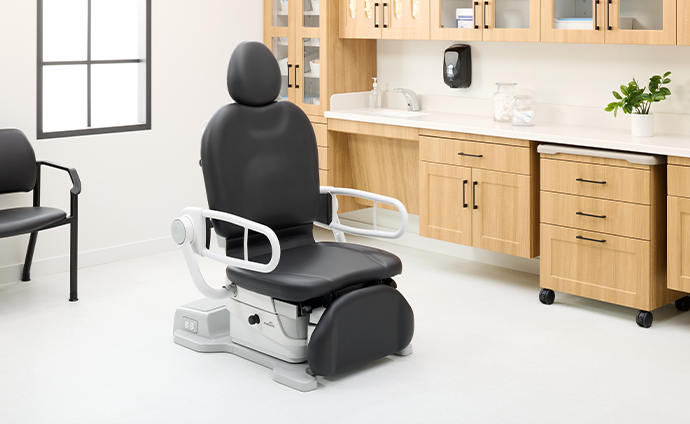
The right procedure room equipment can make a crucial difference in both patient outcomes and caregiver safety. Particularly for patients...
Explore the 631 Procedure Chair











By:
Clinical Solutions Advisor, Midmark
This article examines how blood pressure (BP) measurement site selection, technique and workflow standardization may influence clinical decision-making during hemodialysis—and how a single inaccurate BP reading may alter both clinical trajectory and cost of care. In dialysis care, where treatment decisions are trend-dependent, consistency in measurement conditions is essential to preserve data integrity across sessions.
In hemodialysis, where ultrafiltration targets and treatment adjustments are directly informed by BP trends, measurement integrity is inseparable from patient safety. When a single value is interpreted outside of that trend context, clinical decisions may be affected. The following de-identified case is shared for educational purposes to highlight how site selection and patient positioning can influence recognition of evolving instability.
During a routine hemodialysis session, an adult patient’s BP reading was obtained from a lower extremity due to vascular limitations in both upper extremities. The recorded value suggested hemodynamic stability and ultrafiltration proceeded according to the prescribed plan. No confirmatory upper-arm BP measurement was available at that time and the value was interpreted without comparative site confirmation.
Approximately two hours later, the patient became unresponsive and developed pulseless electrical activity (PEA), requiring resuscitative intervention. The precise precipitating factors were not definitively established. Subsequent inpatient evaluation suggested intradialytic hypotension (IDH) may have contributed to transient cardiac dysfunction, although the course was likely multifactorial.
Because the etiology was not immediately clear, dialysis was restarted cautiously with conservative ultrafiltration targets. The incomplete session and cautious re-initiation were associated with ongoing volume retention and potential additional cardiac strain.
Retrospective review raised concern that although lower-extremity measurements had been used previously, documentation did not consistently specify positioning or limb support relative to heart level. Without confirmation that technique and positioning were standardized across treatments, confidence in longitudinal trend interpretation was limited. While causation could not be established, variation in BP measurement conditions may have contributed to delayed recognition of evolving hemodynamic instability during ultrafiltration.
This case underscores that even when the same limb is used repeatedly, inconsistency in patient positioning, limb support or documentation may weaken the reliability of longitudinal interpretation of the BP readings.
Lower-extremity BP measurements are not directly equivalent to standard upper-arm readings. In a large, individual participant data meta-analysis of more than 33,000 adults, ankle systolic BP averaged approximately 12 mmHg higher than arm systolic BP, with notable interindividual variability. These differences are consistent with normal peripheral systolic pressure amplification as the pulse wave travels distally.
Recent primary evidence demonstrated that posture-related hydrostatic pressure differences between the cuff and the heart led to systemic measurement errors, with mean deviations approaching 10 mmHg when the limb is positioned with the cuff at a different vertical height than the heart. This finding reinforces the need to maintain the limb with cuff at heart level during BP assessment, yet in practice lower-extremity BP measurements are frequently obtained with the leg in a dependent or semi-dependent position, such as in dialysis chair or recliners. These conditions that naturally increase the hydrostatic column and thereby elevate BP recorded values.
In settings such as hemodialysis—where ultrafiltration and treatment adjustments depend on accurate hemodynamic assessment—these described sites and positioning differences may meaningfully influence recognition of evolving hypotension.
Hemodialysis directly alters intravascular volume and venous return. When ultrafiltration exceeds plasma refill, preload declines, stroke volume decreases and cardiac output may fall. In most patients, compensatory increases in heart rate and peripheral vasoconstriction help maintain BP.
In patients with autonomic dysfunction or exposure to antihypertensive therapy, these compensatory responses may be blunted, increasing susceptibility to intradialytic hypotension (IDH). IDH is one of the most common complications of hemodialysis, with reported prevalence ranging from approximately 8% to 40% across studies, reflecting differences in definitions and patient population.
Recurrent IDH has been associated with transient myocardial hypoperfusion (“myocardial stunning”) and adverse cardiac outcomes. While causality is complex and multifactorial, sustained reductions in arterial pressure may impair organ perfusion in patients with limited cardiovascular reserve.
In dialysis care, BP values are interpreted within trends—across treatments and within a single session. When measurement site, patient positioning or documentation varies, trend integrity may be weakened even if an individual reading appears acceptable. In this context, early recognition of hemodynamic change depends not only on vigilance, but on BP measurement consistency.
In this case, the patient’s presentation was likely multifactorial. However, in high-risk dialysis patients, even modest uncertainty about hemodynamic stability often triggers diagnostic escalation. When BP variability contributes to that uncertainty, it can lead to additional monitoring, imaging or inpatient evaluation.
For this patient, the downstream financial impact extended beyond a single dialysis session:
This case illustrates how BP measurement variation can influence clinical interpretation and contribute to diagnostic escalation. In this instance, uncertainty regarding hemodynamic stability was followed by hospital admission, advanced cardiac testing and prescription of a wearable cardioverter-defibrillator. Although overall costs reflect multiple clinical factors, the accuracy and consistency of BP measurement may influence the trajectory of care and the resources ultimately utilized.
There is currently no universally standardized method for measuring BP in the leg. Available evidence is limited compared with upper-arm validation studies. When upper-arm BP measurement is not possible, clinicians should consider the following evidence-informed practices:
Technique supports accuracy.
Standardization supports interpretation.
Documentation supports continuity across care environments.
Accurate BP measurement is not a procedural formality. It is the foundation of safe fluid management, medication titration and hemodynamic interpretation. Leg BP measurements should not be assumed equivalent to arm readings and require contextual interpretation—particularly in high-acuity environments such as hemodialysis, where hemodynamic precision directly influences treatment safety.
At Midmark, our focus is not simply on devices, but on supporting standardized workflows that reinforce validated technique, proper patient positioning, repeatability and clear documentation. Measurement errors often stem from workflow variability rather than clinician intent. Designing environments that make the right technique easier to execute helps protect both patients and clinical teams.
One BP reading can change everything. Make sure it’s one you can trust.