































In Practice: A Clinical Perspective
Why Dental Scaling, Polishing, Probing + Charting
Courses Matter More Than You Think

By:
CVT, VTSH (Dentistry)
March 31, 2026
I still remember the first time someone properly taught me how to scale, polish, probe and chart a patient’s mouth. I was already a trained, credentialed technician with years of experience. But as I learned, I felt a surprising mix of emotions—relief, gratitude …and honestly, a little guilt.
Because in that moment, I realized I didn’t know what I didn’t know.
Like so many technicians, I cared deeply about my patients and took pride in my work. But no one had ever walked me through the finer points—the techniques designed to protect enamel, minimize discomfort and support accurate records. Understanding the “why” behind each step changed everything.
"We Already Do Cleanings… So Why Do We Need More Training?”
Dental cleanings are routine, and it’s easy to feel confident doing something you’ve done for years.
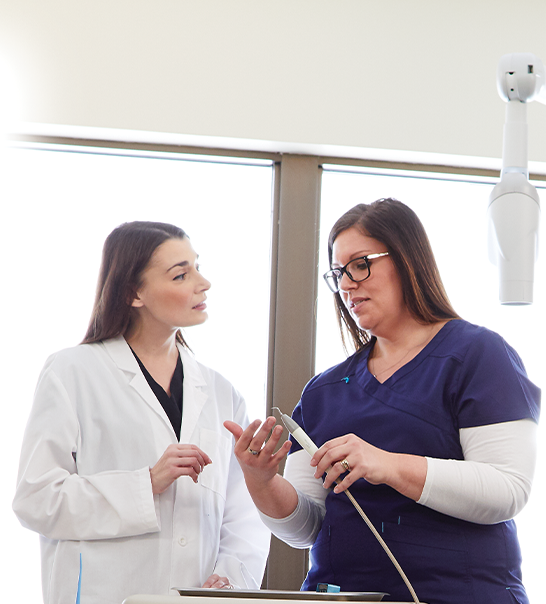
But the truth is: Many of us were never formally taught proper technique.
Not because anyone was careless—dentistry training often happens on the job while patients are under anesthesia. There isn’t always time to pause, ask questions or fully understand the reasoning behind each step. We learn by doing. But sometimes we don’t get the full picture.
Common Gaps I See in Practice
As I observe dental procedures across the country, I often notice small
technique issues that can have meaningful
clinical impact.
• Using the same scaler tip throughout the entire procedure
• Using the tip of the scaler directly on the tooth surface
• Applying aggressive strokes that may increase heat or enamel wear
• Not replacing worn scaler tips
• Polishing too long or applying excessive pressure
• Incomplete charting
• Skipping probing and charting altogether
• Using equipment and instruments in ways they were not intended to be used
These are not signs of a lack of care. They’re usually signs that no one has ever demonstrated a different approach. Teams are doing the best they can with the training they’ve received.
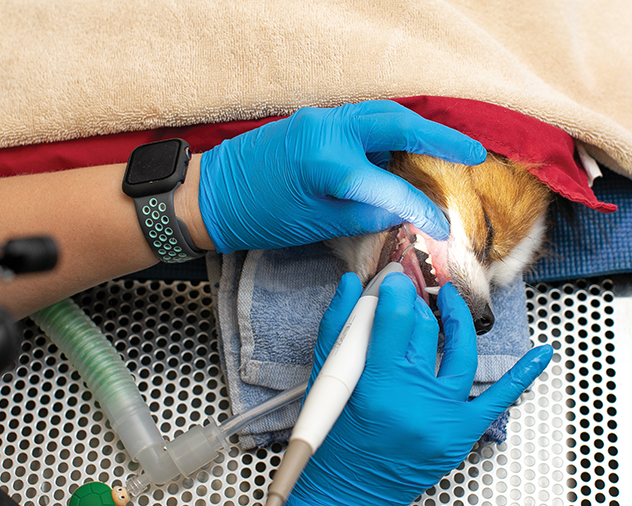
Why Technique Matters for Patients
Improper scaling and polishing techniques or incomplete probing and charting may:
• Harm enamel
• Create grooves where bacteria can accumulate
• Increase patient discomfort
• Delay identification of periodontal disease or pathology
• Result in incomplete medical records
Dental procedures aren’t just routine tasks. They’re clinical interventions that influence long-term oral and overall health.
The Moment Everything Changed for Me
Once I learned to scale, polish, probe and chart correctly, something unexpected happened: I fell in love with it.
Probing and charting became one of my favorite parts of a dental procedure. Documenting a full, accurate dental record made me feel empowered and confident. I was contributing to a comprehensive assessment of my patient’s health.
That shift in understanding elevated my role and my responsibility in patient care.
The Value of Hands-On Veterinary Dental Training
That’s why our Probing, Charting, Scaling and Polishing course was developed.
It isn’t about pointing out mistakes.
It’s about building confidence.
It’s about giving veterinary professionals the education and hands-on experience many of us never had early in our careers.
In this course, teams focus on:
• Scaling and polishing technique
• Complete oral exams and charting
• Dental anatomy and common pathology
• Instrument sharpening
• Dental equipment care and maintenance
• Hand instrumentation fundamentals
• A repeatable, systematic workflow
The goal is simple: Support teams in delivering consistent, high-quality dental care.
You Don’t Know What You Don’t Know—Until You Do
Sometimes the biggest professional growth begins with realizing there’s more to learn.
If your team is already performing cleanings, I completely understand feeling like you’ve got it covered. I once felt that way too.
But additional training can elevate your quality, confidence and patient care in ways that are hard to see until you experience it. Our Dental Cleaning, Probing and Charting Course is designed to give teams that deeper understanding—the kind that changes how you feel about the work you’re doing.
About the Author
Danielle Heberle, CVT, VTSH (Dentistry), is Senior Manager of Clinical Services at Midmark, where she helps advance veterinary clinical standards through education, training, and practice design. She writes about the impact of clinical training and dental suite design on empowering teams, improving workflows, and supporting better patient care.
Suggested Further Reading:
Interested in our solutions?
Let’s design better care together—today.