

























How to Choose a Dental Sterilizer: What to Know About Sterilizer Types

By:
Sr. Marketing Manager, Midmark Dental
June 18, 2026
How to Choose the Right Sterilizer for Your Practice: Part 1
Choosing the right sterilizer for your practice can feel overwhelming. With multiple sterilization methods, air-removal technologies, drying approaches and workflow considerations to compare, how do you sort it all out?
In this blog series, we’ll help you weigh the options so you can choose the best solution for your practice or facility by addressing five essential questions:
- Which type of sterilizer do we need?
- How many do we need? And what sizes?
- What makes a sterilizer easy to learn and use?
- Does the sterilizer help simplify compliance and reduce risk?
- What will it really cost long term?
In this post, we’ll help you answer the first question: Which type of sterilizer do we need? We’ll consider the overall sterilization method, followed by air-removal methods, dynamic air-removal technologies and effective drying methods.
Start with the Sterilization Method: Steam vs. Dry-Heat
Choosing the right type of dental sterilizer starts with a choice between the two primary methods of sterilization: steam sterilization (autoclaving) and dry-heat sterilization.
The Centers for Disease Control and Prevention (CDC) advises using steam sterilization for “all critical and semi-critical items that are heat and moisture resistant.” And both the CDC and the Association for the Advancement of Medical Instrumentation (AAMI) regard steam sterilization as the gold standard for dental instrument reprocessing.
The CDC notes that moist heat through steam sterilization is the most dependable sterilization method, further stating that:
- It “has the largest margin of safety due to its reliability, consistency and lethality” (CDC Sterilization Resource)
- It is “nontoxic, inexpensive, rapidly microbicidal, sporicidal” (CDC Steam Sterilization Resource)
- It “rapidly heats and penetrates fabrics” (CDC Sterilization Resource)
In fact, the CDC advises using steam sterilization “even when not essential to prevent pathogen transmission.”
Dry heat, on the other hand, is best reserved for items that may be damaged by steam, such as some orthodontic instruments. And for items that are both moisture and heat sensitive, other sterilization methods, such as unsaturated chemical vapor, can be used.
For primary sterilizers, the recommendation is clear: use steam sterilization. Always confirm the sterilization method against the instrument manufacturer’s instructions for use (IFU).
Choose an Air-Removal Method: Dynamic vs. Gravity Displacement
In steam sterilization, air must be removed from the chamber and load during the conditioning phase for effective sterilization to occur. If air remains, cool air pockets can prevent full steam contact with instrument surfaces and compromise sterility.
Removing this air can occur in two distinct ways:
- Gravity displacement – allows steam to naturally push cooler, heavier unsaturated air out of the chamber through a vent
- Dynamic air removal – actively forces air out of the chamber using either a vacuum pump and steam or alternating bursts of steam and pressure above atmospheric pressure
Between these two methods, dynamic air removal is “faster at removing air and allowing the steam to quickly come into contact with device surfaces” (per AAMI) and is often considered more effective and consistent.
Gravity displacement sterilizers remain common and can be effective when used according to their IFU. But they are generally more vulnerable to incomplete air removal, which can be caused by a variety of factors. Since dynamic air-removal systems actively remove air, they can support more consistent steam penetration for wrapped or more complex loads.
Compared to gravity displacement, dynamic air removal uses more current technology, offers faster cycle times and helps reduce the risk of sterilization failures caused by air entrapment, helping keep the schedule moving and reduce instrument wait time.
But not all dynamic-air-removal systems are the same.
Compare Dynamic Air-Removal Technologies: Pre-Vacuum vs. Steam Flush Pressure Pulse (SFPP)
Dynamic air removal can be achieved through pre-vacuum or steam-flush pressure-pulse (SFPP) technology. While they use different engineering methods, both pre-vacuum and SFPP cycles are recognized by AAMI as dynamic air-removal steam sterilization because both are designed to actively remove air from the chamber and load to support effective steam penetration.
- Pre-vacuum technology – Uses a vacuum pump to extract air before sterilization. It pulls air out and introduces steam in a repeated cycle to reduce residual air. Pre-vacuum sterilizers require daily Bowie-Dick testing to check for air leaks and inadequate air removal. If a sterilizer fails the Bowie-Dick test, its use should be suspended until it is inspected by sterilizer maintenance personnel and passes the Bowie-Dick test.
- SFPP technology – Uses alternating steam flushes and pressure pulses above atmospheric pressure to remove air during conditioning without relying on a vacuum. Since the chamber maintains positive pressure during this process, it is not affected by air leaks the same way it can be during pre-vacuum conditioning and does not require daily Bowie-Dick testing.
When validated for the device, packaging and load—and used according to applicable manufacturer instructions—both pre-vacuum and SFPP cycles can support effective sterilization outcomes for dental handpieces and other steam-compatible instruments.
When comparing the two technologies for purchase, one of the primary differences to consider is how the presence or absence of vacuum components impacts system complexity, workflow efficiency, service needs and long-term cost of ownership.
Due to the additional vacuum components and testing requirements of pre-vacuum systems, they may require more:
- Parts to maintain and replace
- Technician service to schedule
- Consumables to purchase
- Testing to perform and document
- Labor and downtime when Bowie-Dick tests fail
SFPP autoclaves offer reliable performance with fewer vacuum-related demands. With SFPP technology, practices can receive the effective steam penetration of dynamic air removal while reducing the complications, air-leak vulnerability and additional costs associated with pre-vacuum systems.
It is important to note that SFPP describes the air-removal method used during conditioning, and some SFPP sterilizers may still incorporate vacuum components for other functions, such as drying. Midmark Steam Sterilizers, however, are designed without vacuum-related components for air removal or any other function, helping reduce system complexity, service demands and vacuum-related costs and maintenance.
SFPP vs. Pre-Vacuum Systems
Compared to pre-vacuum systems, SFPP sterilizers often reduce:
- Daily testing costs and labor
- Technician service needs
- System complexity
- Documentation workload
- Downtime tied to air leaks and failed vacuum testing
Focus on Safe Drying: What Really Matters in the Drying Phase
The drying phase is an essential part of effective sterilization and should not be interrupted or cut short. Wet packs or pouches can compromise sterility, so each load must be dry and cool before its contents are handled.
Steam sterilizers may use different drying methods:
- Open-door drying – Vents the door slightly open to a specified drying position as part of the manufacturer’s validated cycle, helping release residual steam while the load remains undisturbed in the chamber
- Closed-door drying – Keeps the door closed while using heated air and/or vacuum technology to remove moisture
Both methods can be effective and safe when they are part of a validated cycle and used according to the applicable IFU. Both are designed to deliver dry sterile instruments ready for use.
Fact Check: Open-Door Drying
You may have heard the rumor that open-door drying is unsafe because it allows room air to enter the chamber and contaminate the wet load. But that is not how validated open-door drying works.
In a validated open-door drying cycle, the door is not simply opened wide to expose the load or allow ambient air to dry the contents. Neither is the load removed, handled or placed on a counter while wet. Moreover, open-door drying is not the same as independently cracking open the door outside of the manufacturer’s intended drying process.
In sterilizers designed for open-door drying, the sterilizer door is vented open slightly to a manufacturer-specified drying position. This precise positioning creates a controlled, narrow vent path for vapor and steam to escape while the load remains undisturbed in the chamber.
Inside the chamber, heat retained from the sterilization cycle helps evaporate remaining moisture, while positive pressure works to drive the steam and warm vapor out through the vent path—rather than pull room air inward toward the load.
The real safety concern during drying is not the drying method itself. In either closed-door or open-door drying, the main concern is deviating from the validated process—interrupting the cycle, opening the door at a time or in a way not intended or specified by the sterilizer’s IFU, or removing, handling or storing packs that are not fully dry. Wet or compromised packs should be considered contaminated and be reprocessed.
The bottom line: What matters most, here, is completing the validated drying cycle according to the manufacturer’s instructions and achieving the intended result: dry, intact packs that are ready for appropriate handling, storage or use.
Put It All Together: Which Type Is Right for Your Practice?
When evaluating sterilizer types,* look for a solution that brings together:
- Steam sterilization for reliable instrument processing
- SFPP dynamic air removal for efficient steam penetration without vacuum-system complexity
- A validated drying method for fully dry packs before handling
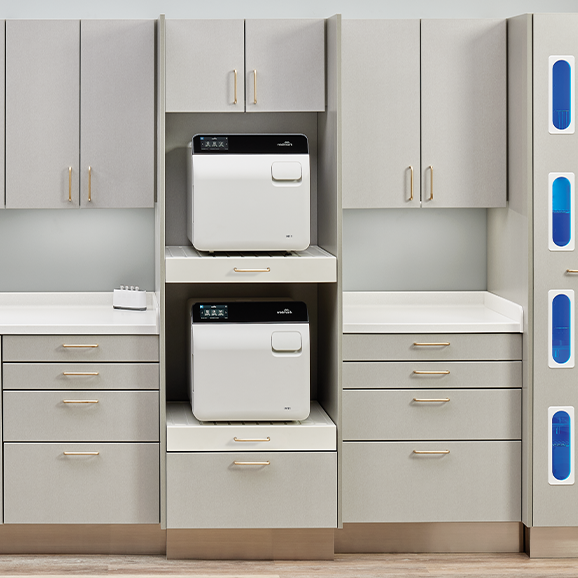
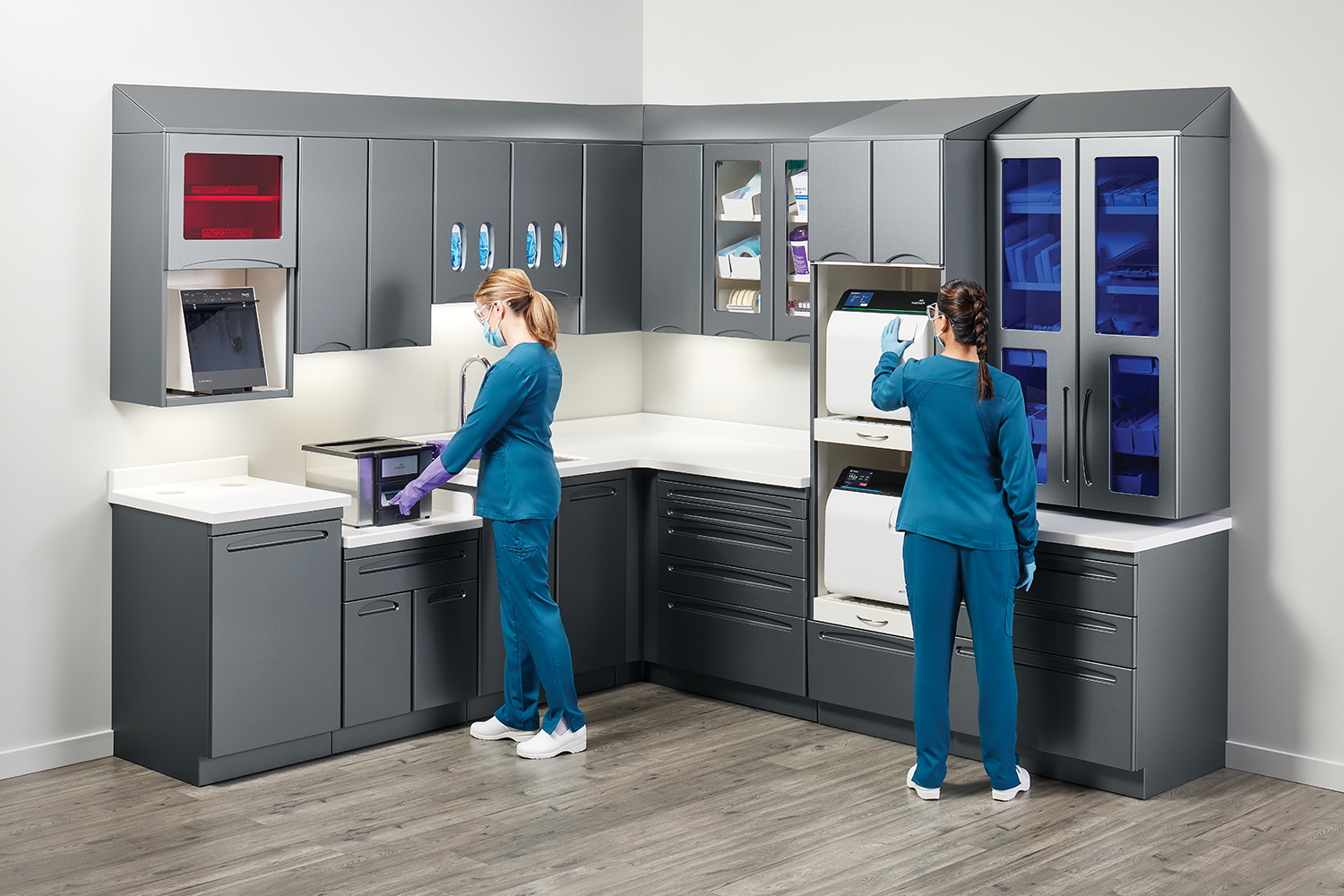
For practices interested in a sterilizer that combines steam sterilization with dynamic air removal and a streamlined user experience, Midmark M9® and M11® Steam Sterilizers are designed to help simplify and standardize daily instrument processing workflows.
Do You Have Questions About Midmark Sterilizers or How They Might Benefit Your Practice?
Start a conversation with us today.
Request a callbackKeep an eye out for the next article in the “How to Choose a Sterilizer” series about how to choose the right size and quantity of sterilizers.
*Always follow the sterilizer, instrument, packaging and sterilization monitoring product manufacturers’ instructions for use, as well as applicable infection-control guidelines and facility protocols.