


























The Importance of Dry Packs in Instrument Processing

By:
Sr. Marketing Manager, Midmark Dental
December 15, 2025
Why Steam Sterilization Requires Complete Drying
Steam sterilization is one of the most widely used methods for instrument processing in dentistry, using saturated steam under pressure to kill microorganisms, including spores. For sterilization to be effective and compliant, the full cycle must complete—including the final drying phase.
Some dental team members may not realize that drying is a required part of the sterilization process. It’s not optional. When instrument packs come out of the sterilizer damp or wet, it’s not just an inconvenience, it compromises sterility. Moisture allows microorganisms to travel from the outside of the packaging to the instruments inside, breaching the sterile barrier (Purdue CRCST).
That’s why, according to ANSI/AAMI ST79 guidance (as summarized in sterile processing education materials), any pack that is wet or damp after sterilization should be considered contaminated.
What Happens When Packs Are Wet
Every wet pack in your sterilizer load triggers additional steps. Since “[w]et packages are not considered sterile,” they must be “identified, repackaged, and re-sterilized” (totalmedicalcompliance.com).
If wet packs aren’t caught immediately, contaminated instruments may end up in clinical use, putting patients at risk. If they are caught, teams can still lose time reprocessing instruments, waiting for instruments to become available and adjusting patient schedules.
Pack dryness is essential for safety, yet many dental teammates are not aware of its importance or that it’s absolutely required.
Why Wet Packs Happen + How to Prevent Them
Wet packs can result from several factors:
- Wet instruments going into pouches or packs
- Improper loading (like overstuffing trays)
- Inadequate airflow inside the chamber due to overloaded trays
- Interrupting the cycle before full drying is complete
- Poorly maintained equipment or blocked vents
Avoiding these issues means following validated instructions for use (IFU), loading trays properly (paper side down, no layering, using a pouch rack when possible) and choosing sterilizers with optimized airflow and real-time cycle guidance.
How Midmark Sterilizers Help Improve Drying Performance
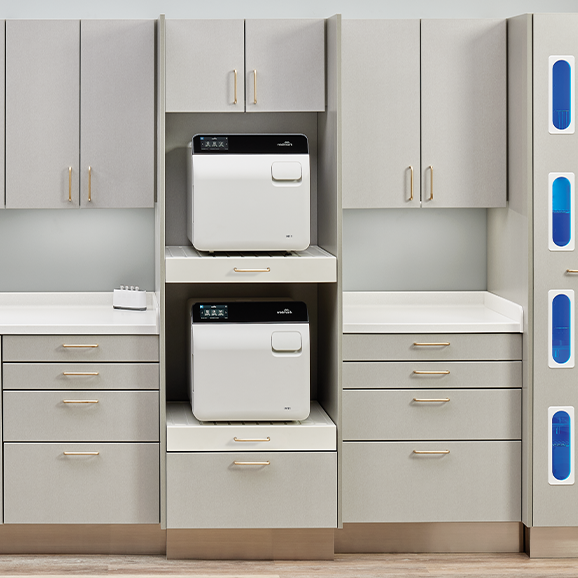
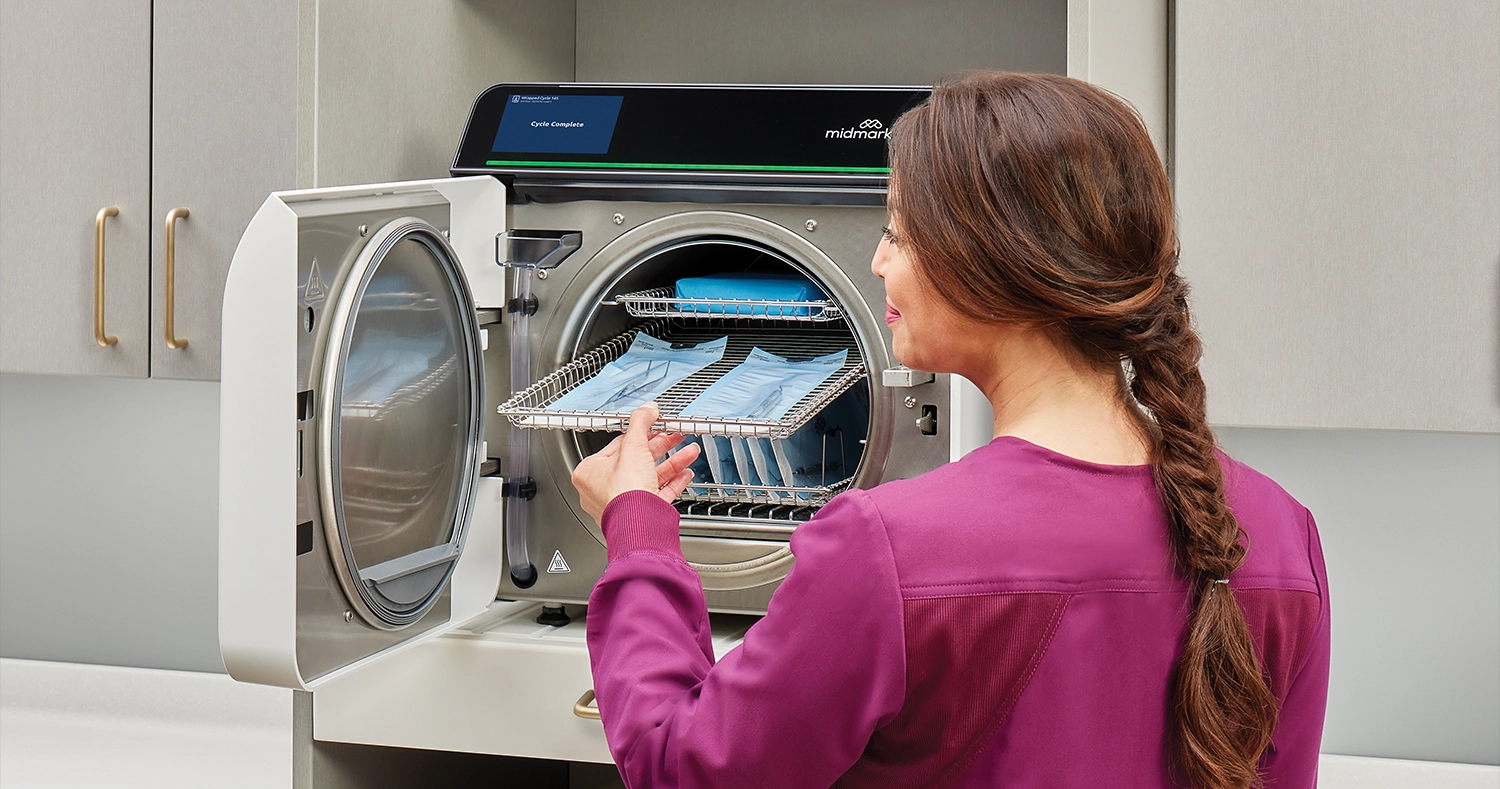
Next-generation Midmark M9® and M11® Steam Sterilizers are purpose-built to minimize drying issues and prevent workflow disruptions. Features support drying consistency, user accountability and adherence to best practices.
Key features include:
- Redesigned trays and pouch racks for better airflow
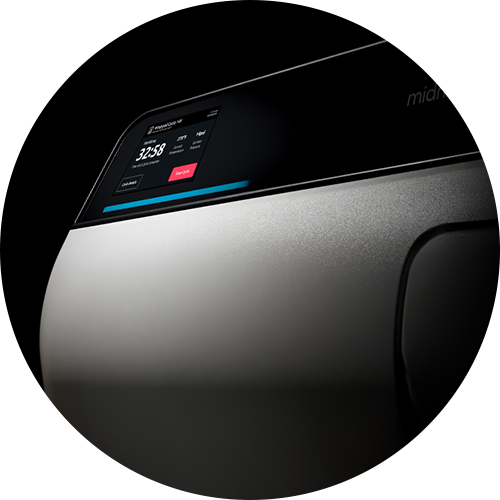
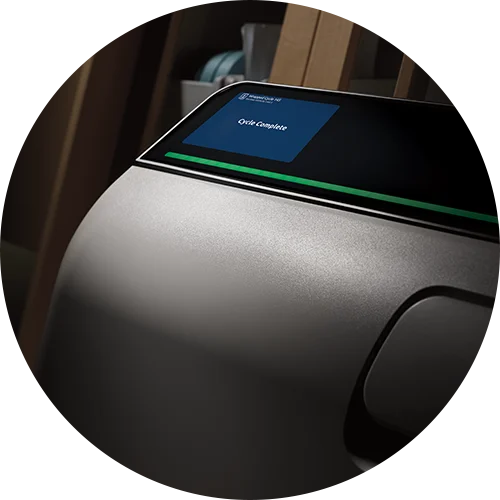
- An intuitive light bar that clearly signals when the drying cycle is complete (green means go)
- End-of-cycle prompts that ask the user to confirm if packs are wet or dry, reinforcing visual inspection and documentation
- Error codes that alert the user when packs may not be sterile, helping prevent unintentional use of compromised instruments

Independent evaluations also highlight the importance of effective drying and accountability in the sterilization process. In a Dental Advisor evaluation, drying performance and user tracking were specifically called out as Midmark sterilizer strengths. One clinician noted:
“Dries instruments completely and records all cycle information, while also tracking which user has removed instruments from the sterilizer.”
Features like these do more than check regulatory boxes—they help teams monitor usage, ensure cycle completion and prevent missteps in shared sterilization environments.
Why It Matters: Beyond Dryness
Dry packs do more than check a box—they help preserve the chain of sterility from autoclave to patient. Sterile-processing training guidance identifies removal of wet packs from the sterilizer as a common mistake that can lead to patient safety issues, additional workload and audit flags.
On the other hand, practices that consistently achieve dry packs can:
- Improve daily throughput by reducing reprocessing delays
- Minimize staff frustration and uncertainty
- Ensure instruments are ready when and where they’re needed
- Strengthen compliance with best practices and standards
Take the Next Step Toward Reliable Sterilization
Midmark sterilizers are designed to help simplify the sterilization process—from loading to final drying—and help your team work smarter, not harder.
Contact us to explore how Midmark sterilizers can help you reduce sterilization issues and support best-in-class clinical workflows.