




Blood Pressure Chaos: Why We Keep Getting It Wrong and How to Achieve Correct BP Technique

By:
Clinical Solutions Advisor, Midmark












We See It

Rethinking the Exam Room - AIA Credit
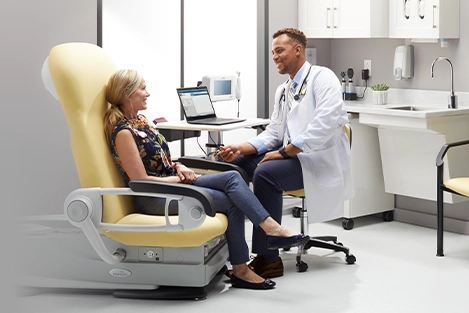
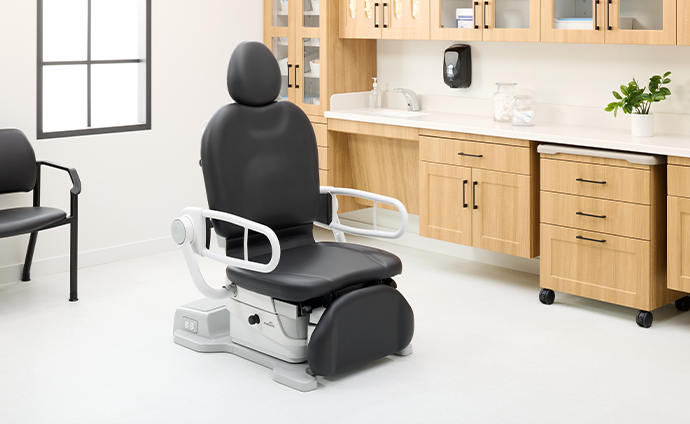
The right procedure room equipment can make a crucial difference in both patient outcomes and caregiver safety. Particularly for patients...
Explore the 631 Procedure Chair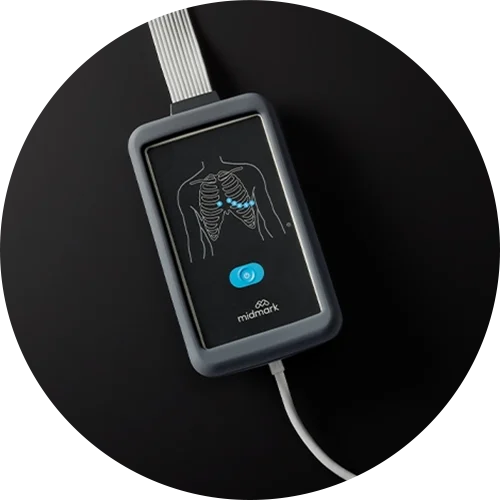










By:
Clinical Solutions Advisor, Midmark
Despite decades of guidance from the American Heart Association (AHA) and American Medical Association (AMA), blood pressure (BP) measurement across healthcare settings remains inconsistent. Observational research shows that many BP readings do not fully adhere to AHA/AMA guidelines for patient preparation, proper patient positioning and repeat measurement. A 2023 consensus article published in The American Journal of Medicine emphasizes that the lack of standardization in BP technique undermines diagnostic reliability and increases the risk of hypertension misclassification.
Accurate BP measurement is the foundation of hypertension diagnosis and management. Even small deviations in preparation, positioning or cuff selection can introduce measurable errors that influence classification and treatment decisions. The challenge is rarely the absence of guidelines, but the difficulty of applying them consistently in real-world clinical workflows—a gap that continues to compromise the reliability of one of medicine’s most essential vital signs.
Current AHA and AMA recommendations outline three essential components of accurate BP measurement: patient preparation, proper patient positioning and correct BP measurement technique. Full adherence to each step is necessary to reduce systematic error and improve diagnostic reliability.
Each of these components address a known source of measurement bias. Omitting even one introduces measurable error.
This impact is not trivial. Published research demonstrates the following approximate effects on systolic BP when individual technique steps are missed:
| Missed Step | Estimated Impact on Systolic BP |
|---|---|
| Talking during measurement | +10 to +15 mmHg |
| Unsupported back | +6 mmHg |
| Unsupported arm | +10 mmHg |
| Cuff over clothing | +5–50 mmHg (highly variable) |
| Legs crossed | +2–8 mmHg |
| No rest period | +5–10 mmHg |
According to the CDC, nearly half of US adults (approximately 119.9 million) meet criteria for hypertension. When such a large population falls near diagnostic thresholds, even modest measurement error can influence classification and contribute to both false positives and false negatives.
In many cases, the issue may not be ineffective hypertension management but inaccurate BP measurement upstream.
Peer-reviewed research reinforces a consistent finding: although proper BP technique is clearly defined, it is not performed with consistency in routine clinical practice.
Collectively, these studies indicate that knowledge of guidelines does not reliably translate into consistent execution. The barrier is rarely information alone, but includes the realities of workflow design, time pressure, environmental constraints and clinical culture. Without system-level reinforcement, training itself is unlikely to sustain measurement fidelity.
Across care environments, a consistent pattern emerges. Inaccuracies in BP measurement are often driven less by individual intent and more by system design.
A systematic review of studies quantifying BP measurement inaccuracy by Kallioinen et al. identified human factors, including rushed workflows, environmental distractions and inconsistent positioning, as common contributors to BP measurement error.
Similarly, the 2023 International Consensus Statement on Standardized Blood Pressure Measurement emphasizes that sustained accuracy depends on system-level support: standardized environments, appropriate equipment, repeat measurements and ongoing competency assessment—not clinician effort alone.
Knowing about the 2025 AHA guidelines is not enough.
If accurate BP measurement is to become more routine rather than aspirational, systems must be intentionally designed to support it. The AHA/AMA Target BP initiative demonstrates that measurement consistency improves when workflow, environment and accountability are aligned with standardized technique.
Variability in BP technique is often treated as inevitable. Yet even small deviations in preparation, positioning or cuff selection can influence classification and clinical decision-making. When measurement is inconsistent, care plans are built on data that may not reflect a patient’s true BP profile.
The gap is rarely knowledge alone, but consistent execution. Closing this gap requires more than education—it requires workflows, environments and accountability structures that make correct BP technique routine.
Clinical spaces and documentation systems shape behavior at the point of care. Room layout, positioning support and integrated workflows can either create friction or reinforce standardization. Addressing these upstream design factors is a practical step toward reducing measurement variability.
At Midmark, we focus on designing clinical environments and workflows that support standardized BP measurement technique and documentation consistency. When BP readings are supported by design, consistency is easier to sustain across teams and over time.
Accurate BP measurement is foundational to diagnosis, treatment decisions and quality reporting. Strengthening that foundation is an achievable step toward more reliable care.
Better BP Begins Here: How Standardization Transforms Accuracy, Efficiency and Outcomes
Better BP: The Importance of Real-World Evidence to Evaluate Diagnostics at the Point of Care
Managing Cardiovascular Health Comes Down to Having Accurate Numbers
Better BP: Designing Spaces for Accurate Blood Pressure Measurements
Improving Patient Outcomes: Earn CEU Credits on Better BP Measurement
With a background in critical care and trauma nursing and an MBA focused on the medical device industry, I bring both clinical and business perspective to my role. My experience in the ICU and as a care flight nurse reinforced the importance of reliable equipment, standardized processes, and strong clinical judgment in driving patient outcomes. As Clinical Solutions Advisor at Midmark, I partner with customers and cross-functional teams to address complex clinical needs, support product performance, and strengthen clinical alignment across the product lifecycle. I am passionate about the connection between clinical accuracy, workflow, and technology—ensuring healthcare professionals have both the tools and the practical insight needed to deliver high-quality care.