



Countdown Complete: HHS Enforcement Begins for Accessible Medical Diagnostic Equipment

By:
Marketing Manager, Midmark Medical












We See It
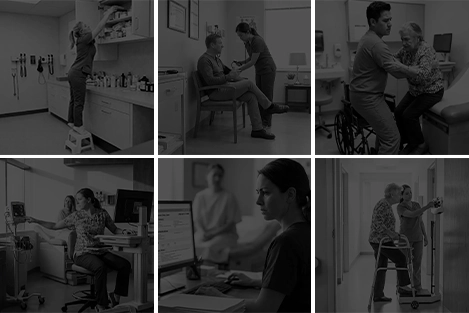
Rethinking the Exam Room - AIA Credit
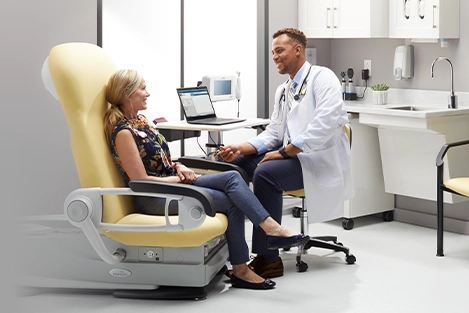
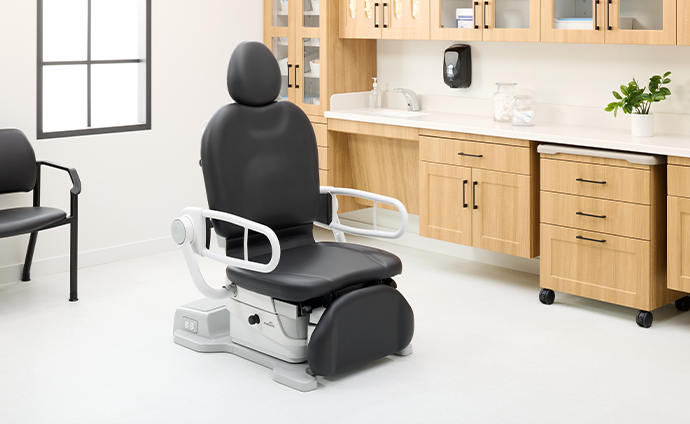
The right procedure room equipment can make a crucial difference in both patient outcomes and caregiver safety. Particularly for patients...
Explore the 631 Procedure Chair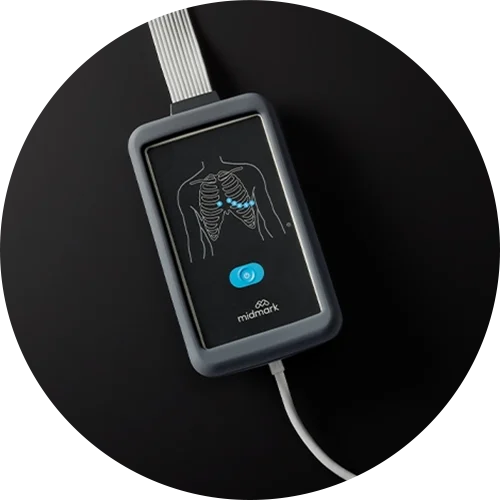










By:
Marketing Manager, Midmark Medical
July 8, 2026, marks an important milestone for healthcare organizations working to improve access to care for patients with disabilities.
Beginning today, the Department of Health and Human Services (HHS) requires covered facilities that use exam chairs and weight scales to have at least one accessible exam chair and one accessible weight scale that comply with the 2017 US Access Board Standards for Accessible Medical Diagnostic Equipment (MDE). For healthcare buying committees, this is more than a regulatory deadline. It is an opportunity to evaluate whether the equipment in each care environment supports safer, more equitable access for every patient.
That evaluation is especially important for large and multi-site organizations, including integrated delivery networks (IDNs), community health centers (CHCs), retail clinics, government facilities and specialty practices such as dermatology and plastic surgery. These organizations often have multiple locations, departments, care models and purchasing stakeholders—making clarity essential.
Medical diagnostic equipment includes equipment used by healthcare providers for diagnostic purposes, including examination chairs, procedure chairs, dental chairs, weight scales, mammography equipment and X-ray machines. For patients with mobility issues or disabilities, inaccessible equipment can create barriers to routine care. A fixed-height exam table, an exam chair without appropriate transfer features or a weight scale that does not accommodate wheelchair users can make it difficult—or in some cases impossible—for patients to receive the same level of care as other patients.
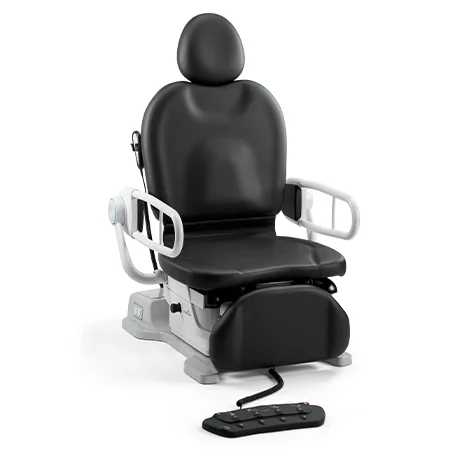
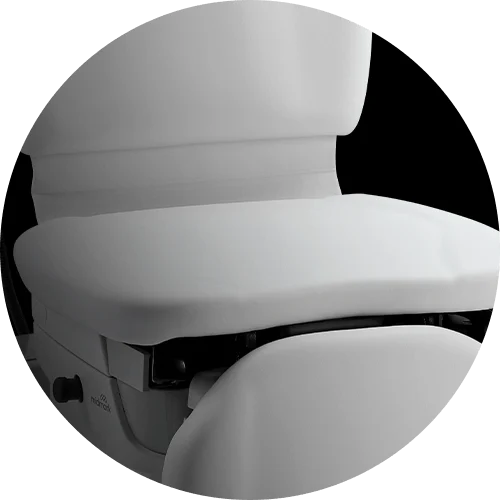
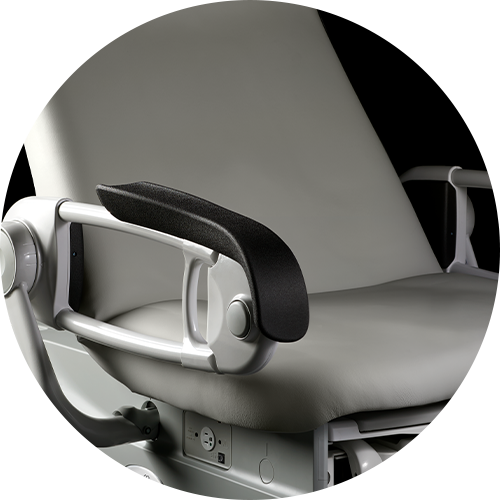
Accessible medical diagnostic equipment is designed to help reduce those barriers. For exam chairs and procedure chairs, buying committees should look closely at features such as chair seat height, transfer surface and base clearance, transfer supports and leg supports.
The details matter. A chair promoted as “accessible” may not automatically address every element needed for compliance. Facilities should verify compliance to the applicable US Access Board Standards, confirming the transfer height range, transfer surface dimensions, transfer support requirements, base clearance and any accessories required for the chair configuration to meet the standards.
The HHS rule applies to covered entities receiving federal financial assistance from HHS. For organizations that participate in Medicare, Medicaid or other HHS funding programs, the July 8, 2026, enforcement date should prompt a facility-by-facility review of exam rooms, procedure rooms and diagnostic spaces for compliance.
By July 8, 2026, covered recipients must have at least one accessible examination chair and at least one accessible weight scale that meet the 2017 US Access Board Standards for Accessible Medical Diagnostic Equipment. This is the HHS’s minimum inventory requirement—the compliance floor.
Covered recipients also need to account for the HHS rule’s broader scoping requirements when they buy, lease or otherwise acquire MDE. Put simply: if a covered recipient buys, leases or otherwise acquires MDE and the facility has not yet met the applicable scoping requirement, the acquired equipment generally must comply with the 2017 US Access Board Standards. For most covered facilities, that means accessible equipment must make up at least 10% of each type of MDE in use, with no fewer than one accessible unit of each type. For rehabilitation facilities that specialize in treating conditions affecting mobility, the threshold is 20%, again with no fewer than one accessible unit. This scoping requirement is not a one-time deadline. It is an acquisition-based obligation that applies as equipment is purchased, leased or retired over time, so buying committees should manage inventory changes to reach—and maintain—the required threshold.
This is why planning should not stop with a single purchase. Buying committees should consider both the July 8, 2026 minimum requirement and the broader acquisition/scoping rules when developing their equipment strategy.
When evaluating a US Access Board compliant exam chair or US Access Board compliant procedure chair, consider asking:
These questions help prevent a common misunderstanding in the market: compliance is not just about purchasing a powered exam chair. It is about ensuring the right chair, properly configured, placed in the right environment, supported by trained staff and integrated into the facility’s care delivery workflow.
As the 2026 deadlines approach, there has been a lot of conversation in the healthcare market about “ADA exam chair compliance.” That conversation is helpful when it raises awareness, but it can also create confusion if it oversimplifies the requirements.
For example, buying committees should be cautious about any message that focuses only on one product feature, one deadline or one broad “ADA-compliant” claim. The more useful question is: Does this equipment, in this configuration, meet the applicable 2017 Access Board Standards for MDE, and does our facility have the required accessible exam/procedure chair and weight scale in place by the 2026 deadline?
It is also important to distinguish between the currently enforced 2017 Access Board Standards and the more recent 2024 Access Board standards. The 2024 standards recommend a 17-inch low transfer height requirement, but HHS and DOJ have not yet adopted that updated standard. Facilities should understand the distinction as they plan purchases today and consider future-proofing their equipment strategy.
Midmark has long focused on designing equipment and care environments that support better access to care. Our patient accessibility resources are designed to help healthcare teams understand the Access Board Standards, evaluate accessible exam and procedure chair features, and plan for compliance across departments and facilities. To further support this planning process, Midmark offers inventory analysis services to help organizations gain a more clear understanding of their current point of care equipment landscape, including equipment condition, chair features, compliance status and replacement needs. These insights can support more informed decisions around accessibility upgrades, purchasing priorities and long-term operational efficiency.
Buying committees can use these resources to align clinical, compliance, risk, facilities and supply chain stakeholders around a shared plan. That alignment is especially important for IDNs, CHCs, retail clinics, government facilities and specialty practices that may need to standardize equipment decisions across multiple care settings.
The HHS enforcement date is not the only one on the calendar. The Department of Justice (DOJ) requires state and local government entities that use exam tables and weight scales to have at least one accessible examination table and one accessible weight scale that comply with the 2017 Access Board Standards for MDE by August 9, 2026.
For buying committees, the message is clear: the compliance clock is no longer theoretical. Now is the time to confirm your current equipment, identify gaps, align stakeholders and make accessibility part of your long-term equipment strategy.
To learn more, visit midmark.com/accessibility.