





























4 Options for Designing an Efficient Instrument Processing Center

By:
Marketing Manager, Midmark Veterinary
April 2, 2025
Although proper instrument processing relies on using an appropriate sterilizer for veterinary medicine and following a best-practice 5-step instrument processing workflow, the most successful protocol can be hindered by your sterilization environment. If the space is a busy hub of activity or co-located with your treatment or break area, it can be challenging to maintain efficiency. Creating a dedicated instrument processing center allows you to manage a dirty-to-clean process better, minimizing cross-contamination risks and supporting a safer, more efficient environment for patients and staff.
Configuring an Instrument Processing Center
Ideally, the size and layout of your instrument processing center should accommodate both equipment and staff, with adequate spaces for receiving, cleaning, packaging, sterilizing and storing instruments. Whether building a new hospital or renovating your current facility, allocating space to support a standardized workflow will allow staff to consistently follow best practices.
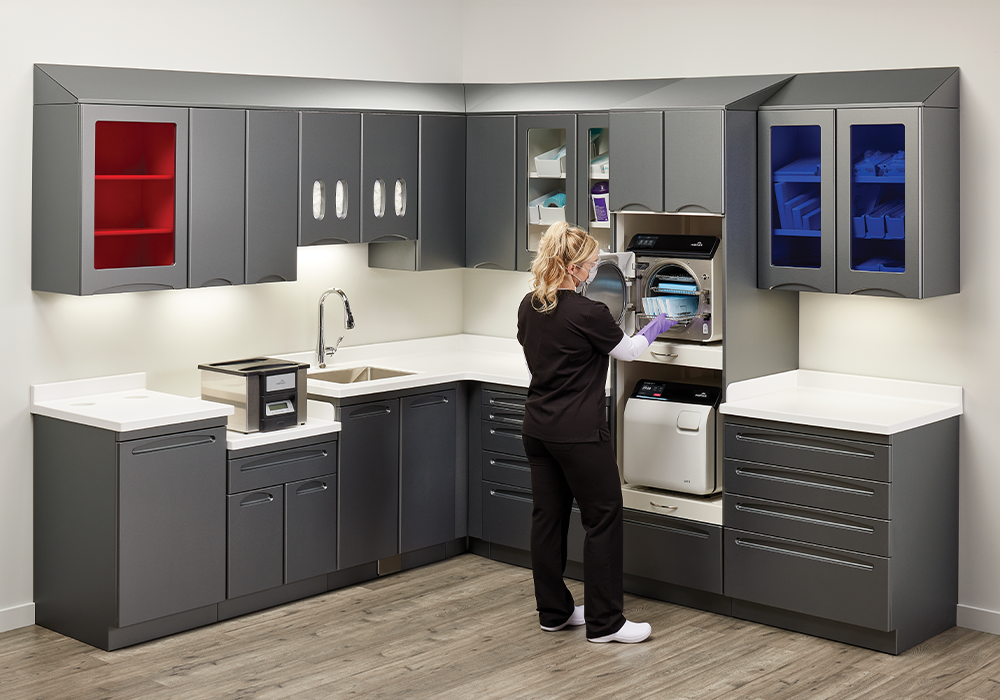
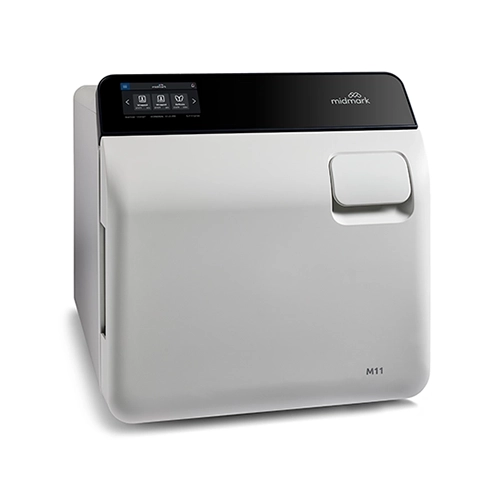
L-Shaped Instrument Processing Center with Midmark Steam Sterilizer
Design Options for Your Floorplan
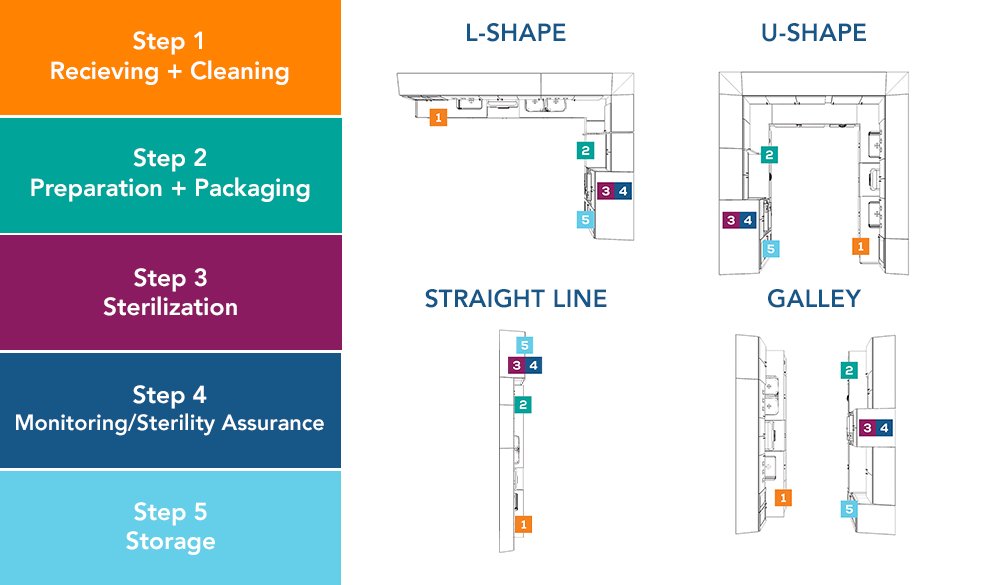
These four instrument processing layouts follow a standardized 5-step dirty-to-clean workflow that adheres to CDC1 recommendations.
- THE L-SHAPE: An L-shaped counter arrangement maximizes the use of available space where elbow room is limited, creating opportunities for better instrument processing workflow within your existing square footage.
- THE U-SHAPE: Multiple cleaners and sterilizers demand space—a U-shaped workspace design provides that and more. Ample surface areas allow more staff in the room to multitask and maintain a bustling workflow.
- THE STRAIGHT LINE: Perfectly suited to a 5-step instrument processing flow, a straight-line workspace design is the picture of efficiency. A straight-line workspace design can help maximize efficiency for effective infection prevention.
- THE GALLEY: The galley layout consists of workspaces on two opposing walls with a single traffic lane between them. This arrangement allows for easy access and efficient workflow, helping your staff keep the process moving using a linear flow while keeping everything within reach.
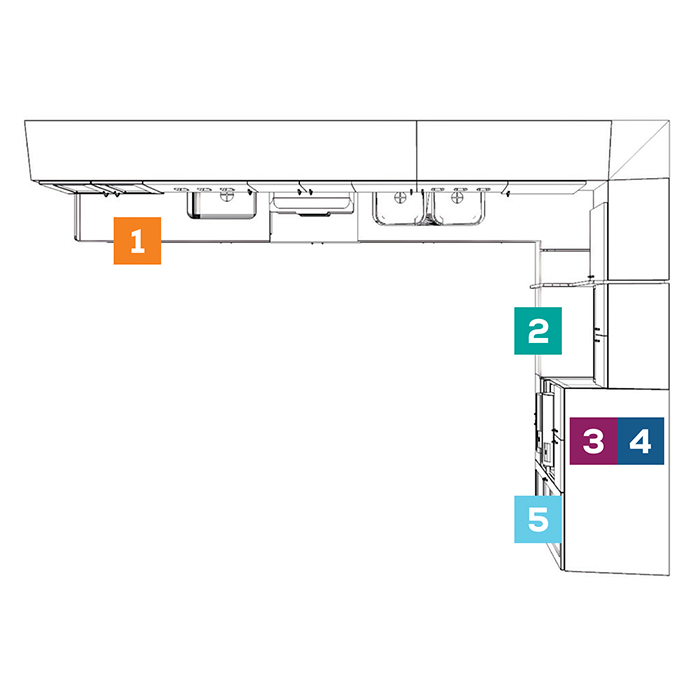
L-Shape
|
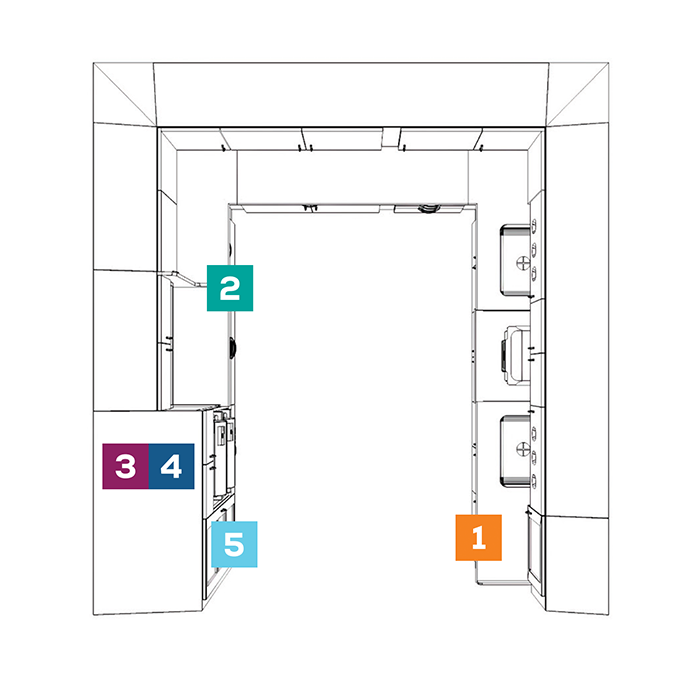
U-Shape
|
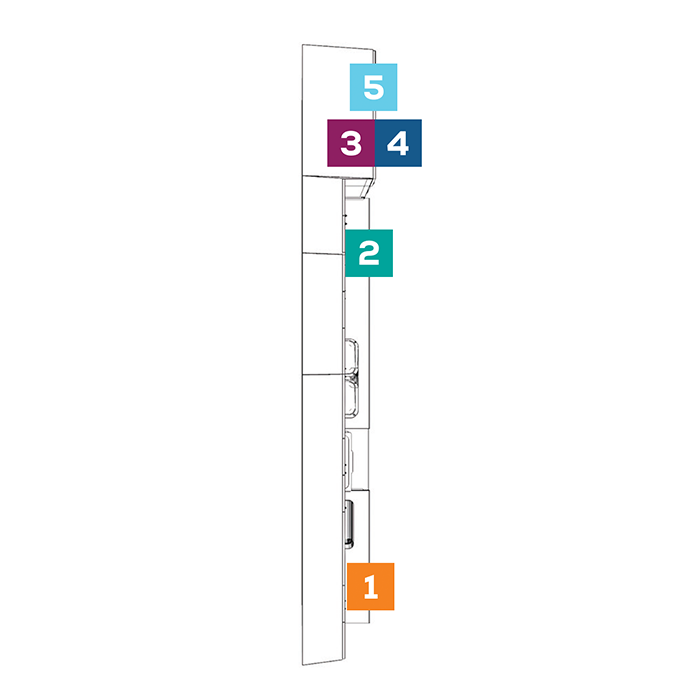
Straight Line
|
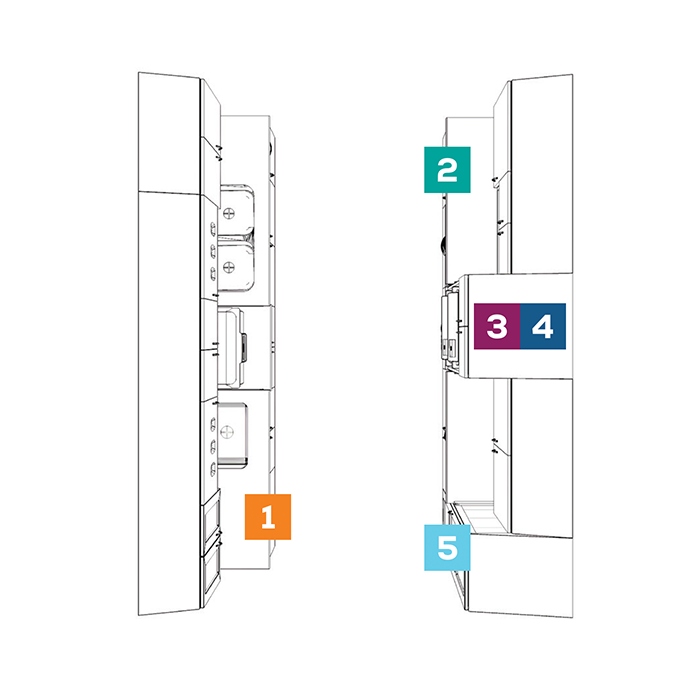
The Galley
|
| Step 1 Receiving + Cleaning |
Step 2 Preparation + Packaging |
Step 3 Sterilization |
Step 4 Monitoring/Sterility Assurance |
Step 5 Storage |
Not sure which layout is best for you? Midmark can help.
Our design experts work directly with you and your architects, contractors and interior designers to create a facility design and room configurations that align with your intended outcomes.
Other Considerations for Enhancing Instrument Processing Efficiency
As mentioned, following the dirty-to-clean workflow recommended by the CDC1 can maximize instrument cleaning and sterilizing efficiency. As you evaluate your current workflow, consider this 5-step process that adheres to best-practice guidelines and helps minimize cross-contamination.
Enjoy Your New Standard of Care
Once you have a dedicated instrument processing space, streamlined workflow and proper equipment, your team will be poised to provide an efficient standard of care that supports a safer environment for patients and staff.