
























Why Dentistry Requires More from an Air Compressor

By:
Marketing Manager, Midmark Dental
Oct 22, 2026
Your dental air compressor does more than supply air. It powers specialized equipment used throughout the day, from handpieces to air/water syringes, making the quality and consistency of the air an important part of your clinical environment.
But not all compressed air is created equal.
Dental compressors are designed to address the specific demands of dentistry, helping provide the clean, dry air needed to support equipment performance and patient care. When evaluating a compressor for your practice, consider a few important factors.
Keep Moisture Under Control
The air around us naturally contains water vapor. When air is compressed and subsequently cools, moisture can condense within the compressed air system. Without an effective way to remove it, moisture can travel downstream through air lines and into dental equipment.
For handpieces, excess moisture can be particularly problematic. Without effective drying, moisture can travel through air lines to handpiece tubing. Over time, moisture can contribute to corrosion and technical problems in sensitive dental instruments, potentially affecting performance and service life.
International standards for dental compressed air specifically address moisture for this reason. ISO 22052 identifies clean, dry air as important for protecting sensitive dental instruments and equipment from water, oil and particles. The standard also notes that high humidity can contribute to corrosion within the compressed air system, technical problems with dental instruments and microbial growth.
When comparing compressors, look beyond claims of “dry air” to understand how each system manages moisture.
One way to evaluate air dryness is pressure dew point, or the temperature at which water vapor in compressed air begins to condense. Generally, a lower pressure dew point indicates drier compressed air.
But how dry does dental compressed air need to be?
ISO 22052 establishes air-quality requirements specifically for dental compressed air, including a maximum pressure dew point of 37.4°F (3°C) under specified conditions.
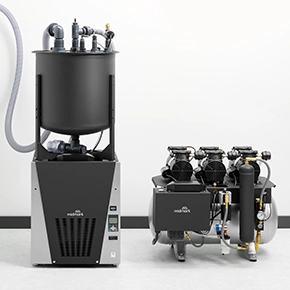
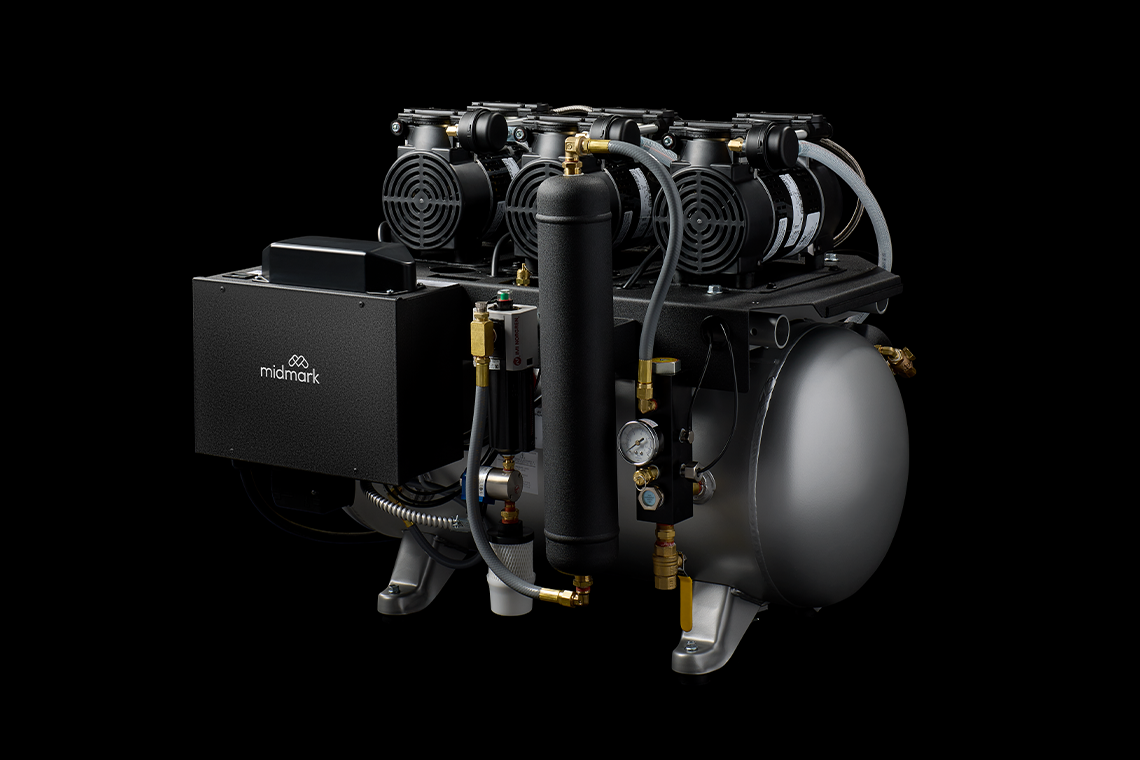
Midmark® Smart Air Compressors go beyond this moisture specification, using a desiccant drying system to achieve a pressure dew point of –25°F (–31.7°C), which helps minimize moisture in the compressed air supply and protect sensitive dental equipment.
Keep Oil Out of the Equation
Oil is another important consideration when choosing a compressor for dental applications.
Traditional lubricated compressors rely on oil within the compression process, creating the potential for oil to enter the compressed-air stream if it is not adequately removed. Oil-less compressors eliminate oil from the compression process altogether.
Keeping oil out of dental compressed air matters for more than equipment protection. Compressed air is also used during patient care, including to dry the treatment site.ISO 22052 specifically identifies oil contamination as a concern because oil can interfere with dental adhesion systems.
Midmark Smart Air Compressors use an oil-less design, eliminating the need for routine compressor oil changes while helping provide clean air for dental applications.
Get Clinical-Quality Filtration
Oil-less operation is only part of the air-quality equation.
Compressors draw in ambient air from their surrounding environment. Effective filtration helps remove particulates and other contaminants before compressed air travels through the practice.
Midmark Smart Air Compressors use a 0.01-micron coalescing filter that removes 99.9997% of compressed-air contaminants. Combined with an oil-less design and desiccant drying system, this filtration helps provide clean, dry air for equipment used at the point of care.
Not all compressors are designed for the dental environment.< /h3>
When comparing options, look for equipment designed specifically for dental applications. Evaluate published equipment specifications for appropriate moisture control, air filtration and oil-less operation, and consider the equipment’s alignment with relevant healthcare standards and ratings.
Midmark Smart Air Compressors are NFPA 99 Level 3 rated, indicating they are designed to meet applicable healthcare safety criteria for compressed air systems used to power dental equipment.
Standards and ratings may not be the first details you consider when comparing compressors, but they provide valuable information to help you select equipment designed for the needs of your practice.
Don’t Forget Performance
Clean, dry air is important, but your compressor also has to keep up with your practice.
A compressor that isn't appropriately sized for demand may have to run more frequently to supply the air your team needs. When evaluating your options, consider not only air quality but also factors such as compression rate, user capacity and the needs of your equipment.
Midmark Smart Air Compressors offer one of the highest cubic-feet-per-minute (CFM) compression rates available, with models designed to support practices ranging from one to 10 simultaneous users.
Midmark Smart View™ connectivity can also provide greater visibility into compressor health and status, including routine maintenance notifications and critical alerts.
Choose Air Designed for the Point of Care
A compressor's job in a dental practice isn't simply to compress air. The air it produces travels throughout the practice, powers sensitive dental equipment and is used directly during patient care.
Looking beyond basic capacity to consider moisture management, oil-less operation, filtration, dental standards and performance can help you choose a compressor designed for the demands of dentistry.
Midmark Smart Air Compressors bring these considerations together to help provide clean, dry air and support reliable performance at the point of care.
Learn more about Midmark Smart Air Compressors at midmark.com.