


Deep Dive on ECG/DICOM Focusing on Cardiology
By:
Vice President of Clinical Affairs and Chief Medical Officer





We See It
Rethinking the Exam Room - AIA Credit
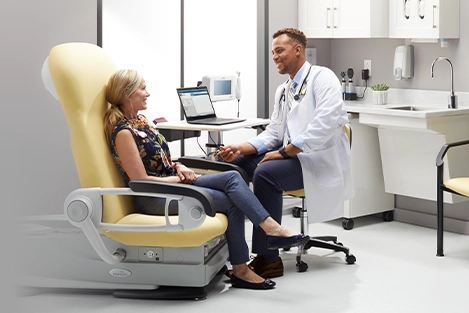
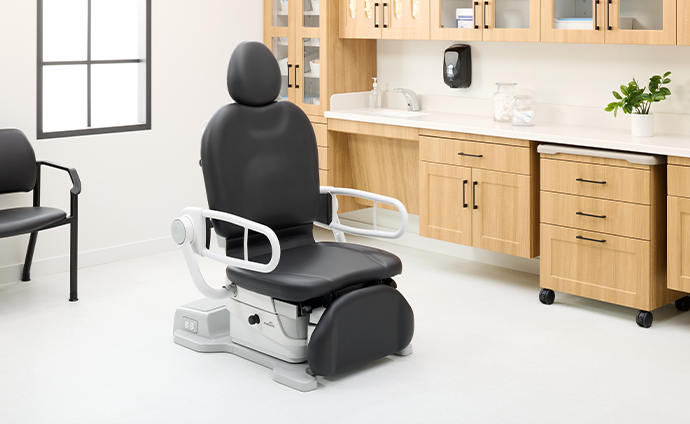
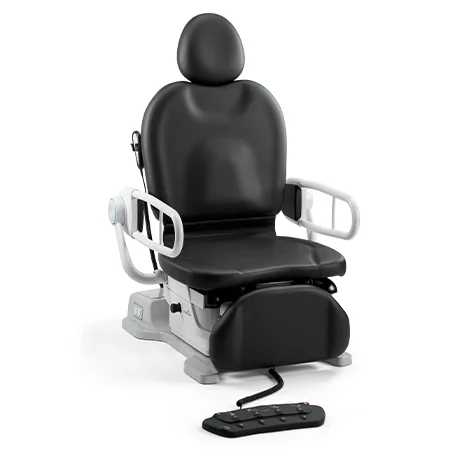
The right procedure room equipment can make a crucial difference in both patient outcomes and caregiver safety. Particularly for patients...
Explore the 631 Procedure Chair








By:
Vice President of Clinical Affairs and Chief Medical Officer
This blog examines how electrocardiogram(ECG) data fidelity, interoperability standards and digital imaging and communications in medicine (DICOM) integration directly impact diagnostic precision, electrophysiology workflows and longitudinal cardiac care. In cardiology, ECG is not a one-time test—it is a continuous data stream used to guide complex decisions over time.
Unlike primary care, where ECG may support screening or triage, cardiology depends on high-resolution waveform data, reproducibility and longitudinal comparability. As volumes increase across inpatient, outpatient, procedural and remote monitoring environments, ECG data management becomes a core component of cardiovascular diagnostics infrastructure.
In cardiology and electrophysiology, clinical decisions often depend on detecting subtle temporal changes rather than isolated findings.
Many arrhythmias are intermittent or therapy dependent. Without consistent, high-fidelity serial ECG comparison, clinically meaningful changes may be missed or misclassified.
A critical misconception is that all ECG storage formats are diagnostically equivalent. In cardiology practice, this assumption introduces risk.
When ECGs are stored as static images or non-standard formats:
For cardiologists and electrophysiologists, loss of waveform fidelity is not a technical inconvenience—it is a diagnostic limitation.
ECG data often resides across disconnected systems:
Without interoperability, ECG data is not reliably available across these environments.
This is less about IT architecture—and more about clinical continuity across the cardiovascular service line.
DICOM standardizes ECG data in a way that aligns with how cardiology already manages imaging—bringing waveform data into the same interoperable ecosystem.
This supports reproducible measurement and reliable serial comparison.
DICOM allows ECG data to be accessed alongside imaging and procedural data within:
This creates a more complete and clinically usable record at the point of care.
In cardiology and EP settings, improving ECG usability starts with both acquisition and infrastructure:
Where appropriate, standardization may help reduce repeat testing, improve diagnostic consistency and support more efficient electrophysiology workflows.
Cardiology is moving toward a more integrated diagnostic model—where electrical, structural and procedural data are expected to align within a single clinical context. ECG cannot remain as an isolated data type within that model.
As EP, imaging and longitudinal disease management become more interconnected, the ability to access ECG data that remains comparable across encounters and care settings becomes increasingly important. DICOM-supported workflows represent one approach to aligning ECG with the broader cardiovascular data ecosystem.
For cardiology leaders, the question is no longer whether ECG data is available—it is whether that data is complete, comparable and clinically usable when decisions depend on it.
As Chief Medical Officer for Midmark Corporation, Dr. Tom Schwieterman has a profound understanding of the trends and issues driving the healthcare industry through significant change and evolution. His experience as a private practice physician for 12 years in a rural community gives him a unique perspective on problems and opportunities facing physician practices, especially at the point of care. “Dr. Tom” helps lead the company’s focus on innovative technology and new approaches that enrich experiences between caregivers and their patients at the point of care. Much of his time is focused on advising the development of clinical solutions, recognizing and understanding market trends, monitoring and providing insight on government regulations, and identifying and quantifying new innovations in the medical, dental and animal health markets. He also targets optimal ways health information technology can improve caregiver efficiency and patient outcomes. Dr. Tom holds a Bachelor of Science in software engineering from Miami University, Ohio, a Doctor of Medicine degree from The University of Cincinnati College of Medicine and a Master of Business Administration from Xavier University. He is board certified in family practice.