
























Ergonomics in Healthcare: Why Design Matters for Care Teams

By:
Senior Marketing Manager, Midmark Medical
June 1, 2026
The Job is Hard. The Environment Shouldn’t Make It Harder.
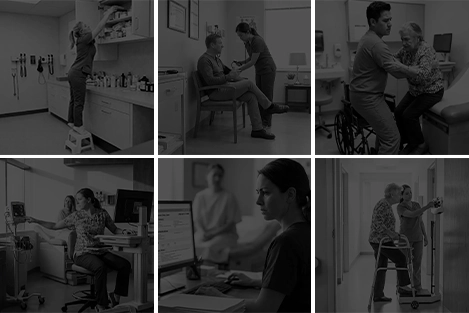
Healthcare professionals spend their days bending, reaching, sitting, standing, charting, lifting and moving between patients, equipment and work surfaces. Over time, those repeated movements can add up.
That is why ergonomics in healthcare matters. It is not only about comfort. It is about designing clinical environments that better support the people delivering care. When exam and procedure room cabinetry, seating and workstations are not designed around the body and the workflow, care teams may experience unnecessary strain. That strain can affect how efficiently they work, how they feel at the end of the day and how safely they interact with patients.
According to research, healthcare workers are almost three times as likely to suffer from work-related injuries than construction workers.1 And one out of five injuries reported in the United States is healthcare related.2
Medical Ergonomics Starts with Everyday Movements
In many clinical spaces, strain does not come from one major event. It comes from hundreds of small movements repeated throughout the day.
Think about a typical exam and procedure room:
- A nurse reaches into upper cabinetry for supplies
- A medical assistant bends to access lower drawers
- A provider sits uncomfortably on a stool while positioning close to the patient
- A clinician moves between the exam chair, workstation and documentation area
- A care team member twists to access technology or supplies
Each action may seem simple. But when the space does not support natural movement, these tasks can become harder than they need to be.
An ergonomic clinical environment setup starts with the way care teams actually work. Equipment placement, storage height, seating support and workstation adjustability can all influence how clinicians move through the room.
For healthcare organizations looking at how to reduce strain for healthcare workers, exam and procedure rooms are a practical place to start.
Exam + Procedure Room Cabinetry That Supports Better Reach + Visibility
Cabinetry plays a bigger role in medical ergonomics than many organizations may realize. Storage that is too high, too low or poorly placed can cause care teams to bend, reach or twist repeatedly.
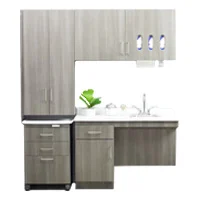
Midmark Synthesis® Wall-Hung Cabinetry is designed to improve ergonomic reach and visibility while helping reduce the risk of stress and strain injuries. This approach to medical cabinetry for exam and procedure rooms can help make frequently used supplies easier to see, access and organize.
For care teams, ergonomic cabinetry can support:
- Less reaching above shoulder height
- Less bending below comfortable working zones
- Better visibility to supplies
- More efficient movement during the patient visit
- A more organized point of care
Good cabinetry design can also support workflow standardization by giving supplies a clear, accessible home. When the right items are positioned in the right places, staff can spend less time searching and more time focused on the patient.
For organizations exploring how to improve exam and procedure room workflow, cabinetry is more than storage. It is part of the care delivery system.
Medical Workstations for Clinics Should Fit the User
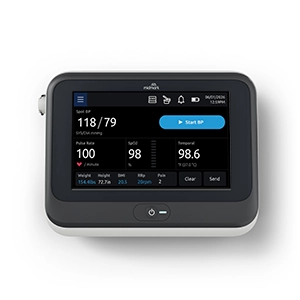
Documentation is now part of nearly every patient interaction. But technology can create ergonomic challenges when workstations are not positioned or adjusted properly.
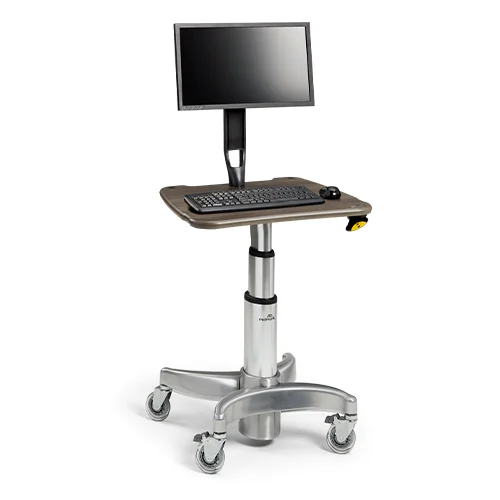
Midmark® Workstations are designed to support a range of users and working preferences, whether seated or standing. With mobile and wall-mounted workstation options, care teams can bring documentation and technology closer to the point of care.
Height-adjustable medical workstations for clinics can help care teams:
- Chart while seated or standing
- Position screens and input devices more comfortably
- Reduce awkward posture during documentation
- Bring technology closer to the point of care
- Support workflow needs in small or flexible spaces
Point of care workstations can also help reduce unnecessary movement between the patient, documentation area and equipment. That can make the room feel more connected and help the care team stay focused during the visit.
Ergonomic Medical Stools Can Help Support Better Positioning
A stool may seem like a small part of the care environment. But for clinicians who sit, reposition and move close to patients throughout the day, seating can directly affect posture, comfort and stability.
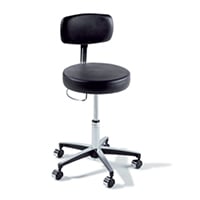
Ritter® seating by Midmark is designed to provide comfort, support and stability. The Ritter 277 Air Lift Stool includes an ergonomic backrest, a wide padded seat, pneumatic seat height adjustment and a star-shaped base designed for closer access to the patient with stable maneuverability.
Ergonomic medical stools can support care teams by helping them:
- Maintain better seated posture
- Move closer to the patient without overreaching
- Adjust height for the task at hand
- Reduce pressure points during seated work
- Improve stability during patient interactions
In a busy ambulatory environment, the right stool can help make daily work feel more manageable. It is one more way clinical spaces can be designed to help prevent clinician fatigue in exam and procedure rooms.
Ergonomic Design Can Help Reduce Risk
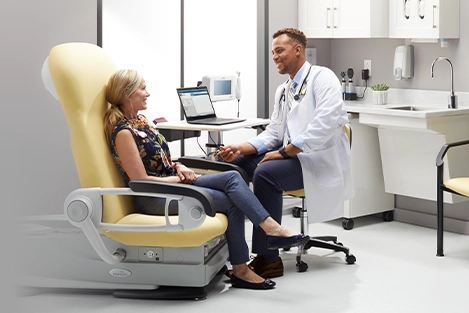
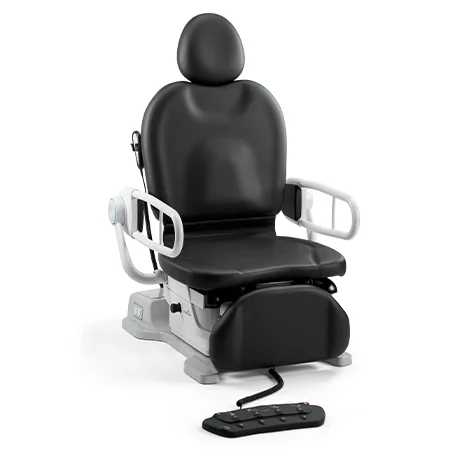
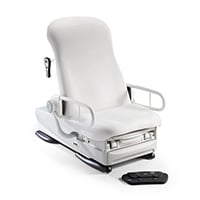
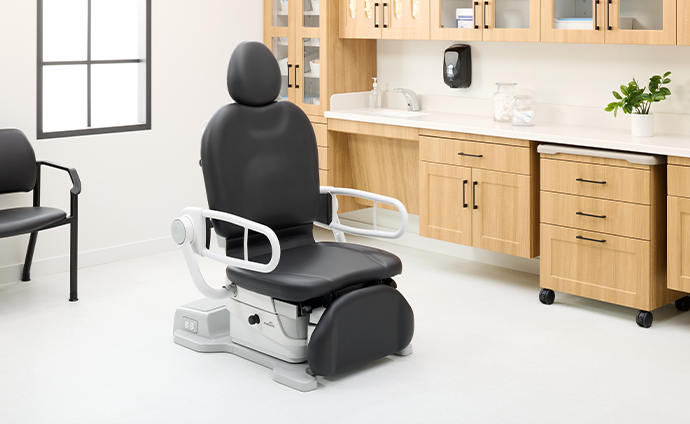
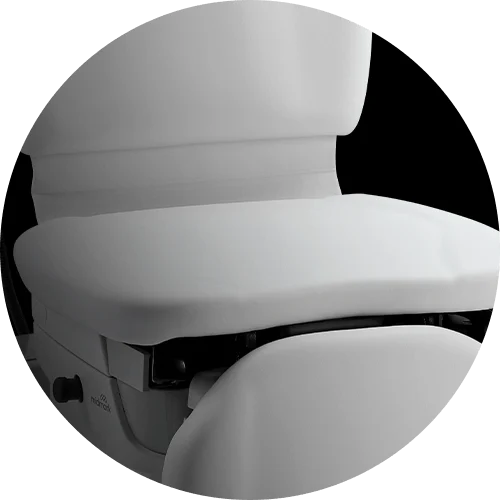
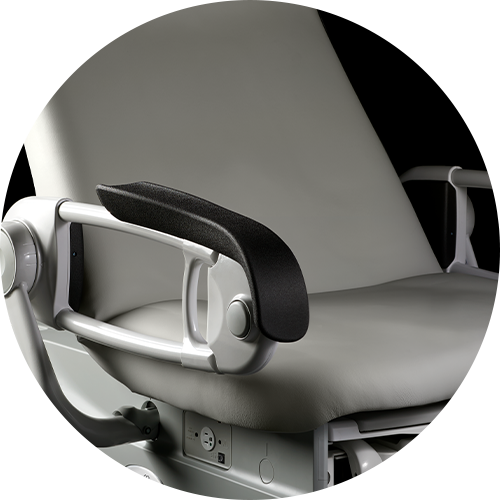
Poor patient handling practices can put strain on caregivers. In a Midmark-sponsored peer-reviewed study, experienced caregivers compared patient transfer tasks using a traditional fixed-height exam table and a height-adjustable exam chair.
With the height-adjustable exam chair, caregivers reported 19 times less shoulder exertion, 40 times less upper back exertion and 29 times less lower back exertion. The study also found a 96.75% average reduction in perceived physical exertion when using a height-adjustable exam chair.
While cabinetry, workstations and seating each support different tasks, they share one goal: helping the clinical environment work better for the people using it.
A more ergonomic exam and procedure room setup can help support:
- Caregiver comfort
- Staff and patient safety
- Workflow efficiency
- Better access to supplies and technology
- A more organized patient care experience
Designing Around the Care Team
Ergonomics should not be an afterthought. It should be part of how healthcare organizations plan, equip and improve clinical spaces.
The most effective exam and procedure rooms are designed around the realities of care delivery. They consider where people stand, sit, reach, chart, communicate and move. They support the caregiver as much as the patient.
Midmark medical solutions, including Synthesis Cabinetry, workstations and seating, are designed to help create more supportive clinical environments. From better reach and visibility to adjustable documentation surfaces and supportive stools, ergonomic equipment can help care teams work more comfortably throughout the day.
Take the Next Step
Visit midmark.com to explore products that support ergonomic design in clinical environments, including cabinetry, workstations and seating.
Sources
- https://www.bls.gov/iif/osch0060.pdf
- U.S. Bureau of Labor Statistics, 2023 data: bls.gov/news.release/pdf/osh.pdf
Additional Resources
- Midmark Synthesis® Cabinetry - Ergonomics
- Midmark Synthesis® Cabinetry Brochure
- Improving Ergonomic Reach, Visibility + Infection Prevention Video
- Midmark® Workstations
- Better Ergonomics for Every Body
- Midmark® Workstations Product Literature
- Ritter® Seating Literature
- Breaking No Backs: Reducing Caregiver Injury Risks