































The Hidden Risk in Chronic Disease Management: Are We Treating Physiology—or Measurement Variability?

By:
Clinical Solutions Advisor, Midmark
June 8, 2026
In our previous blog, “When 7 mmHg Changes the Diagnosis: Why Medicare ACCESS Depends on Blood Pressure Accuracy,” Dr. Tom Schwieterman explored why measurement accuracy and standardized acquisition techniques are foundational to trustworthy chronic disease management and outcome-based care. This article builds on that discussion by examining a broader longitudinal challenge: When patients receive care across fragmented healthcare environments, how can clinicians distinguish true physiologic change from variability introduced by inconsistent measurement conditions?
Healthcare is entering an era where chronic disease management increasingly depends on longitudinal data across fragmented care environments. Patients with hypertension, diabetes, chronic kidney disease and cardiovascular disease are often managed across multiple health systems, specialists, urgent care settings, retail clinics, home-monitoring environments and digital care platforms. Clinicians, health systems and payers are being asked not only to document disease, but also to demonstrate measurable improvement over time through emerging outcome-aligned care models such as Medicare ACCESS (Advancing Chronic Care with Effective Scalable Solutions). Blood pressure (BP) control, weight trends, hemoglobin, A1c reduction, kidney function stability and other longitudinal markers are becoming central to clinical management, quality reporting and value-based reimbursement.
As this shift accelerates, healthcare faces a foundational question that has not received enough attention: How confident are we that observed variability reflects true physiologic change rather than differences in how measurements were obtained?
The distinction matters more than many organizations realize. Inconsistent measurement conditions can introduce clinical “noise” that complicates longitudinal trend interpretation, destabilizes treatment decisions and contributes to clinicians “chasing the tail,” escalating, de-escalating or modifying therapy based on measurement variability rather than true physiologic status.
As healthcare increasingly depends on longitudinal outcomes, point-of-care measurement accuracy and repeatability are becoming operationally and financially consequential.
Chronic Disease Management Depends on Longitudinal Trust
Modern chronic disease management rarely occurs within a single clinical environment. Fragmentation has become a defining feature of longitudinal care delivery, with patients frequently moving between independent practices, multispecialty health systems, urgent care centers, virtual visits, retail clinics and home-monitoring programs, often with little consistency in how measurements are acquired across settings. At the same time, healthcare is generating more data than ever through remote monitoring, connected devices, patient-generated health information and digital engagement platforms.
More data can improve clinical visibility but only if the data is clinically trustworthy, standardized and comparable over time.
In fragmented care environments, measurement inconsistency becomes amplified because clinicians may lack context around acquisition conditions. For example, a single elevated BP reading captured in a rushed urgent care workflow may later be interpreted alongside carefully obtained office measurements or home readings collected under entirely different conditions, a challenge highlighted by the CORRECT BP study. Without a repeatable clinical framework, longitudinal interpretation becomes increasingly vulnerable to measurement noise.
In many cases, no single organization has complete visibility into the patient’s full longitudinal journey. Clinicians often interpret trends from partial datasets generated across highly variable acquisition environments. Under those conditions, the integrity and repeatability of each individual clinical measurement become even more important.
This challenge is particularly relevant in hypertension management.
Blood Pressure Variability Is Not Always Physiologic
BP is highly sensitive to acquisition conditions. Small changes, for example in patient positioning, cuff size, arm support, rest period, conversation, workflow pace or room setup, can meaningfully alter readings.
The American Heart Association (AHA) recommends several foundational practices for accurate BP measurement, including:
- Allowing the patient to rest quietly before measurement
- Supporting the patient’s back and arm with cuff at heart level
- Positioning the feet flat on the floor with legs uncrossed
- Using an appropriately sized cuff and placing cuff on bare arm
- Avoiding conversation and movement during measurement
- Repeating measurements and averaging readings when appropriate
Even modest deviations from these techniques can influence readings.
What the CORRECT BP Study Revealed
As mentioned earlier, the CORRECT BP study demonstrated the magnitude of this issue. Investigators found that BP readings obtained under routine clinical conditions were significantly higher than readings obtained using AHA-recommended positioning techniques, including proper back support, arm support with cuff at heart height and seating configuration. Average differences approached 7 mmHg systolic and 4.5 mmHg diastolic.
Those differences are clinically meaningful.
A systolic variation of 7 mmHg may influence:
- Hypertension diagnosis
- Medication initiation
- Therapy intensification
- Cardiovascular risk categorization
- Longitudinal outcome assessment
Yet in many clinical environments, BP variability is often interpreted primarily as patient physiology rather than potential measurement inconsistency.
That creates risk, not only for patients, but also for clinicians, healthcare systems and payer-driven care models that rely on clinically reliable longitudinal data. Inconsistent or inaccurate measurements can influence treatment decisions, distort quality reporting, complicate remote patient monitoring efforts and impact value-based reimbursement models tied to documented patient outcomes. As healthcare continues moving toward predictive analytics, AI-supported clinical decision-making and population health management, the integrity of the original measurement becomes increasingly important.
Technique Tip: Validate technique before interpreting trends. Repeat measurements under standardized conditions may help distinguish physiologic change from acquisition variability.
The “Chasing the Tail” Problem in Hypertension Management
When measurement acquisition lacks consistency, clinicians and care teams may inadvertently react to signal distortion rather than true physiologic change. One elevated reading may trigger medication escalation. A lower reading obtained under different conditions may later prompt medication de-escalation. Home readings may conflict with office measurements obtained using different positioning standards or workflow practices. Specialists across separate systems may interpret inconsistent readings differently while lacking complete visibility into the patient’s broader longitudinal care history.
The result can become a cycle of reactive adjustments driven partly by variability in measurement conditions rather than actual changes in the patient’s cardiovascular status.
This is the “chasing the tail” problem.
Importantly, this is not an argument against home monitoring or expanded longitudinal care. Home BP monitoring remains valuable for ongoing management, patient engagement and identifying trends outside the clinical setting. Current evidence supports home monitoring as an important adjunct to office-based care when validated devices and standardized measurement techniques are used.
However, home-generated data still requires a reliable clinical anchor and a standardized framework for interpretation.
Without repeatability, longitudinal trend interpretation becomes more difficult—not less.
More Data Is Not Automatically Better Data
Healthcare has invested heavily in collecting, transmitting, integrating and analyzing more clinical information. Far less attention has been given to standardizing how the data is generated in the first place.
That gap matters because all of the following depend on clinically reliable input data:
- Predictive analytics
- Artificial intelligence
- Value-based reimbursement
- Remote patient monitoring
- Longitudinal care management
Better analytics cannot compensate for inconsistent acquisition practices.
If healthcare organizations want confidence in longitudinal outcomes, they must also prioritize confidence in the repeatability of the measurements used to define those outcomes.
Point of Care Repeatability Is Becoming Strategic Infrastructure
Historically, BP technique may have been viewed primarily as a clinical workflow issue. Increasingly, it is becoming part of healthcare’s broader data integrity infrastructure.
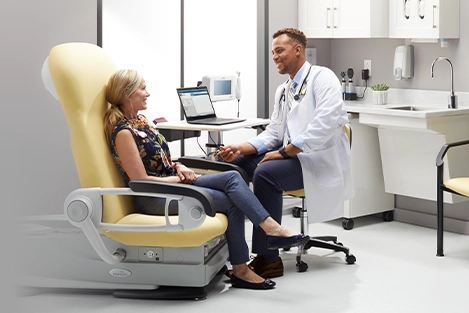
Repeatable point of care acquisition requires more than an FDA-cleared device. It depends on:
- Standardized workflows
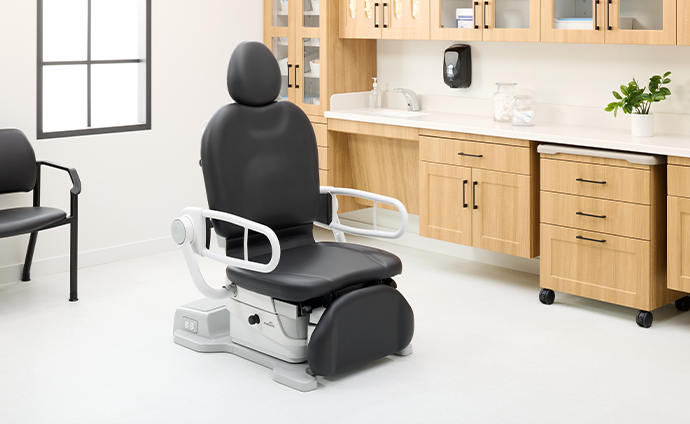
- Appropriate room design
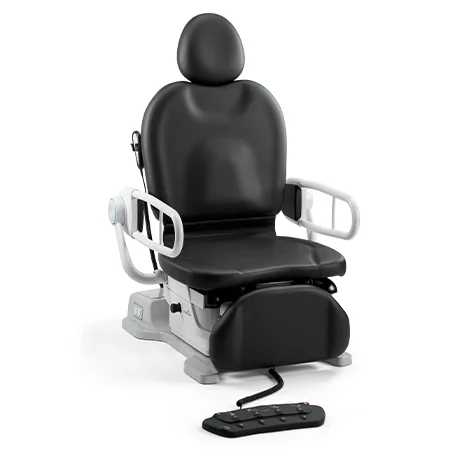
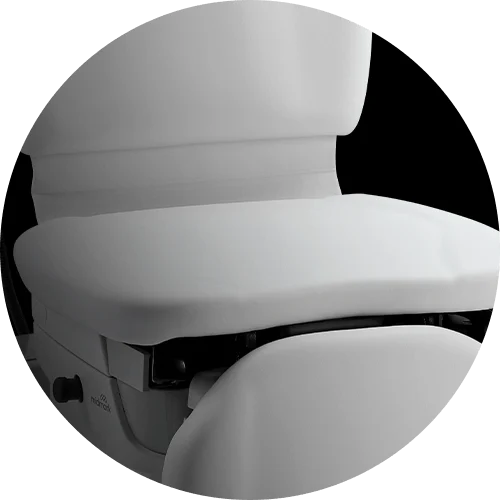
- Positioning support
- Staff training
- Workflow consistency
- Minimized transcription error
- Integration of measurements into the clinical record
These factors influence whether longitudinal trends can be interpreted confidently across fragmented care environments.
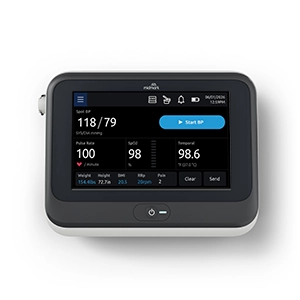
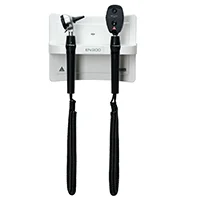
In workflow-focused care environments, integrated point of care systems may help support measurement consistency by reducing manual transcription, standardizing acquisition workflows and improving documentation reliability across encounters.
Common Pitfall: Treating every outlier as disease progression without evaluating acquisition conditions may contribute to unnecessary treatment adjustments.
Beyond Blood Pressure: Repeatability Across Clinical Diagnostics
BP is only one example.
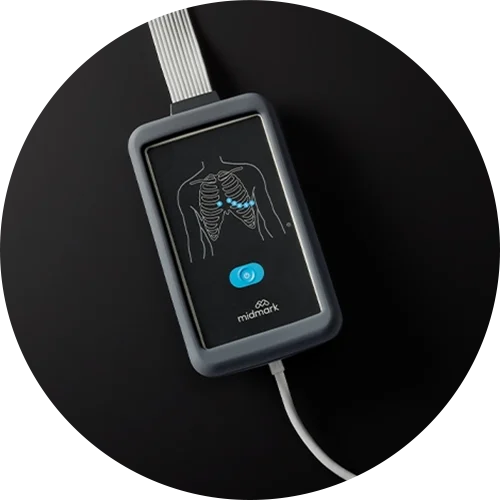
The same principles apply to ECG acquisition where workflow consistency, patient positioning, electrode placement, skin preparation and repeatability can directly influence interpretation and clinical decision-making.
Just as inconsistent BP measurement can complicate longitudinal interpretation, variability in ECG acquisition may also reduce diagnostic confidence and complicate serial comparison over time.
Healthcare’s future will depend not only on interoperability and access to more data, but also on the accuracy, repeatability and trustworthiness of the data entering the system in the first place.
In a longitudinal, outcome-driven healthcare environment, trustworthy clinical data are not produced by devices alone. They depend on point of care ecosystems that support standardized workflows, repeatable acquisition practices and reliable clinical interpretation across the continuum of care.
One of the most important operational questions in modern healthcare may become:
Can clinicians, health systems and care teams trust the data guiding their decisions?
Key Takeaways
- Longitudinal chronic disease management depends on trustworthy and repeatable clinical measurements.
- BP variability may reflect measurement inconsistency as much as true physiologic change.
- Small deviations in positioning and acquisition techniques can meaningfully alter BP readings.
- Inconsistent measurements may contribute to clinicians “chasing the tail” with reactive treatment adjustments.
- More clinical data does not automatically improve decision-making if acquisition practices remain inconsistent.
- Standardized workflows, FDA cleared devices and repeatable point-of-care practices increasingly support data integrity in value-based care.
- The same repeatability principles apply to ECG acquisition and other point-of-care diagnostics measurements.
About the Author
With a background in critical care and trauma nursing and an MBA focused on the medical device industry, I bring both clinical and business perspective to my role. My experience in the ICU and as a care flight nurse reinforced the importance of reliable equipment, standardized processes, and strong clinical judgment in driving patient outcomes. As Clinical Solutions Advisor at Midmark, I partner with customers and cross-functional teams to address complex clinical needs, support product performance, and strengthen clinical alignment across the product lifecycle. I am passionate about the connection between clinical accuracy, workflow, and technology—ensuring healthcare professionals have both the tools and the practical insight needed to deliver high-quality care.