



























How to Reduce Instrument Processing Bottlenecks in Busy Dental Practices

By:
Sr. Marketing Manager, Midmark Dental
April 1, 2026
How to Reduce Instrument Processing Bottlenecks in Busy Dental Practices
In a busy dental practice, instrument processing delays rarely stay contained to the sterilization area. They show up as slower room turnover, instruments that are not ready when needed and team members scrambling to complete procedures on time.
That is what makes bottlenecks so disruptive. The issue is often bigger than one cycle or one piece of equipment. More often, it is the result of small inefficiencies across the full workflow.
When the process is difficult to monitor, standardize or document, delays multiply quickly. The most useful question is not “How do we sterilize faster?” but “What is making instrument processing harder than it needs to be?”
Bottlenecks: Not Just About the Sterilization Cycle
Instrument processing is not just loading, running and unloading the sterilizer. It is a sequence of steps that includes receiving and cleaning, preparation and packaging, sterilization, monitoring, and storage.
Bottlenecks can develop anywhere along that five-step flow, not just at the sterilizer. Common points of friction include:
- Manual cleaning and recordkeeping that demand more teammate attention
- Limited workspace for organizing, inspecting and packaging instruments
- Sterilizers that are too small, too few or difficult to use efficiently
- Improper loading that interferes with steam penetration or drying
- Storage setups that make sterile items slower to retrieve and return to use
Any of these issues can slow turnaround and add pressure to the schedule.
Download the Five-Step Instrument Processing Workflow
Get recommended best practices to help reduce bottlenecks and improve efficiency across your sterilization process.
Reduce Friction Before It Affects the Schedule
Once practices identify where they’re losing time, the next step is to reduce the friction built into daily processes. It usually starts with making the workflow easier to follow and progress easier to see.
A strong approach includes:
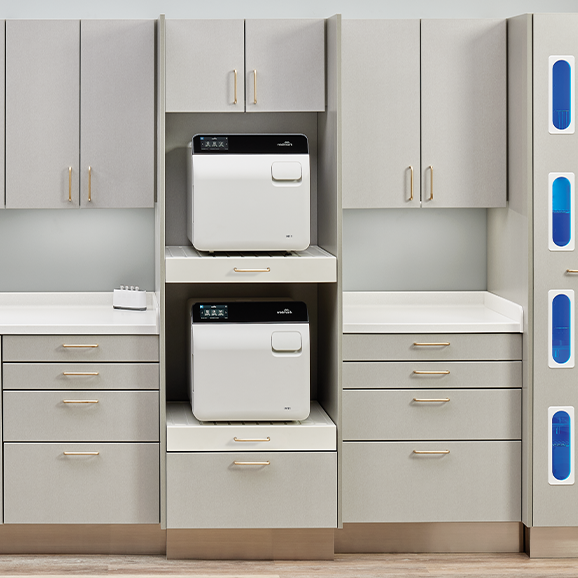
- Designing a sterilization center for one-way flow and enough workspace to perform each step effectively
- Standardizing processes so team members are not relying on memory alone
- Simplifying compliance documentation
- Matching sterilizer capacity to daily instrument demand
- Making the process easier to learn, repeat and support across the team
These changes can support efficiency without encouraging shortcuts. They can also help practices address bottlenecks in a way that feels manageable rather than overwhelming.
The Importance of One-Way Flow and Elbow Room
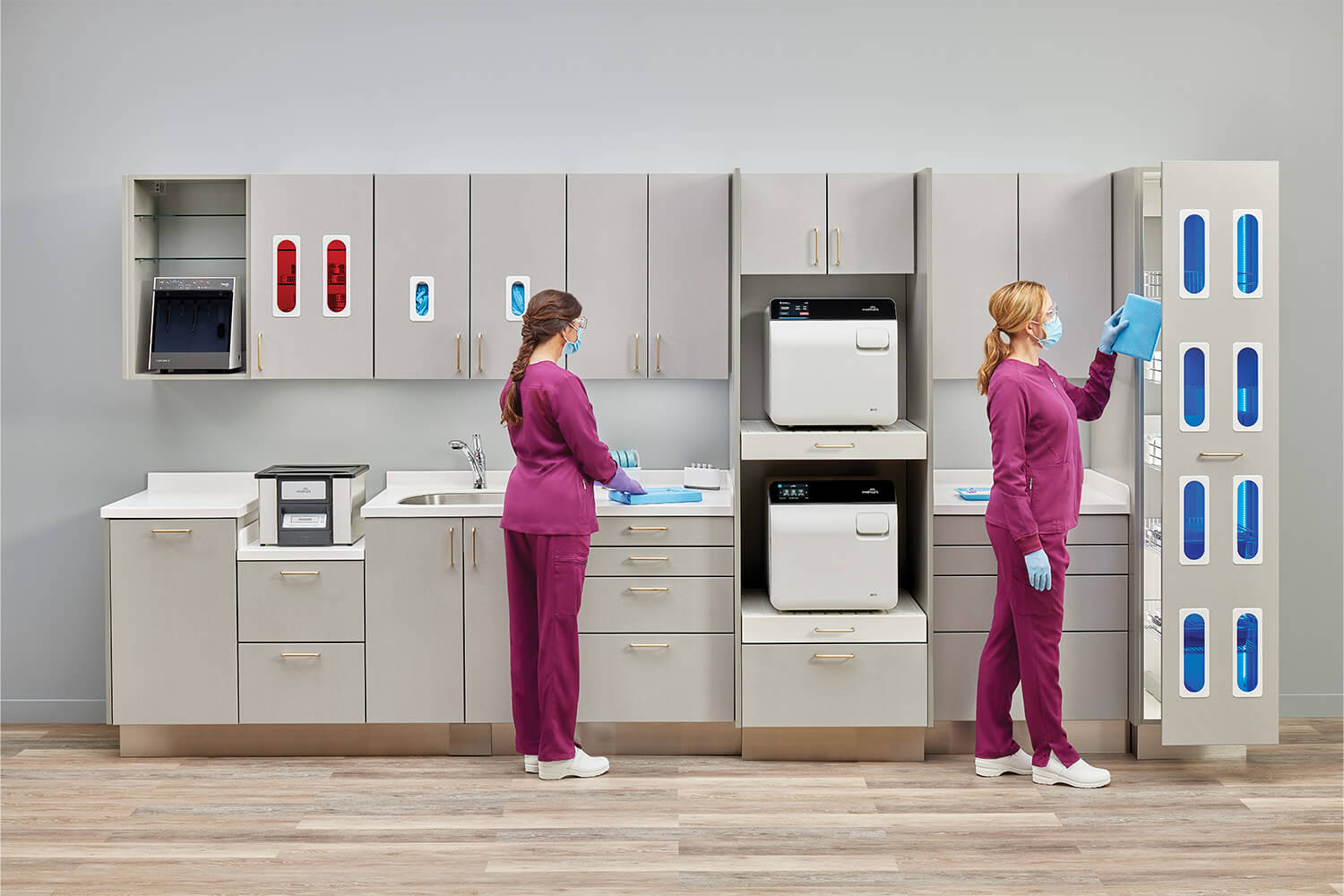
Many sterilization workflows develop around habit rather than intentional design. As a result, team members may double back with instruments, work in tight spaces, or blur the separation between clean and dirty zones.
A sterilization center designed for one-way flow can help improve clarity, reduce extra movement and support more consistent infection prevention practices.
A better setup can help by:
- Creating a clear sequence from dirty to clean zones
- Using visual separation to reinforce proper flow, such as red-tinted windows for contaminated storage and blue-tinted windows for sterile storage
- Reducing unnecessary movement and handoffs
- Providing a well-lit ergonomic space that helps team members work efficiently
Why Simplicity Matters More Than Many Teams Realize
When processes are hard to follow, overly manual or time-consuming to learn, practices may see more delays, more errors and more variability from one team member to the next.
This is where the right sterilizer can make a meaningful difference. Equipment features that can help reduce training burden and streamline operation include:
- On-device tutorials that support onboarding and refresher training
- Onscreen, step-by-step prompts that guide users through the process
- Clear, intuitive touchscreen navigation
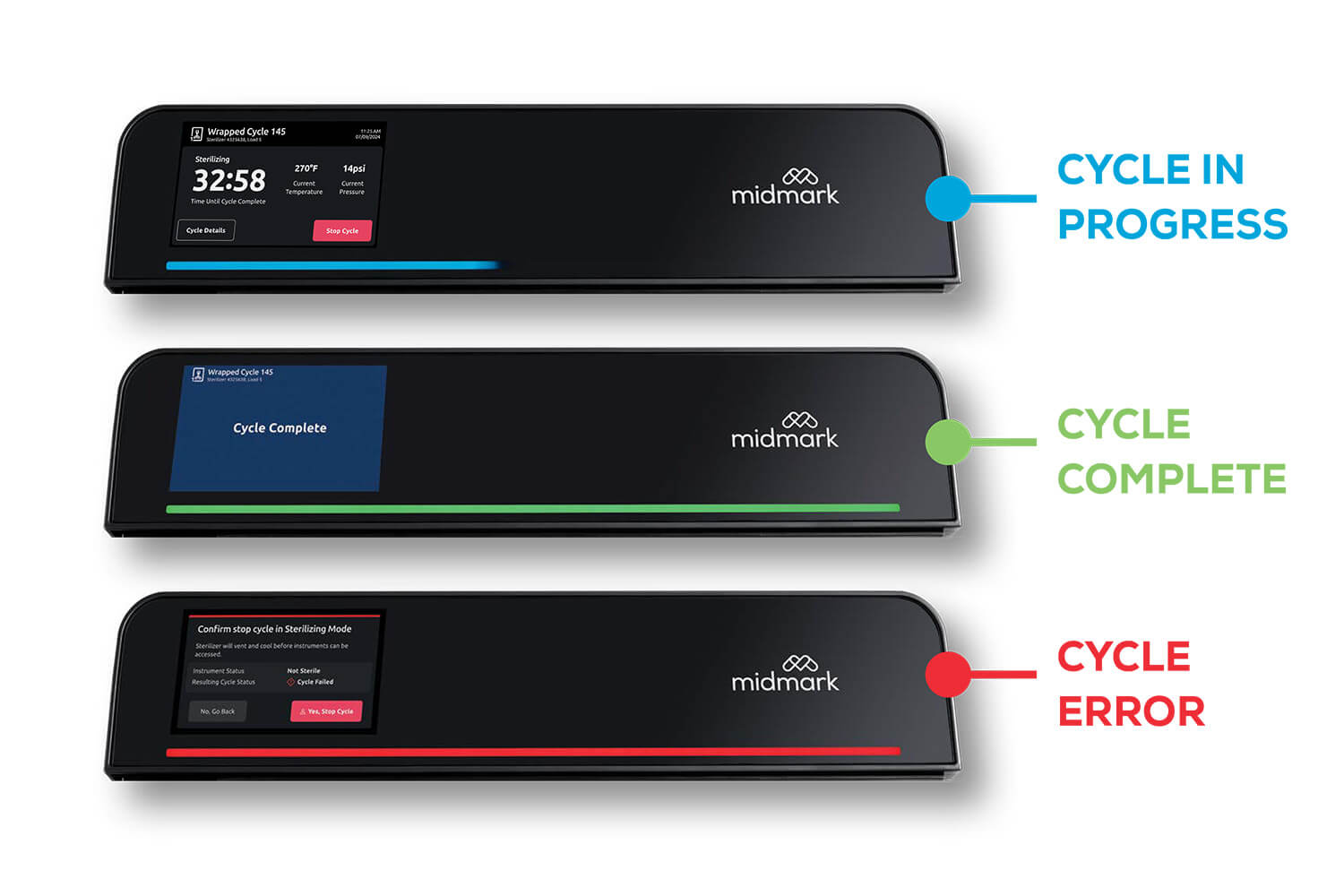
- Visual cues that make cycle status easier to see from a distance
- Audible cues that help the team stay informed without standing nearby for updates
These features don’t just make a sterilizer easier to use. They can help create a more standardized process across the team, which is especially valuable in practices where several people may perform instrument processing throughout the day.
Dry Means Dry: An Easy Way to Avoid Rework
Incomplete drying may not be the first issue practices think about when trying to reduce instrument processing bottlenecks, but it can be a significant source of delay.
Complete drying matters in two places in the five-step workflow:
Step 2: Preparation and Packaging: Instruments must be completely dried after cleaning and before packaging (AAMI, CDC guidance). Residual moisture can interfere with direct steam contact and contribute to wet packs after sterilization.
Step 3: Sterilization: The drying phase at the end of the cycle is not optional and should not be interrupted. Packages must be dry and cool before handling. If a package comes out damp or wet, it is considered contaminated and must be repackaged and re-sterilized.
A damp pack is not just a small technical issue. It requires rework that can lead to:
- Delays in instrument availability
- More pressure on already limited inventory
- Greater risk of schedule disruption if the needed set is no longer ready to use
When practices are tight on throughput or inventory, one wet or questionable pack can create a ripple effect.
Capacity Problems Often Look Like Process Problems
Some bottlenecks are caused simply by expecting too little sterilizer capacity to support too much demand. Practices need their equipment quantity and sizing to reflect the volume of instruments they process.
Questions worth asking include:
- Does current sterilizer capacity match the pace of the practice on busy days?
- Are doctors and hygienists competing for the same instrument availability window?
- Is the team waiting because the process is inconsistent? Or because there is not enough throughput?
If sterilizer capacity seems to be a point of friction, the next question is how much capacity your practice actually needs.
Start by looking at how many doctors and hygienists your practice supports. Then, compare that mix to the Midmark configuration recommendations below.
Choose the Right Capacity
Note: Midmark M11® sterilizers feature an 11-inch chamber, while Midmark M9® sterilizers feature a 9-inch chamber.
| Number of Clinicians | Recommended Number of Sterilizers | Recommended Models of Midmark Sterilizers |
|---|---|---|
| 1–2 Doctors and 2–4 Hygienists | 2 Sterilizers | 2 M11 Sterilizers or 1 M11 Sterilizer and 1 M9 Sterilizer |
| 3 Doctors and 3–5 Hygienists | 3 Sterilizers | 3 M11 Sterilizers or 2 M11 Sterilizers and 1 M9 Sterilizer |
| 4 Doctors and 4–6 Hygienists | 4 Sterilizers | 4 M11 Sterilizers or 3 M11 Sterilizers and 1 M9 Sterilizer |
How the Right Sterilizer Can Help Reduce Bottlenecks
The right sterilizer cannot solve every workflow issue by itself. It can, however, remove several common sources of friction that contribute to bottlenecks.
Midmark M9® and M11® Steam Sterilizers are well positioned to help support busy dental practices through features designed to simplify training, operation and documentation.
Key advantages of these next-generation autoclaves include:
- On-device tutorials that support easier training and cross-training
- Onscreen step-by-step prompts that guide team members through a standardized process
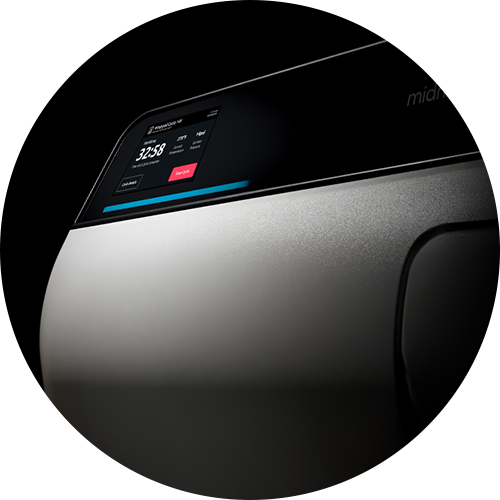
- A color-coded LED status bar and large cycle-countdown clock that offer at-a-glance updates on cycle progress from across the room
- User tracking and cycle records that support traceability if a cycle is interrupted or needs follow-up
- Automated cycle and routine care recordkeeping that can simplify compliance documentation and reduce manual tasks
These features can help practices reduce variability, improve awareness of load status and make it easier for the team to stay on target without adding extra monitoring burden.
A Smart, Big-Picture Way to Think About Bottlenecks
Instead of focusing solely on teammate speed and sterilizer cycle times, practices may get more value from asking what else is creating friction around instrument processing.
For many teams, the biggest issues are not hidden deep inside the sterilization cycle. They are found in the surrounding workflow, equipment setup and manual task burden.
Bottlenecks are more likely when:
- The instrument processing workflow is difficult to standardize
- Equipment capacity does not match the pace of care
- Cycle status is difficult to monitor from a distance
- Documentation depends on manual effort
- Rework creates delays that could have been avoided
When practices address these points of friction all together, they are in a better position to improve throughput, support compliance and keep patient care moving.
Ready to Reduce Bottlenecks in Your Practice?
Midmark product and design experts are ready to help improve your sterilization center setup, meet your equipment capacity needs and simplify sterilization workflows.
Request a product consultation
Schedule a free virtual design appointment