
























Small Design Details That Make a Big Difference in the Operatory: Soft Starts + Stops

By:
Marketing Manager, Midmark Dental
July 6, 2026
In this blog series, we’ll explore small details in equipment design that can have a significant impact on the care experience. Some improve patient comfort, while others support clinical efficiency, ergonomics or asepsis.
In part one, we’ll look at a design detail many patients may never consciously notice—yet it can influence how comfortable, calm and confident they feel from the moment treatment begins.
Movement Sets the Tone for the Appointment
Before treatment begins, patients are already taking in the operatory. Some settle comfortably into the chair. Others grip the armrests, wonder how far back they’ll recline or visibly tense as they prepare for treatment.
They may notice the lighting, the sounds and the way the room feels. They may also notice—without consciously thinking about it—how the dental chair moves.
These details matter because many patients enter the operatory with some level of anxiety. According to a 2025 article from the American Dental Association (ADA), a census-matched JADA study found that 72.6% of surveyed US adults reported being afraid of going to the dentist.
Long before patients evaluate the quality of treatment, they're forming opinions about how comfortable and cared for they feel. For practices focused on creating a positive patient experience, even small design details can help shape that first impression.
The way the chair starts and stops moving is one of those details.
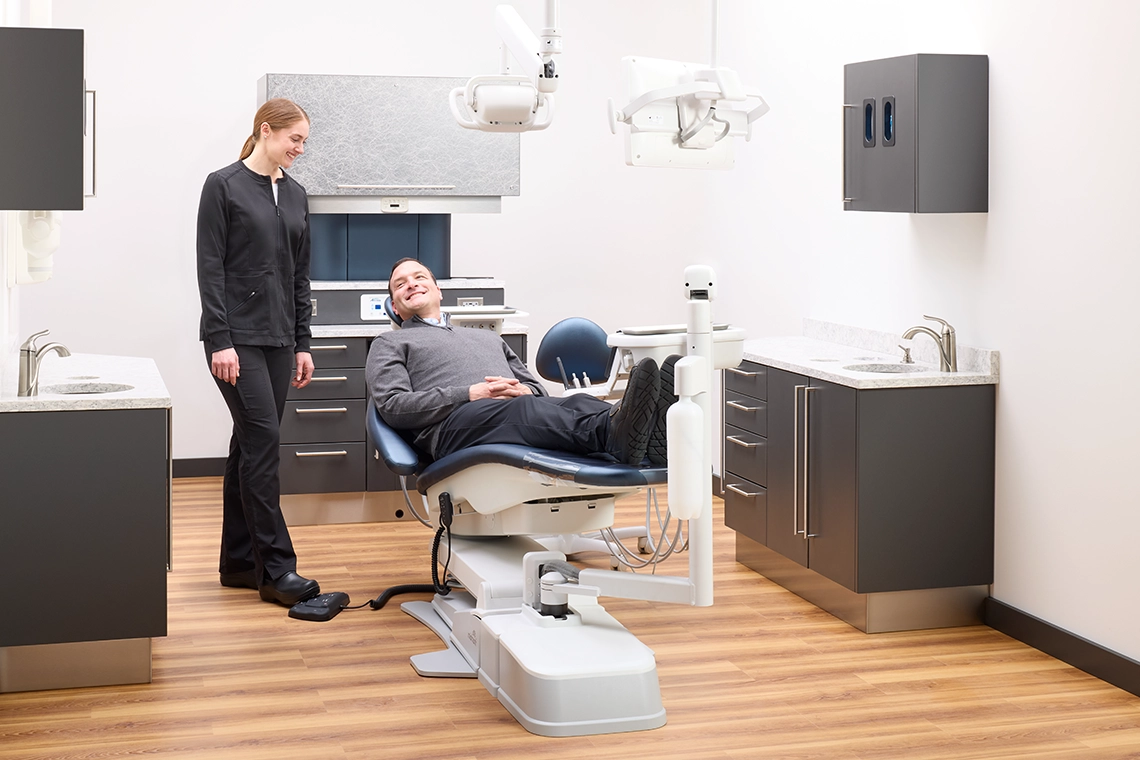
When movement feels smooth and controlled, patients can settle into care with less disruption. When movement feels abrupt or unexpected, it may reinforce tension some patients already feel.
Chair soft starts and stops may seem like a small feature, but it can influence how comfortable, controlled and reassuring the transition to care feels.
Why Soft Starts and Stops Matter
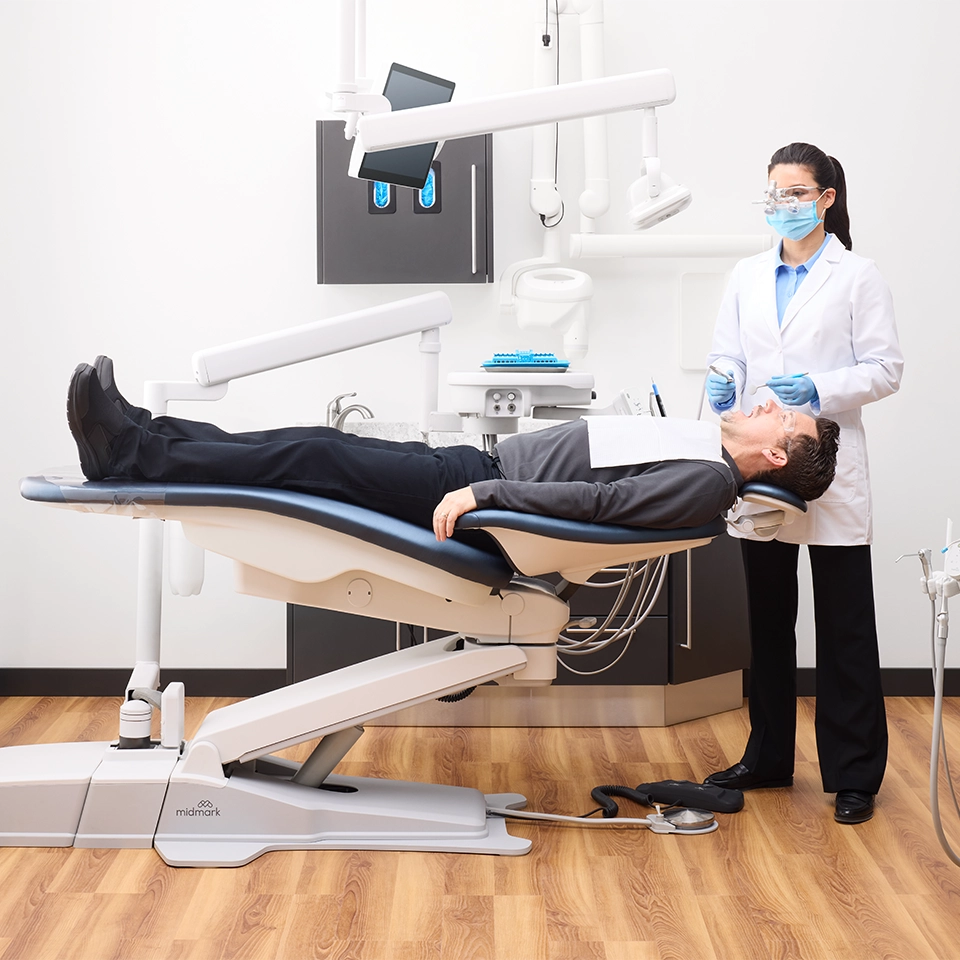
Two chairs can move a patient into the exact same treatment position. One gets there with abrupt starts and stops. The other arrives smoothly and gently. The destination is the same. The experience is not.
Patients may not know what technology is moving the chair. But they know how it feels.
A sudden start or stop can be startling, especially for anxious patients, pediatric patients, older adults or those with mobility concerns. Smoother movement helps reduce that sense of surprise and create a more natural transition as patients are positioned for treatment.
Although chair positioning lasts only a few moments, those moments contribute to the overall perception of care. Smooth movement can help create an environment that feels calm, intentional and focused on patient comfort from the beginning of the appointment to the end.
The Technology Behind Soft Starts and Stops
One way manufacturers create smoother chair movement is through actuator-driven design.
Actuators use electromechanical components to help lift, lower and position the dental chair. Unlike hydraulic systems that can be sensitive to fluid levels, temperature and pressure, actuators convert electrical energy into more controlled mechanical motion.
In practical terms, this type of system can help support smooth, steady chair positioning, reduce sudden jolts and enable soft starts and stops. For patients, controlled movement can help create a smoother, more reassuring transition into care, supporting a more comfortable overall experience.
Beyond Patient Comfort
Patient experience is only one part of the equation. Chair movement also affects the way the dental team works.
Throughout a busy day, clinicians may reposition dozens of patients—from an anxious child to an adult with mobility concerns to a routine hygiene patient. Smooth, controlled actuator-driven movement can help support:
- More precise and predictable patient positioning
- A quieter operatory environment
- A more comfortable and cooperative patient
- Reduced concern about hydraulic fluid leaks
- A more refined experience for both the team and patient
The result of this design is not just a chair that moves. It is a chair that contributes to the rhythm of the operatory.
Midmark Design Detail
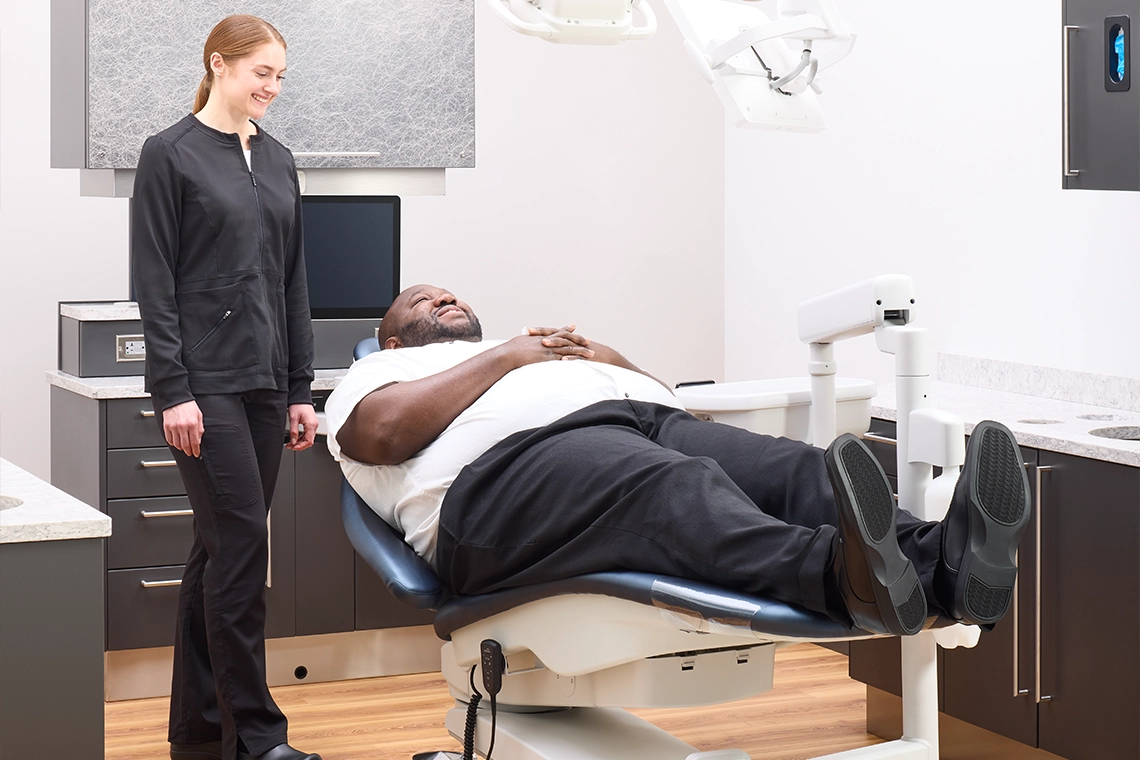
Many actuator-driven chairs are designed to provide smooth movement. The Midmark Dental Chair goes a step further with a soft-start, soft-stop actuator, engineered to maintain consistent movement speed under any patient weight up to 500 lb.
Why does that matter? Consistency helps create a more predictable experience for both the patient and clinical team. Whether positioning a child, an elderly patient or a larger adult, the chair moves with the same grace every time.
Why Consistency Matters
Consistency can be easy to overlook—until it’s missing.
Most clinicians have used equipment that feels slightly different from one patient to the next or one day to the next. Small variations may not stop treatment, but they can create unnecessary distractions throughout the workday.
Gentle, steady chair movement can help create a calmer patient experience, a more polished workflow and a more focused team.
If movement speed, power or sound levels fluctuate under varying operating conditions such as patient weight, clinicians may need to adjust their expectations and workflow throughout the day. Consistent movement helps create a smoother, more predictable experience for both the patient and provider.
The Midmark Dental Chair is designed to maintain consistent movement speed under any patient weight up to 500 lb, helping support predictable positioning and a steadier experience from patient to patient. The result is a chair that feels intentional, refined and dependable throughout the workday.
A Small Detail with a Big Impact
Few clinicians walk into a showroom asking about soft starts and stops. Yet these small movement details influence how nearly every patient feels in the chair and how efficiently clinicians can position patients throughout the day.
In the operatory, meaningful differences are often found in the details. Sometimes, that difference starts with how smoothly the chair moves.
See the Next-Generation Midmark Dental Chair in Motion
The next-generation Midmark Dental Chair is engineered to support patient comfort, ergonomic positioning and clinical efficiency through thoughtful, human-centered design.
Explore how soft-start-and-stop actuator-driven movement, consistent positioning performance and other carefully considered design details can help elevate the care experience for patients and providers.
Interested in learning more about the Midmark Dental Chair or next-generation Midmark Operatory Solutions?
Start a conversation with us today.
Next in the Series
Chair movement is only one example of how thoughtful equipment design can shape the operatory experience. In the next article, we’ll explore how adjustable patient support can elevate patient comfort, positioning and accessibility.