








The Hidden Costs of an Inaccurate BP Reading
Why patient positioning deserves a seat at the Value-Based Care table

By:
Vice President of Clinical Affairs and Chief Medical Officer












We See It

Rethinking the Exam Room - AIA Credit

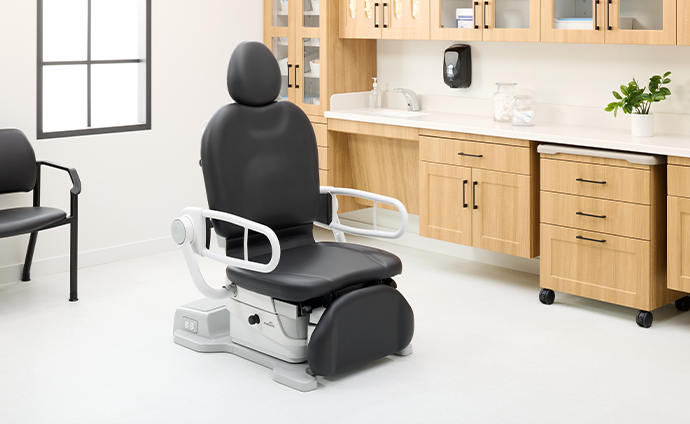
The right procedure room equipment can make a crucial difference in both patient outcomes and caregiver safety. Particularly for patients...
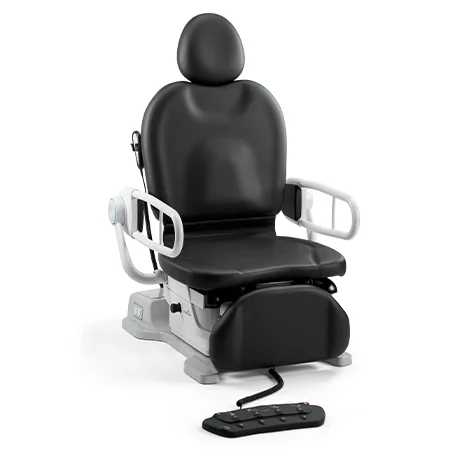
Explore the 631 Procedure Chair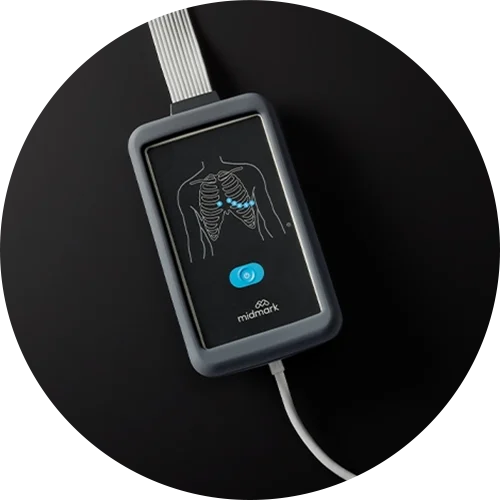
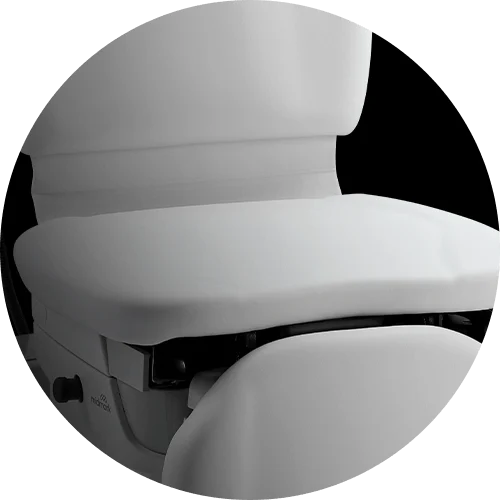
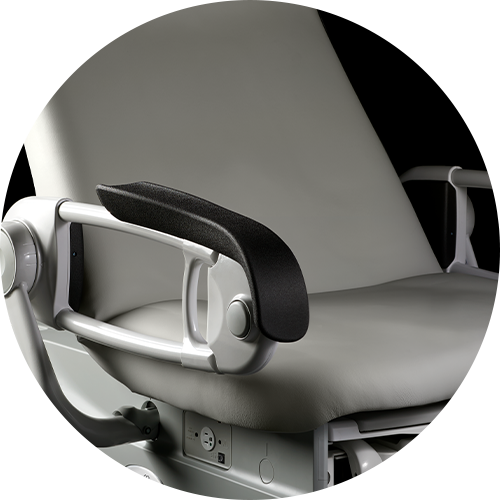










Why patient positioning deserves a seat at the Value-Based Care table
By:
Vice President of Clinical Affairs and Chief Medical Officer
When people weigh themselves, they typically do so under consistent conditions—first thing in the morning, after using the restroom and before eating breakfast. They understand that body weight fluctuates throughout the day based on hydration and food intake. Likewise, no one expects a respiratory rate measured immediately after climbing several flights of stairs to reflect a person’s resting physiology. Blood pressure (BP) deserves the same perspective.
The cardiovascular system is designed to respond continuously to the body’s changing demands. More than a century ago, Ernest Starling described how the heart adjusts its performance on a beat-to-beat basis to match venous return. As activity increases, cardiac output rises and BP increases to meet the metabolic demands of working tissues. Even something as simple as climbing stairs or active listening and talking during measurement can transiently increase BP. These changes are not signs of disease—they are normal physiology. The goal of measuring BP is not to capture expected physiologic fluctuations or the highest or lowest value a patient experiences. It is to estimate resting cardiovascular risk. That objective can only be achieved when measurements are obtained under standardized conditions that minimize temporary physiologic influences.
We intuitively understand this principle in other areas of medicine. No clinician would diagnose rapid weight gain based on an evening measurement alone. Context matters because physiology is dynamic. Yet BP—despite being one of the strongest predictors of stroke, myocardial infarction, heart failure, chronic kidney disease and premature death—is often measured without the same attention to context.
The importance of proper technique is no longer based solely on expert consensus. The CORRECT BP study, published in The Lancet eClinicalMedicine, demonstrated that routine office measurements using common shortcuts consistently produced higher readings than those obtained using American Heart Association (AHA) recommended technique. Patients who were measured under standardized conditions, including five minutes of quiet rest, proper positioning, arm supported with cuff at heart level, appropriate cuff size and no conversation had significantly lower BP than those measured under typical clinical conditions. The difference was clinically meaningful with 7 mmHg systolic and 4.5 mmHg diastolic lower readings when proper measurement protocols were followed. The investigators estimated that proper technique alone could reclassify millions of adults from having hypertension to not having hypertension—avoiding unnecessary medications, follow-up visits and years of inappropriate treatment.
These findings are not a critique of clinicians. They reflect the realities of modern healthcare delivery. Clinical workflows are increasingly compressed and care teams are asked to do more in less time. Standardized BP measurement has often become an unintended casualty. But physiology does not adapt to workflow. Shortcuts may save minutes, but they increase the likelihood that the measurement reflects recent activity rather than true baseline, or ‘resting’ cardiovascular status. That distinction has consequences far beyond the exam room.
BP is one of the most consequential measurements in healthcare. It drives decisions to diagnose hypertension, initiate or intensify medication, order laboratory testing, schedule follow-up visits and assess long-term cardiovascular risk. If the initial measurement is biased, every downstream decision inherits that bias. An artificially elevated systolic pressure of just 10–15 mmHg—well within the range caused by poor positioning or conversation—can change treatment decisions. Notably, this magnitude of error is comparable to the average reduction achieved with many antihypertensive medications.
The implications are especially important in value-based care. Alternative payment models reward organizations for improving outcomes while reducing unnecessary utilization and total cost of care. BP control is a cornerstone quality metric across Medicare Shared Savings Programs, Medicare Advantage, HEDIS measures, commercial value-based contracts and CMS reporting programs. These models assume that the clinical data guiding decisions accurately reflect the patient’s condition.
When that assumption fails, so does the value equation. Falsely elevated readings can lead to unnecessary medications, additional office visits, laboratory testing, medication-related adverse events and avoidable spending. Falsely reassuring readings may delay diagnosis and treatment, allowing cardiovascular risk to accumulate until patients present with preventable complications such as stroke, heart failure, myocardial infarction or chronic kidney disease. Both scenarios undermine quality, increase costs and make it more difficult for organizations to succeed under value-based payment models.
Perhaps the most compelling aspect of this issue is its simplicity. Healthcare organizations invest heavily in analytics, remote monitoring, care management and advanced technologies to improve chronic disease outcomes. Yet one of the highest-value interventions requires no new technology or capital investment. It simply requires measuring BP correctly within the right exam room configuration.
Supporting the patient’s back, placing both feet flat on the floor, uncrossing the legs, positioning the arm with cuff at heart level, allowing five minutes of quiet rest and avoiding conversation are small actions that significantly improve measurement accuracy. The return on that investment is not just better readings—it is better clinical decision-making.
As healthcare continues its transition from paying for volume to paying for value, the accuracy of foundational clinical data becomes increasingly important. BP is more than another vital sign documented before the physician enters the room. It is the more important measurement for diagnosing and managing the world’s leading modifiable risk factor for cardiovascular disease.
In value-based care, better decisions begin with better measurements. Ensuring proper patient positioning before measuring BP is not a procedural detail—it is an investment in better outcomes, lower costs and higher-value care.
As Vice President of Clinical Affairs and Chief Medical Officer for Midmark Corporation, Dr. Tom Schwieterman has a profound understanding of the trends and issues driving the healthcare industry through significant change and evolution. His experience as a private practice physician for 12 years in a rural community gives him a unique perspective on problems and opportunities facing physician practices, especially at the point of care. “Dr. Tom” helps lead the company’s focus on innovative technology and new approaches that enrich experiences between caregivers and their patients at the point of care. Much of his time is focused on advising the development of clinical solutions, recognizing and understanding market trends, monitoring and providing insight on government regulations, and identifying and quantifying new innovations in the medical, dental and animal health markets. He also targets optimal ways health information technology can improve caregiver efficiency and patient outcomes. Dr. Tom holds a Bachelor of Science in software engineering from Miami University, Ohio, a Doctor of Medicine degree from The University of Cincinnati College of Medicine and a Master of Business Administration from Xavier University. He is board certified in family practice.