




Accessible Exam and Procedure Chairs: What Healthcare Organizations Should Look for After the 2026 MDE Deadlines

By:
Marketing Manager, Midmark Medical












We See It
Rethinking the Exam Room - AIA Credit
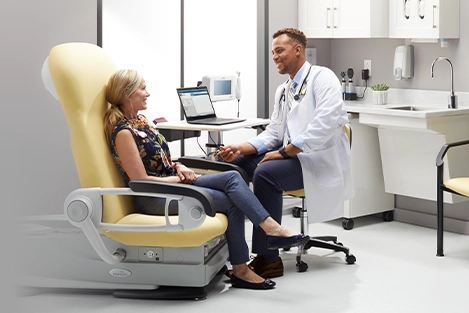
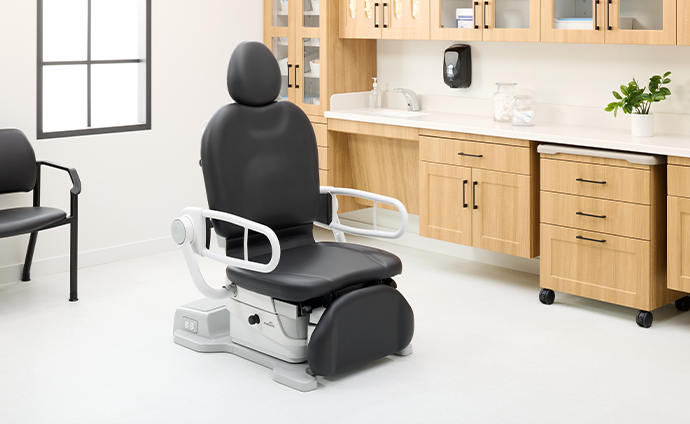
The right procedure room equipment can make a crucial difference in both patient outcomes and caregiver safety. Particularly for patients...
Explore the 631 Procedure Chair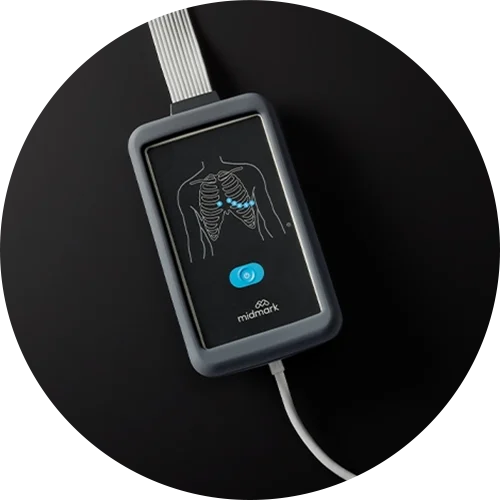










By:
Marketing Manager, Midmark Medical
The 2026 enforcement deadlines for accessible medical diagnostic equipment (MDE) have passed. For healthcare organizations subject to the requirements, the important question is: What does accessible equipment look like in everyday care?
Any discussion of accessible MDE is shaped by two recent government enforcements. First, on July 8, the US Department of Health and Human Services (HHS) enforcement deadline passed requiring healthcare facilities that receive federal financial assistance, such as Medicare, Medicaid, or other funding from the HHS, to acquire at least one compliant exam chair and one compliant wheelchair scale per facility.1
Second, on August 9, the US Department of Justice (DOJ) enforcement deadline passed requiring state and local government healthcare facilities covered under Title II of the Americans with Disabilities Act (ADA) to acquire at least one compliant exam chair and one compliant wheelchair scale per facility.2
Selecting an accessible exam or procedure chair involves more than meeting a requirement. Equipment configuration, room placement and staff readiness can all influence whether equipment supports accessibility at the point of care. For healthcare organizations evaluating equipment after the 2026 deadlines, here are five considerations to help guide your decision.
Consider a routine exam or procedure from the perspective of a patient with mobility limitations. The transfer surface of a traditional fixed-height examination is typically 33 inches tall. For a patient with a mobility limitation, safely getting onto the surface can become a barrier. The patient may need caregiver assistance or a mechanical lift and, in some cases, difficulty accessing the equipment can interfere with the examination itself.
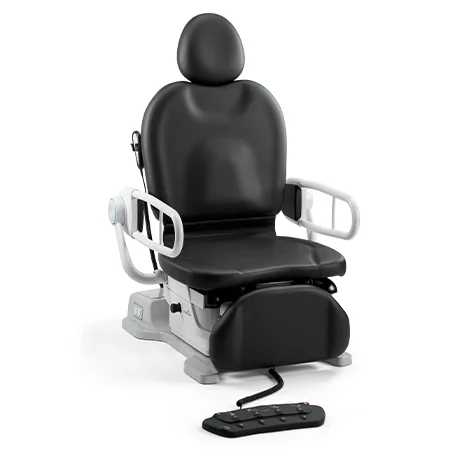
A height-adjustable examination or procedure chair can create a lower transfer point before raising the patient to a more appropriate working height for the caregiver. To address this problem, the Ritter® 228 and 229 Barrier-Free® Examination Chairs lower to a 17-inch seat height and raise to 37 inches. The Midmark® 626 Barrier-Free Examination Chair lowers to 15.5 inches and raises to 37 inches. And the Midmark® 631 Procedure Chair lowers to 17 inches and raises to a maximum height of 39 inches.
Offering that height range helps address two needs within the same care encounter: improving patient access during transfer and positioning the patient at a more ergonomic working height for the caregiver. Choosing height-adjustable examination equipment rather than fixed-height equipment can reduce caregivers’ perceived physical exertion by as much as 95% to 98%.3
Low transfer height is important, but it is only one component of an accessible exam or procedure chair.
Healthcare organizations evaluating equipment should consider the complete patient transfer and positioning experience, including:
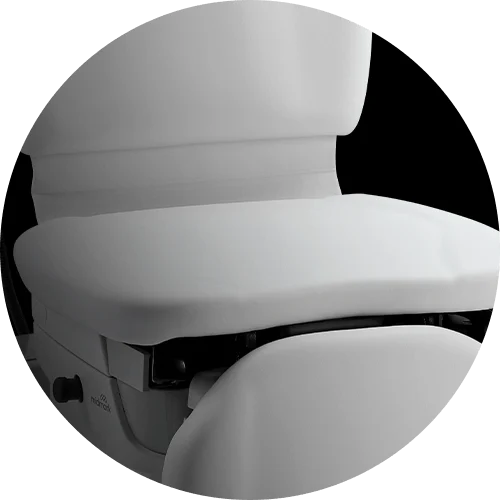
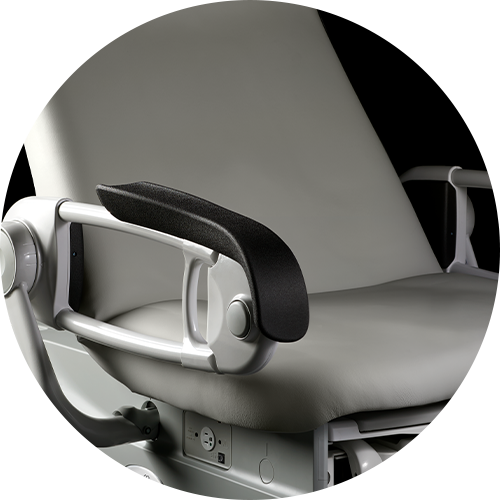
The Ritter 228 and 229 provide a 28-inch-wide compliant transfer surface, while the Midmark 626 and 631 provide a 28-inch or 32-inch-wide surface. Patient Support Rails and Patient Support Rails Plus from Midmark provide a USAB-compliant gripping surface for patients entering, exiting or repositioning on the chair.
For lower-body examinations and procedures where stirrups are used, USAB-compliant Articulating Knee Crutches are also available to support the patient's thigh, knee and calf.
The important distinction for buying committees is that an exam or procedure chair should be evaluated as a complete package. A single feature does not necessarily determine whether the equipment meets the applicable accessibility requirements.
As accessibility becomes part of routine capital planning, procurement teams can benefit from a consistent set of evaluation criteria.
Before selecting an accessible examination or procedure chair, ensure its available configurations address these key questions:
These questions shift the purchasing conversation from identifying accessible chairs to identifying the necessary configurations to achieve compliance. Some chairs may require accessories to achieve compliance, further complicating the purchase decision. This distinction becomes particularly important for health systems and multi-site organizations working to standardize purchasing decisions across different specialties and care environments.
Even appropriately configured equipment can fall short of its purpose if patients cannot readily access it.
Consider what happens after an accessible examination or procedure chair arrives at the facility. Where will it be located? Which patients will need it? Do schedulers know which rooms have accessible equipment? Can staff operate the chair and assist with patient transfers?
Healthcare organizations should consider accessibility as part of the broader care environment:
For large health systems, community health centers and multi-site facilities, this can require coordination among clinical leadership, facilities, procurement, compliance, finance and risk management.
An equipment inventory can provide a useful starting point. Understanding where equipment is located, how it is configured and where replacement needs exist can help providers prioritize future investments rather than addressing accessibility one purchase at a time.
Healthcare organizations should also understand the difference between the accessibility standards being enforced today and newer standards that could influence future equipment planning.
The HHS and DOJ requirements addressed in this summer’s enforcement deadlines are based on the 17 to 19-inch low transfer height required by the 2017 USAB Standards. New USAB standards were established in 2024, recommending a new low transfer height of 17 inches.4 5 The HHS and DOJ have not yet adopted this recommendation but have signaled their intent to adopt it in the future.
The Midmark 631 and Ritter 228 and 229 lower to 17 inches while the Midmark 626 lowers to 15.5 inches. As a result, all four address the 17-inch low transfer height established in the 2024 USAB Standards while also offering configurations designed to comply with the currently enforced requirements.
For healthcare organizations planning replacements, renovations or new facilities, looking beyond the immediate purchasing need can help create a more consistent accessibility strategy over time.
The HHS and DOJ enforcement deadlines brought greater urgency to accessible MDE. The next step is making accessibility part of how healthcare organizations evaluate equipment and design care environments. An accessible exam or procedure chair should support patient transfer, work with the appropriate supports and accessories, fit into the clinical environment and be available when patients need it.
The Midmark 626, 631 and Ritter 228 and 229 offer configurations designed to help providers address these considerations while prioritizing patient access and caregiver ergonomics. Explore patient accessibility resources, Barrier-Free® examination chairs and the 631 Procedure Chair to better understand equipment requirements and solutions for your care environment.
To learn more, visit https://www.midmark.com/medical/products/barrier-free-examination-chairs and https://www.midmark.com/medical/products/power-procedures-chairs/detail/midmark-631-procedure-chair.
Sources: