




Accurate BP Takes More Than Training: Why Workflow Design Matters

By:
Vice President of Clinical Affairs and Chief Medical Officer












We See It
Rethinking the Exam Room - AIA Credit
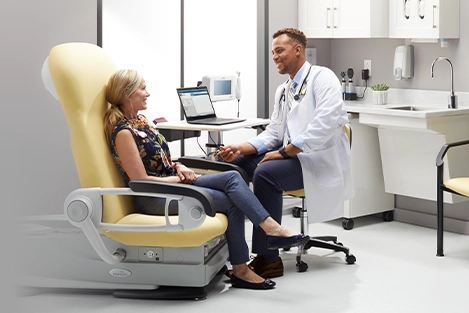
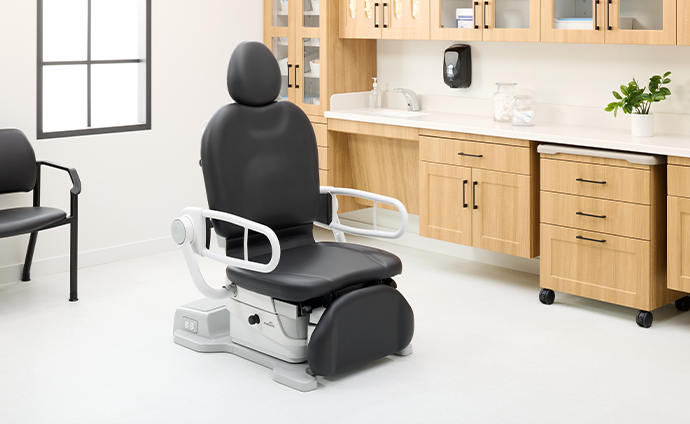
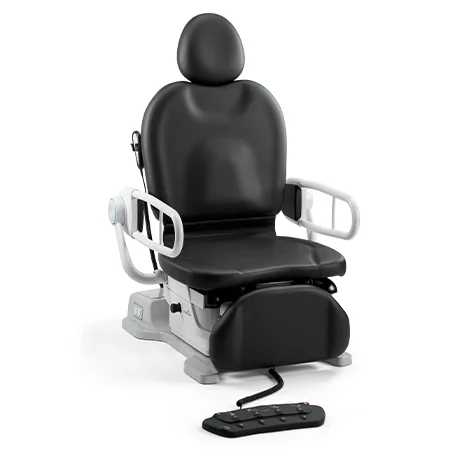
The right procedure room equipment can make a crucial difference in both patient outcomes and caregiver safety. Particularly for patients...
Explore the 631 Procedure Chair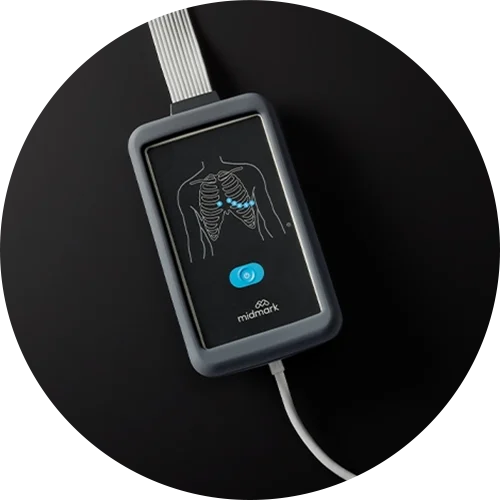










By:
Vice President of Clinical Affairs and Chief Medical Officer
Consider a patient presenting to a clinic with symptoms suggestive of a cardiac event. The nurse feels pressured to complete the ECG quickly and hastily places the leads on an unprepared chest without confirming proper patient positioning or instructing the patient to remain still and breathe quietly. The resulting tracing may be poor quality and unreliable for clinical decision-making, requiring the ECG to be repeated with proper patient preparation, positioning and lead placement.
Yet during too many patient visits today, blood pressure (BP) is measured under similarly compromised conditions. Clinicians feeling pressure to keep intake moving may shorten patient preparation, accept improper positioning or take the measurement while the patient is talking. These may seem like minor deviations, but clinical studies have established that they can materially affect the resulting BP.
We would not accept an ECG acquisition process that routinely violated the conditions necessary for a valid tracing. Why are we more tolerant of this with BP?
The problem is not simply one of clinical training. If accurate BP measurement depends primarily on clinicians doing extra steps to overcome a poorly designed environment, inconsistency is inevitable. The workflow itself should support the correct technique.
The importance of standardized BP measurement is not new, but it received renewed attention following the SPRINT trial and continues to be emphasized in the 2025 American College of Cardiology (ACC)/American Heart Association (AHA) Guideline for the Prevention, Detection, Evaluation and Management of High Blood Pressure in Adults. Published in 2015, SPRINT used a highly standardized BP measurement protocol that included proper patient positioning, an appropriate cuff size, five minutes of quiet rest and automated measurement. SPRINT helped reinforce an important principle that remains relevant today: the BP values used to inform clinical decisions are only meaningful when we consider how those values are obtained.
A 2023 randomized study, Comparison of Outcomes for Routine versus American Heart Association-Recommended Technique for Blood Pressure Measurement (CORRECT BP), conducted at The Ohio State University, demonstrated just how consequential patient positioning can be. Investigators compared BP measurements obtained on a typical fixed-height examination table with measurements obtained using AHA-recommended positioning with the patient’s feet flat on the floor, back supported and arm supported with the cuff at heart level. Measurements taken on the examination table averaged 7.0 mmHg higher systolic and 4.5 mmHg higher diastolic. Both differences were highly statistically significant.
The magnitude of this effect is clinically meaningful. A positioning-related difference of this size could move a patient’s recorded systolic BP from the 130s into the 140s. Improper positioning does not simply introduce random variation; it can systematically alter the BP value upon which diagnosis and treatment decisions are based.
A reliable BP workflow starts with the fundamentals: a validated device, appropriately sized cuff, supported back and feet, measurement arm supported with the cuff at heart level and minimal conversation during measurement. Repeat and average readings when indicated.
We often think of an inaccurate BP as a measurement problem. But once that number enters the medical record, it becomes a clinical problem.
Consider a BP documented as 146/88 mmHg. The clinician may not know whether that value reflects the patient’s physiology or the conditions under which it was measured. Was the patient given time to rest? Were the feet, back and arm supported? Was the correct cuff used? Was the patient talking?
That context is rarely visible in the medical record. The number becomes data and may influence diagnosis, medication decisions, follow-up intervals and assessments of BP control.
This is particularly problematic with BP because an improperly obtained measurement may give the clinician no obvious indication that anything went wrong during acquisition. By the time the clinician sees the patient, the measurement technique has disappeared and only the result remains. A value of 146/88 obtained under ideal conditions looks exactly like a value of 146/88 obtained with the patient’s feet dangling, arm unsupported and immediately after walking into the examination room.
The chart preserves the number, but often not the context needed to determine how much confidence to place in it. Once measurement error enters the medical record, it can become clinical decision-making error.
BP measurement is often treated as an assumed capability for most care team members. Clinical leaders may teach the correct technique but devote less attention to whether the environment and workflow consistently allow that technique to be followed.
Even a well-trained clinical team works within the constraints of the environment around them. When examination rooms make it difficult to support the patient’s feet, back and arm correctly, the clinician must compensate and variation in technique becomes much more likely.
Training is important to ensure care teams know the correct protocols. Workflow design and the right equipment make the correct process repeatable.
The realities of ambulatory practice cannot be ignored. Care teams are managing increasingly complex patients within compressed visit schedules and simply adding more steps to the rooming process is unlikely to produce sustainable change. Current guidelines continue to emphasize standardized patient preparation as part of accurate office BP measurement. The 2025 ACC/AHA guideline reinforces the use of a validated device, an appropriately sized cuff, proper patient positioning and multiple readings to support accurate measurement and clinical decision-making.
At the same time, emerging evidence is examining whether selected elements of the traditional measurement process can be streamlined in primary care. A 2026 review published in Hypertension evaluated evidence for reducing or eliminating the traditional pre-measurement rest period. The authors reported that, among individuals with systolic BP below 140 mmHg, measurements obtained after 0–2 minutes of rest differed by less than 2 mmHg from measurements obtained after five minutes of rest. Based on the evidence reviewed, the authors proposed that the rest period may be reduced or eliminated as part of a streamlined screening approach.
Importantly, this represents an evidence-based proposal for streamlining—not a change to current ACC/AHA guideline recommendations. The review also emphasizes that other elements of proper BP measurement should be preserved, including correct cuff sizing, arm support and proper patient positioning.
This is precisely why workflow design matters. The objective should not be to abandon recommended technique because the clinic is busy. It should be to design workflows that make the foundational elements of accurate BP measurement practical and repeatable while evidence continues to evolve around where the process may safely be streamlined.
The fundamentals of accurate BP measurement remain straightforward: use a validated device and appropriately sized cuff; support the patient’s back and feet; support the measurement arm with the cuff at heart level; and minimize conversation and other factors that can influence the measurement.
The question is not whether we know how to measure BP correctly. The question is whether we have designed the clinical environment to make these conditions practical and repeatable during everyday patient care.
If the examination chair is too high for the patient’s feet to reach the floor, the care team must find a footstool or another workaround. If there is no convenient way to support the arm at heart level, the clinician or patient must improvise. If the appropriate cuff is stored somewhere else, obtaining it becomes another step in an already compressed intake process. Each workaround creates another opportunity for recommended technique to be abbreviated or skipped.
A well-designed workflow should also define what happens after the initial measurement. If the first BP is elevated, the response should not depend on who happens to be rooming the patient that day. The 2026 review also proposes a streamlined approach in which repeat measurements are reserved for patients whose initial reading is elevated. The specific protocol may vary, but the important point is that the response to an elevated initial reading should be standardized rather than improvised.
Automation can standardize important elements of BP acquisition, but it cannot compensate for a patient whose feet are dangling, whose arm is unsupported or whose cuff is incorrectly sized. Once an appropriately obtained measurement has been acquired, connectivity can transfer the result directly into the electronic medical record, reducing another potential source of human error: manual transcription.
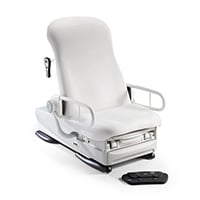
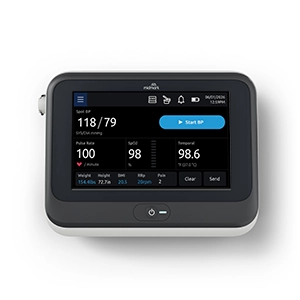
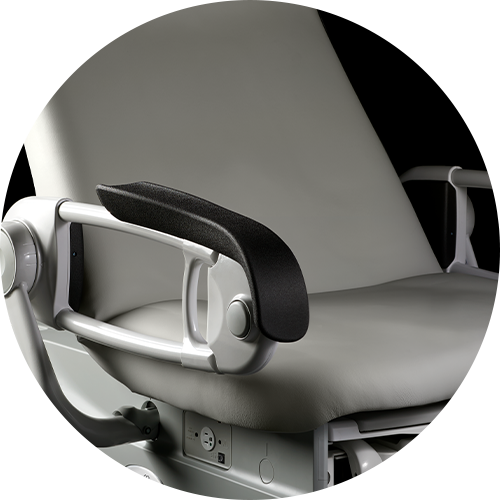
Technology becomes valuable when it removes unnecessary steps, reduces opportunities for variation and makes adherence to the desired clinical process easier. This design philosophy is reflected in Midmark’s Better BP® approach. Examination chairs designed to facilitate feet-flat, back-supported and arm-supported positioning can reduce the need for workarounds. Automated BP devices can help standardize acquisition, while EMR connectivity can transmit the measurement into a compatible electronic medical record. Rather than asking the clinician to compensate for the environment, the environment is designed around the clinical objective.
A useful exercise for any practice is to observe how BP is actually measured—not how the protocol says it should be measured.
During intake, ask:
Each workaround or source of variation is an opportunity to redesign the workflow.
Efficiency and clinical quality should not be competing objectives. The best clinical workflows accomplish both. Training remains essential, but education should not have to compensate continuously for an environment that makes best practice difficult. The question for clinical leaders, then, may not be whether their teams know how to take a blood pressure correctly. It may be whether their clinical environment makes it easy for them to do so—every patient, every time.
As evidence around streamlined BP measurement continues to develop, clinical leaders have an opportunity to evaluate both technique and workflow. The goal is not simply to collect a BP more efficiently. It is to make a properly obtained, clinically useful measurement easier to reproduce during everyday care.
As Vice President of Clinical Affairs and Chief Medical Officer for Midmark Corporation, Dr. Tom Schwieterman has a profound understanding of the trends and issues driving the healthcare industry through significant change and evolution. His experience as a private practice physician for 12 years in a rural community gives him a unique perspective on problems and opportunities facing physician practices, especially at the point of care. “Dr. Tom” helps lead the company’s focus on innovative technology and new approaches that enrich experiences between caregivers and their patients at the point of care. Much of his time is focused on advising the development of clinical solutions, recognizing and understanding market trends, monitoring and providing insight on government regulations, and identifying and quantifying new innovations in the medical, dental and animal health markets. He also targets optimal ways health information technology can improve caregiver efficiency and patient outcomes. Dr. Tom holds a Bachelor of Science in software engineering from Miami University, Ohio, a Doctor of Medicine degree from The University of Cincinnati College of Medicine and a Master of Business Administration from Xavier University. He is board certified in family practice.