





























Dirty-to-Clean Flow: The Clinical Foundation of Safe Instrument Processing

By:
Marketing Manager, Midmark Medical
August 18, 2026
Every reusable instrument follows a journey before it can be safely used on the next patient. When that journey is interrupted by poor room design, inconsistent processes or unnecessary crossover between clean and contaminated items, patient safety and operational efficiency can be compromised.
For healthcare professionals, a standardized dirty-to-clean workflow helps reduce variability and maintain infection prevention practices. For healthcare leaders and purchasing teams, it provides a framework for evaluating equipment and workspace design that supports long-term clinical and operational goals.
An effective instrument processing workflow helps organizations:
- Support patient and staff safety
- Reduce opportunities for cross-contamination
- Improve consistency across care teams
- Enable efficiency and compliance efforts
Why Dirty-to-Clean Flow Matters
Dirty-to-clean flow is a foundational principle of effective instrument processing. Each stage of reprocessing builds on the previous one, and a breakdown at any point can compromise the integrity of the entire flow. Moving from contaminated receiving through cleaning, sterilization and sterile storage helps reduce the risk of cross-contamination while promoting consistency, especially when you stay in a designated processing area. This aligns with the CDC recommendation that teams “perform most cleaning, disinfection, and sterilization of patient-care devices in a central processing department in order to more easily control quality.”1
A standardized workflow also helps minimize unnecessary instrument handling and reduce variation between staff members, shifts and locations. When every team member follows the same flow, organizations are better positioned to support infection prevention efforts, streamline training and improve day-to-day operational efficiency.
The Five Essential Steps of Instrument Processing
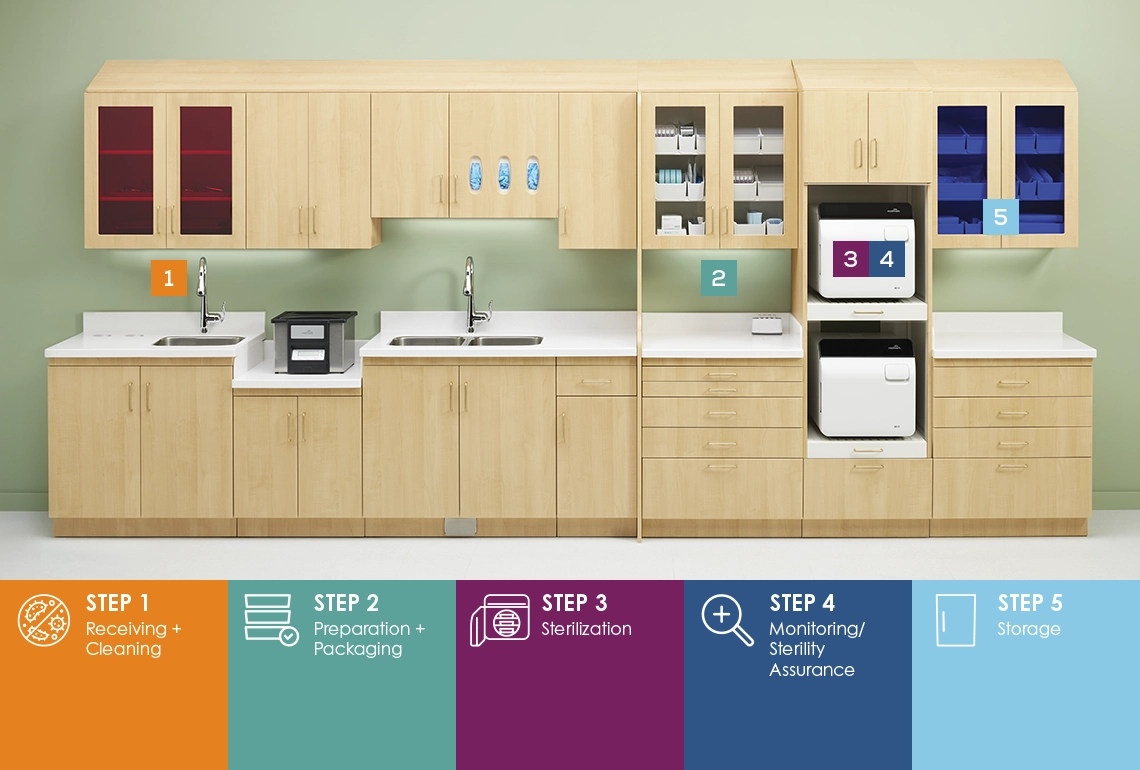
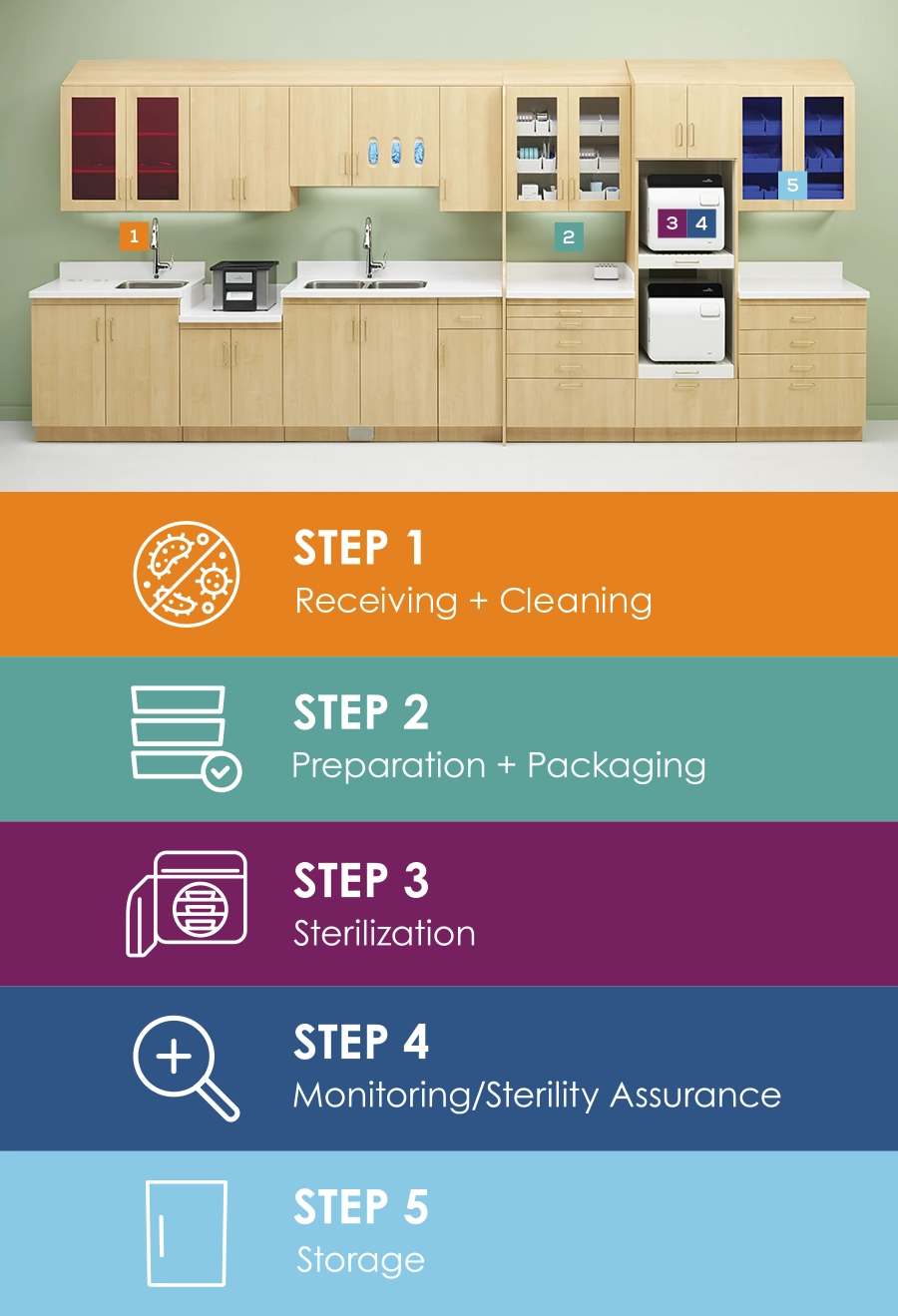
A successful sterile processing workflow depends on maintaining a clear progression from contaminated instruments to sterile storage. To ensure best practices, make sure to remove gross soil at the point of use in the exam room. This should be done prior to practicing the five step Midmark instrument processing framework:
Receiving + Cleaning
Reusable instruments should be received, cleaned and disinfected in a designated contaminated area. Effective cleaning removes debris before sterilization and establishes the foundation for each subsequent step.Preparation + Packaging
After cleaning, dried instruments should be inspected for cleanliness and damage before being assembled into sets or packaged according to manufacturer instructions for use (IFUs).Sterilization
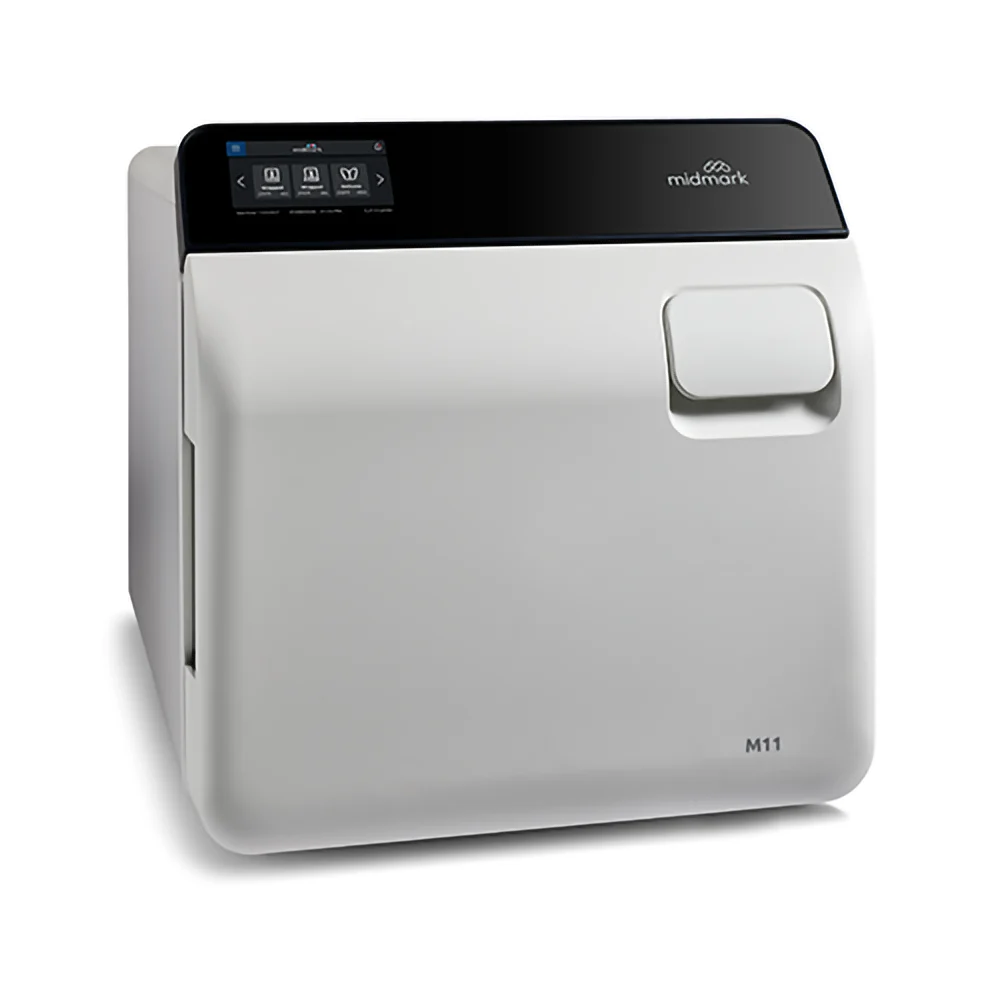
The sterilization area should provide adequate space for loading and unloading equipment while supporting proper cycle selection and adherence to validated sterilization procedures.Monitoring + Sterility Assurance
Mechanical, chemical and biological monitoring help verify that sterilization parameters have been achieved. Documentation of every cycle reinforces quality assurance and process consistency.Storage
Sterile instruments should be stored in a clean, dry and protected environment that is physically separated from contaminated processing activities until they are needed for patient care.
Maintaining this unidirectional flow helps reduce unnecessary handling and enables safer instrument reprocessing.
Workflow Design is Critical
Even experienced teams can face challenges when instrument processing spaces are undersized or poorly organized. When clean and contaminated activities overlap, staff may need to retrace steps, increasing inefficiencies and creating additional opportunities for error.
Healthcare organizations should evaluate whether their sterilization areas allow for:
- Clear separation of dirty and clean activities
- Logical movement of instruments through each processing stage
- Adequate workspace around sterilization equipment
- Storage areas that protect sterile instruments until use
Designing the environment around the workflow—not simply fitting equipment into available space—can help improve efficiency while supporting infection prevention objectives. Balancing space, room layout and equipment placement is essential to achieve an effective instrument processing area.
What to Look for in a Sterilization Solution
When evaluating sterilization solutions, purchasing decisions should look beyond equipment specifications. The right solution should complement the entire instrument processing workflow.
Healthcare leaders should look for solutions that help support:
- Consistent instrument processing
- Efficient daily operation
- Sterilization monitoring and documentation practices
- Staff training and standardization
- Future improvements as organizational needs evolve
A comprehensive approach to sterile processing helps healthcare organizations align patient safety priorities with operational efficiency while creating a more consistent experience for clinical teams.
Build a Strong Foundation for Infection Prevention
Dirty-to-clean flow is the clinical foundation of effective instrument processing. By combining thoughtful workspace design, standardized workflows and appropriate sterilization solutions, healthcare organizations can help deliver safer care while improving day-to-day efficiency.
Whether you are planning a new instrument processing area or evaluating opportunities to improve an existing workflow, understanding how each step connects is the first step toward better outcomes.
Explore Midmark sterilization solutions, planning resources and educational materials designed to help healthcare organizations improve infection prevention, support staff efficiency and optimize instrument processing environments.
To learn more, click here
Additional Reading:
- Instrument Processing Workflows | Midmark
- Four Questions You Need to Ask About Your Sterilizers
- Guidelines and Guidance Library | Infection Control | CDC