









































Getting the ECG Right: How Standardized Acquisition Supports Consistent, High-Quality 12-Lead ECGs

By:
Clinical Solutions Advisor, Midmark
November 16, 2026
The ECG Starts Before Interpretation
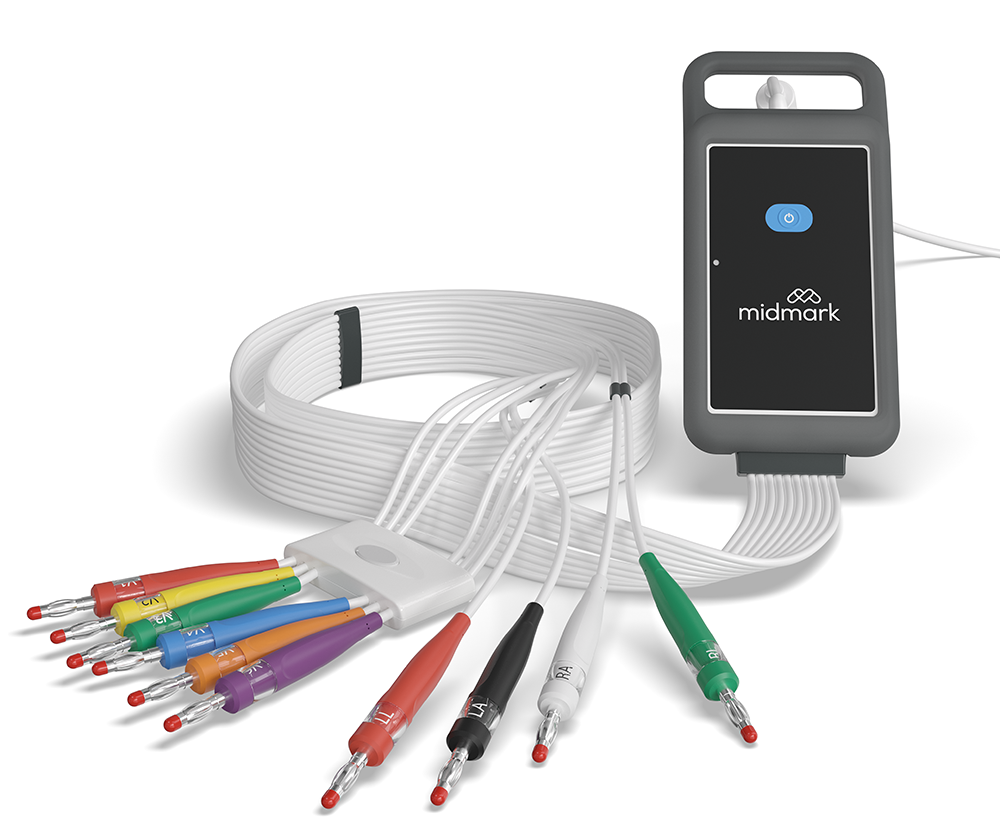
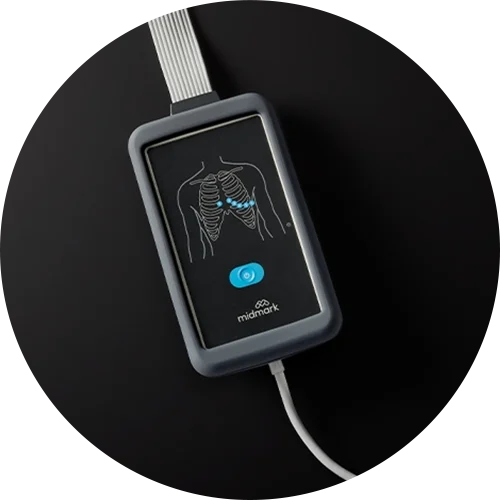
When clinicians review a 12-lead electrocardiogram (ECG), attention naturally turns to what the tracing shows: rhythm, rate, intervals, morphology and changes that may require further evaluation. However, the quality and consistency of the tracing are influenced by the acquisition process that occurs before interpretation begins.
For example, a standard 12-lead ECG depends on electrodes being positioned according to defined anatomical landmarks and the tracing being acquired under appropriate conditions. Variations in precordial electrode positioning can alter recorded ECG morphology. That distinction becomes especially important when ECGs are acquired by different healthcare professionals, at different locations or at different points in time.
For ambulatory organizations operating across multiple sites, ECG standardization is therefore more than a matter of workflow consistency. It is an opportunity to reduce avoidable variability before the tracing reaches the clinician interpreting it.
Electrode Placement Can Change the Tracing
Electrode placement variability continues to be documented among healthcare professionals who routinely acquire 12-lead ECGs. In a 2021 observational study, 52 registered paramedics were asked to position the precordial electrodes according to their usual practice. Only three participants (5.8%) accurately positioned all six precordial electrodes, with substantial variation observed in electrode positioning. Errors involving V1 through V3 were predominantly vertical and accurate placement of V1 was associated with more accurate placement of subsequent electrodes.
Why does this matter? Electrode position can affect the ECG that is ultimately presented for interpretation. In a study of 60 patients with cardiac disease, Kania and colleagues systematically displaced precordial electrodes from their standard positions and evaluated the resulting changes in ECG morphology. Morphologic changes became more prominent with greater displacement, particularly beyond 2 cm and V2 was especially sensitive to changes in position.

The potential implications extend beyond the appearance of the ECG tracing. Bond and colleagues used body-surface potential maps from 232 patients to generate ECGs with correct and simulated incorrect electrode configurations. In a subset of 75 cases reviewed by two clinicians, the simulated incorrect configuration changed diagnostic interpretation in 17% to 24% of cases. Those percentages apply to the specific configuration evaluated and should not be generalized to every electrode-placement error, but the study demonstrates an important principle: acquisition-related variation can influence the information available for clinical interpretation.
The tracing a clinician interprets is shaped in part by how the ECG was acquired. Consistent electrode placement helps reduce avoidable variation in ECG morphology and provides a more standardized foundation for interpretation. For ambulatory organizations performing ECGs across multiple clinicians and locations, that makes electrode placement more than a technical step, it is an important component of ECG data quality.
Serial ECG Comparison Raises the Stakes
Consistency becomes particularly important when today's ECG is compared with a previous tracing.
Serial ECGs are often evaluated for changes over time. Yet a difference between two tracings can reflect more than a change in the patient's physiology. Differences in electrode position can also contribute to variation between recordings.
This creates an important distinction: standardizing acquisition does not guarantee that serial ECGs will be identical and they should not be if the patient's physiology has changed. The goal is to reduce avoidable acquisition-related variability so that differences between tracings are less likely to be introduced by inconsistent technique.
Research examining day-to-day ECG variability has demonstrated why this matters. In a multicenter randomized study of 276 patients with hypertension, investigators obtained two 12-lead ECGs 24 hours apart and compared patients whose electrode positions were marked with those whose electrode positions were not marked. Marking electrode positions reduced day-to-day variability in ECG voltage measurements and reduced reclassification for several ECG criteria for left ventricular hypertrophy. The findings demonstrate how consistency in electrode positioning can matter when ECGs are compared over time.
For organizations seeking reliable serial comparison, the question is therefore not only, “Was an ECG obtained?” It is also, “Was it obtained consistently?”
Standardization Is More Than Electrode Placement
Correct electrode placement is essential, but ECG acquisition quality involves more than anatomical landmarks. Established recommendations for standardized ECG acquisition address factors including electrode placement, recording methods and other technical aspects of ECG acquisition.
A standardized approach can also address patient preparation and positioning, recognition and reduction of artifact, consistent acquisition procedures, and documentation of nonstandard electrode configurations when clinically necessary. It can also address staff competency and processes for responding when a tracing appears inconsistent with the patient's presentation.
Artifact deserves particular attention because interference introduced during ECG acquisition can affect signal quality and the appearance of the tracing. Movement, muscle activity and other sources of interference can contribute to ECG artifact. When a tracing result is unexpected, clinicians and staff should consider both the patient's clinical condition and whether acquisition factors may have contributed to what appears on the ECG.
Standardization does not mean eliminating clinical judgment. It means creating a reliable acquisition foundation upon which clinical judgment can operate.
Training Is the Beginning, Not the Endpoint
Training is an important part of standardization, but a one-time educational intervention should not automatically be assumed to create permanent consistency.
Targeted education can improve electrode-placement performance. In one peer-led educational intervention, accuracy of precordial electrode positioning improved substantially following training.
Research has also highlighted the importance of ongoing reinforcement after initial training. One study found that improvements in nurses' knowledge immediately following education were not sustained 15 months later, even though several improvements in ECG-related care processes persisted.
For multi-site organizations, that finding raises a broader operational question: How is competency not only established but also maintained across locations?
Organizations may evaluate whether ECG acquisition practices are standardized across sites, whether staff consistently use the same anatomical landmarks and acquisition procedures, how competency is assessed and maintained, how nonstandard electrode placement is documented and how quality issues are identified and addressed over time.
The goal is not simply to teach ECG acquisition. It is to build a consistent, reproducible process that supports high-quality ECGs across clinicians, locations and time.
From Individual Technique to Enterprise Consistency
Each ECG is acquired by an individual clinician, but achieving consistent ECG quality across locations requires an organizational approach to standardization.
When diagnostic ECGs are acquired across multiple locations, organizations have an opportunity to look beyond individual technique and consider whether acquisition practices are consistent across people, locations and time.
Healthcare organizations may therefore benefit from asking:
- Are ECG acquisition procedures standardized across locations?
- Are electrode-positioning expectations based on the same anatomical landmarks?
- Are staff competencies assessed consistently?
- Are nonstandard electrode configurations documented when they are clinically necessary?
- Are artifact and unexpected tracings recognized as possible acquisition-quality issues?
- Are acquisition practices sufficiently consistent to reduce avoidable variability when ECGs obtained at different locations or points in time are compared?
These questions do not assume that variation is occurring within any particular organization. They provide a framework for examining whether the acquisition process supports the quality and consistency expected of the ECG data it produces.
Consistency Before Interpretation
The 12-lead ECG is a familiar diagnostic tool, but familiarity should not make the acquisition process invisible.
Evidence demonstrates that electrode-positioning variability occurs in clinical practice and that displacement can alter ECG morphology and, under some conditions, clinical interpretation. Standardization cannot eliminate physiologic variability, nor can it guarantee a particular diagnostic outcome. What it can do is address potentially avoidable sources of variation introduced during acquisition.
For healthcare organizations operating across multiple locations, the opportunity is straightforward: standardize what happens before interpretation begins. Because every clinical decision informed by an ECG starts with the quality and consistency of the tracing placed in front of the clinician.
Additional Reading
- The ECG Is Only as Good as the Acquisition | Why ECG Accuracy Starts with Technique
- When Every Second Counts | The Clinical Value of ECG Testing in Primary Care
- DICOM Compatibility | Bridging the Gap Between Primary Care Physicians and Cardiologists
About the Author
With a background in critical care and trauma nursing and an MBA focused on the medical device industry, I bring both clinical and business perspective to my role. My experience in the ICU and as a care flight nurse reinforced the importance of reliable equipment, standardized processes and strong clinical judgment in driving patient outcomes. As Clinical Solutions Advisor at Midmark, I partner with customers and cross-functional teams to address complex clinical needs, support product performance and strengthen clinical alignment across the product lifecycle. I am passionate about the connection between clinical accuracy, workflow and technology—ensuring healthcare professionals have both the tools and the practical insight needed to deliver high-quality care.