
























-
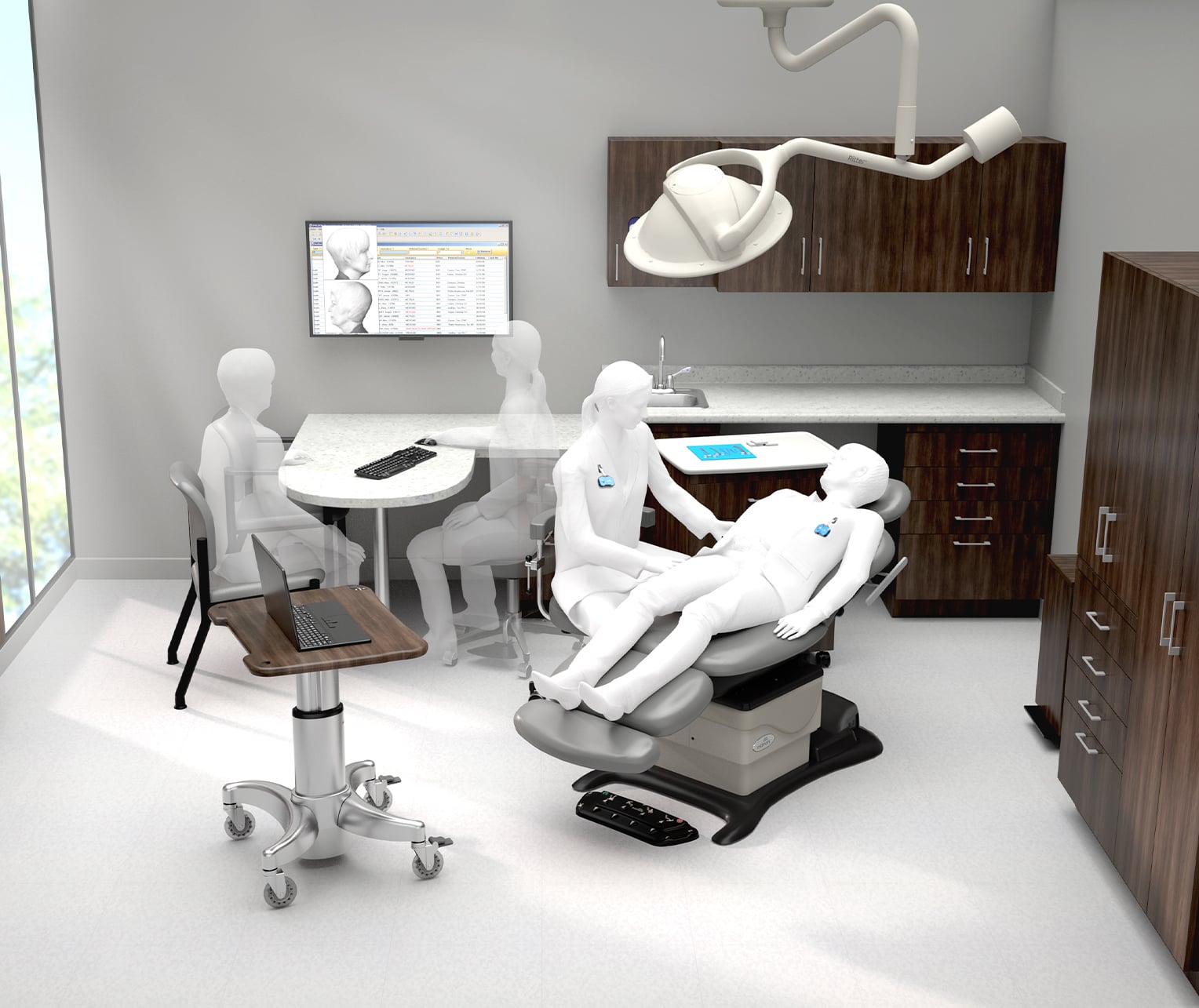 Dermatology WorkflowIn this workflow, we have reengineered the dermatology room to combine three key activities effectively in one space—consultation, counseling and procedures. This seamless, flexible and efficient dermatology room design can help enhance the caregiver-patient relationship and ultimately improve outcomes.
- Americans with Disabilities
- Infection Prevention
- Clinical Process Improvement
- Real-Time Locating System
-
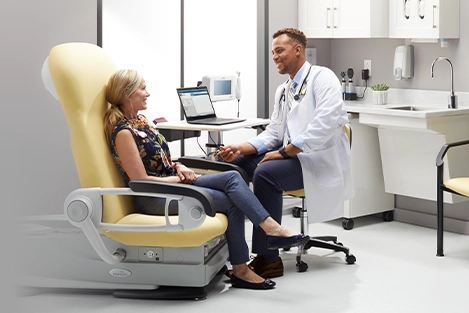
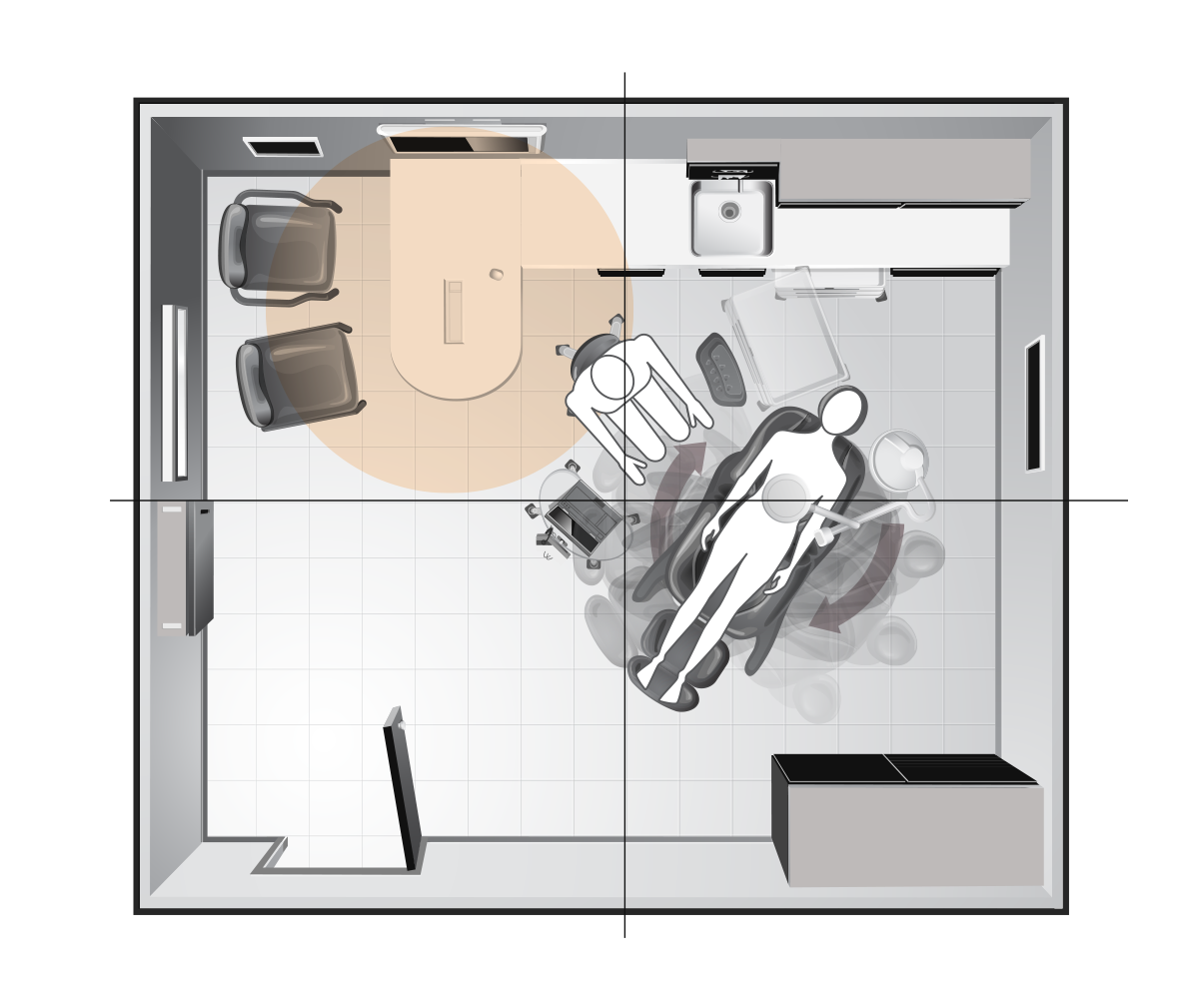 Consultation ZoneThe consultation zone is designed around shared communication between the caregiver, patient and guest. A large interactive screen makes information readily accessible, creating a more intimate dialogue between patient and caregiver and bringing needed educational information into the procedures room. The walls surrounding the family visitor zone have displays for related care products.
 -
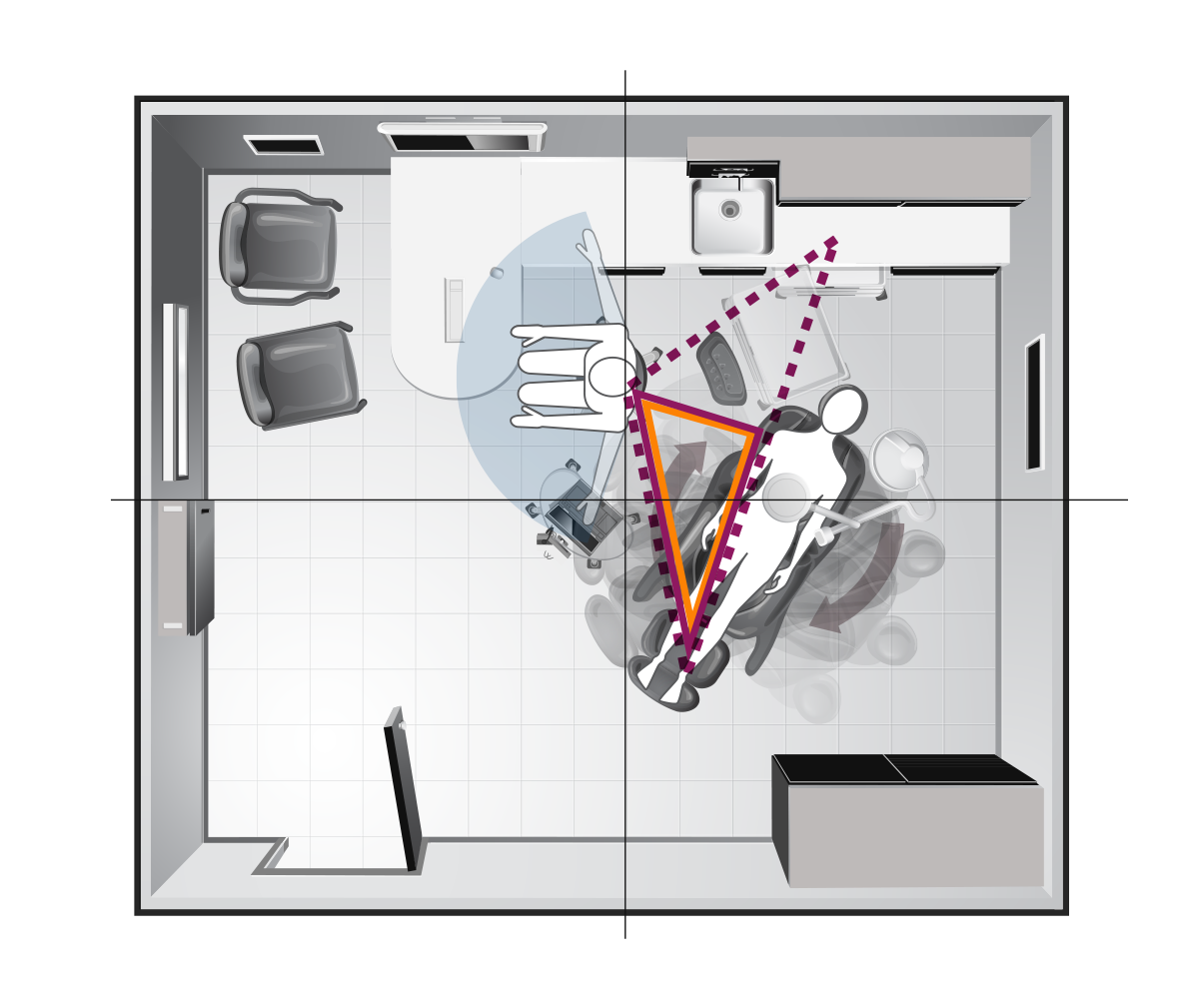 Enhanced ErgonomicsThe enhanced ergonomic design helps divide the room into consultation and procedure zones with technology such as a large, interactive monitor to make the consultation more visual and engaging. Before the start of the procedure, the treatment room is well-organized, minimizing visual clutter while reducing patient anxiety. This is supported by ample storage along one wall with a vertical storage unit for larger equipment. Considerations should also be made to ensure that storage is organized in a manner that enhances ergonomic reach and efficiency.
-
 Clinical Process Improvement
-
 Americans with Disabilities
-
 Real-Time Locating System
-
 Infection Prevention
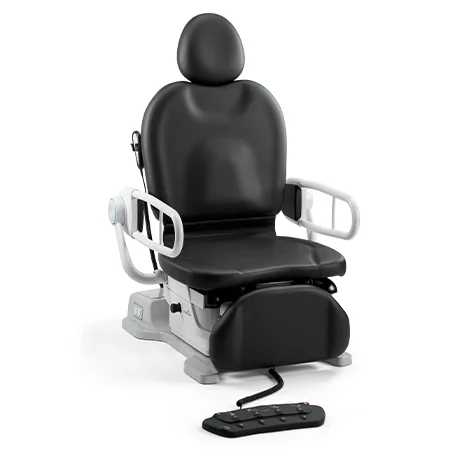
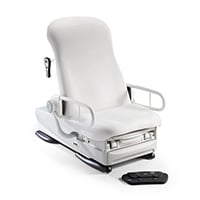
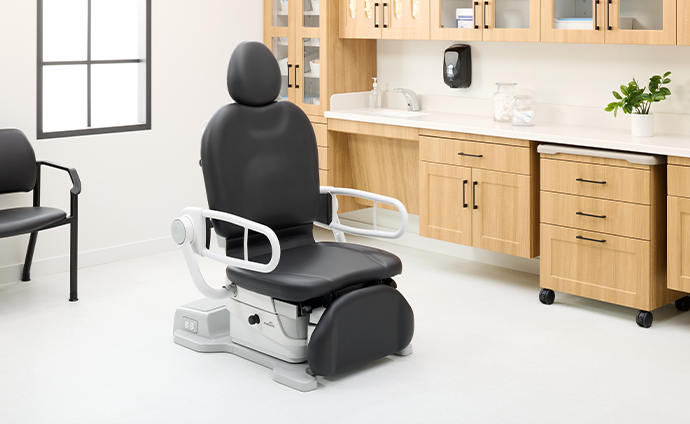
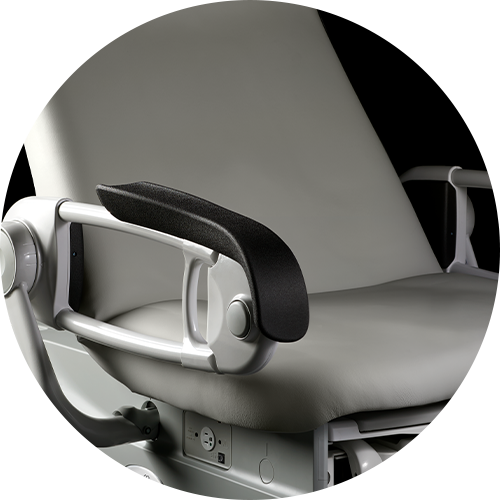
The height-adjustable procedure chair decreases the need for manually lifting and repositioning patients. The center of the room is kept open to allow a 60-inch wheelchair turning area. There is also ample room for patient egress.
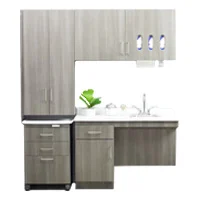
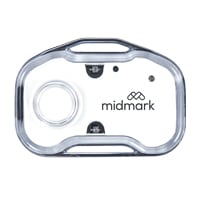
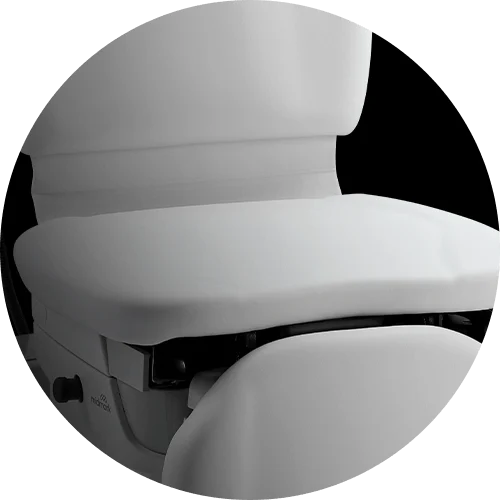
Use of a self-rooming workflow reduces exposure to contagions. RTLS automates contact tracing. The mobile treatment cabinet can be easily moved for cleaning and disinfecting. Seamless upholstery as well as seamless door and drawer cabinetry finishes, tub-style drawers and solid surfaces also help simplify cleaning.
The procedure chair is positioned close enough to the cabinetry countertop for access to supplies. Mobile cabinets and supply carts can be moved in close proximity of the procedure chair as well. The adjustable positioning and rotation features of the procedure chair bring the patient to the caregiver for better access to the procedure site.
Use of RTLS for a patient flow optimization and self-rooming can assist in waste reduction efforts that help eliminate costly bottlenecks.
The height-adjustable procedure chair decreases the need for manually lifting and repositioning patients. The center of the room is kept open to allow a 60-inch wheelchair turning area. There is also ample room for patient egress.
Use of a self-rooming workflow reduces exposure to contagions. RTLS automates contact tracing. The mobile treatment cabinet can be easily moved for cleaning and disinfecting. Seamless upholstery as well as seamless door and drawer cabinetry finishes, tub-style drawers and solid surfaces also help simplify cleaning.
The procedure chair is positioned close enough to the cabinetry countertop for access to supplies. Mobile cabinets and supply carts can be moved in close proximity of the procedure chair as well. The adjustable positioning and rotation features of the procedure chair bring the patient to the caregiver for better access to the procedure site.
Use of RTLS for a patient flow optimization and self-rooming can assist in waste reduction efforts that help eliminate costly bottlenecks.
The height-adjustable procedure chair decreases the need for manually lifting and repositioning patients. The center of the room is kept open to allow a 60-inch wheelchair turning area. There is also ample room for patient egress.
Use of a self-rooming workflow reduces exposure to contagions. RTLS automates contact tracing. The mobile treatment cabinet can be easily moved for cleaning and disinfecting. Seamless upholstery as well as seamless door and drawer cabinetry finishes, tub-style drawers and solid surfaces also help simplify cleaning.
The procedure chair is positioned close enough to the cabinetry countertop for access to supplies. Mobile cabinets and supply carts can be moved in close proximity of the procedure chair as well. The adjustable positioning and rotation features of the procedure chair bring the patient to the caregiver for better access to the procedure site.
Use of RTLS for a patient flow optimization and self-rooming can assist in waste reduction efforts that help eliminate costly bottlenecks.