




















CareFlow™ Asset Tracking
Case Study
OPERATIONAL GAINS THROUGH RTLS
In 2012, a large academic hospital opened its state-of-the-art, 1.6 million square-foot facility. Initially, Midmark CareFlow RTLS (real-time locating system) was installed throughout for asset tracking and nurse call automation. The solution’s scalability to additional applications enabled the hospital to expand its CareFlow RTLS footprint to nearly all inpatient areas, supporting patient flow and staff efficiency.
RIGOROUS SELECTION PROCESS LOCATES BEST SYSTEM
The hospital's selection team narrowed several RTLS proposals to three, including Midmark’s infrared (IR) and radio frequency (RF) solution, a beacon IR/RFID system and a Wi-Fi based technology. The finalists were evaluated in a 12,000-square-foot simulation center for their ability to track assets and locate personnel. Midmark RTLS out-performed its competitors with bed-level accuracy and was the only system selected to move on to the pilot stage.
ASSET TRACKING: THE FOUNDATION FOR SUCCESSFUL SCALABILITY
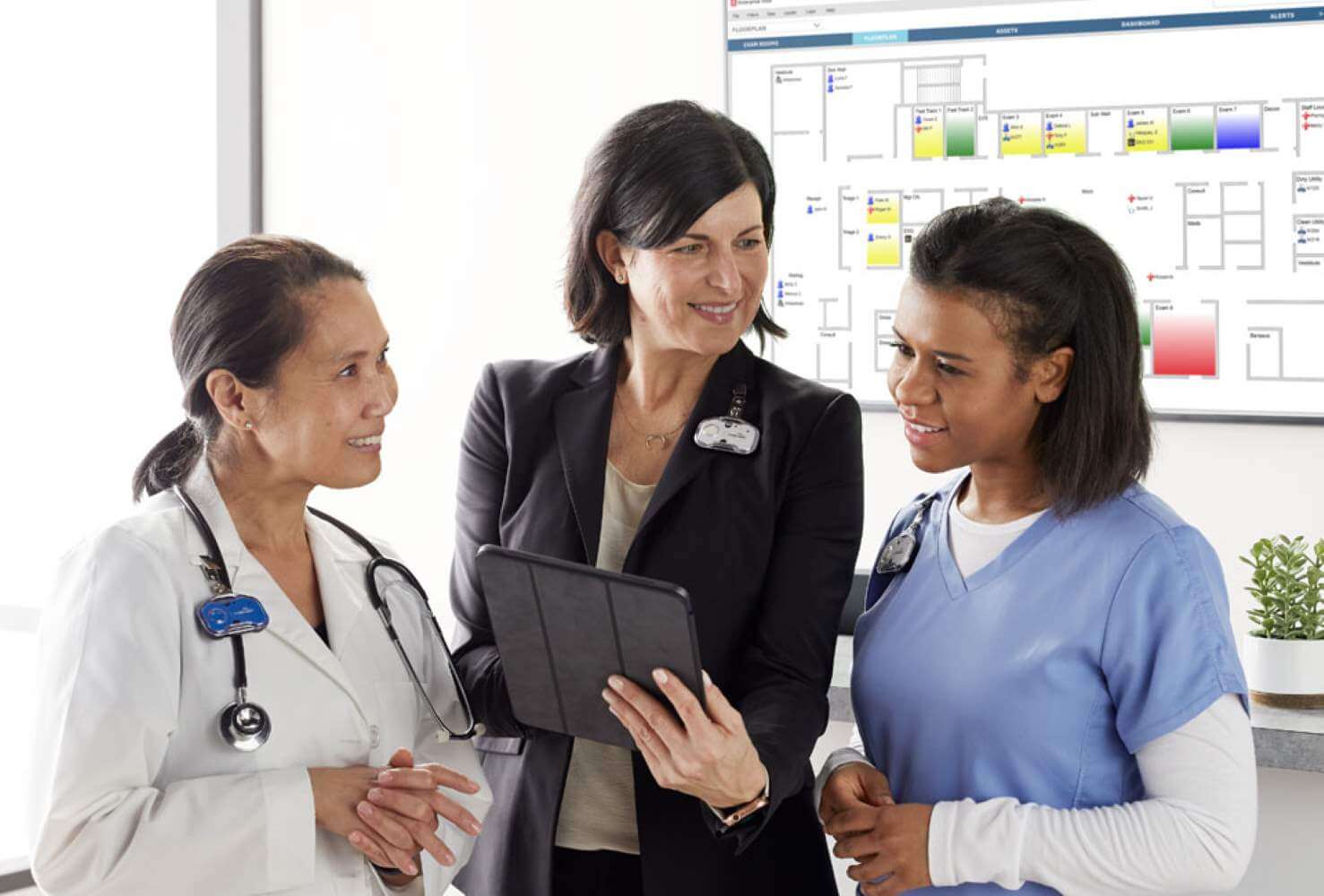
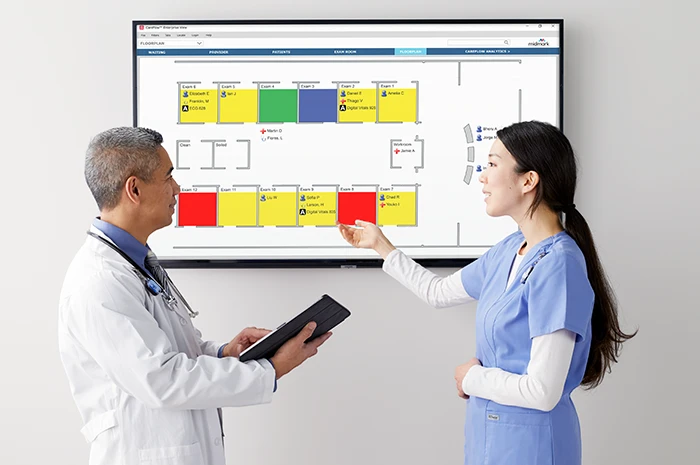
When the new facility opened, CareFlow Asset Tracking was one of the first RTLS solutions deployed. Using the asset platform ensures that care areas have optimal numbers of critical assets available, enabling staff to easily locate important assets by using the CareFlow Enterprise View® List and Floorplan.
CareFlow RTLS Applications
Largest CareFlow RTLS Installation
- 14,000+ asset tags
- 4,000+ personnel badges
- 5,100 sensors in 20 buildings
ON-TIME CARDIAC CASE STARTS IMPROVE 25% WITH EFFECTIVE ASSET MANAGEMENT
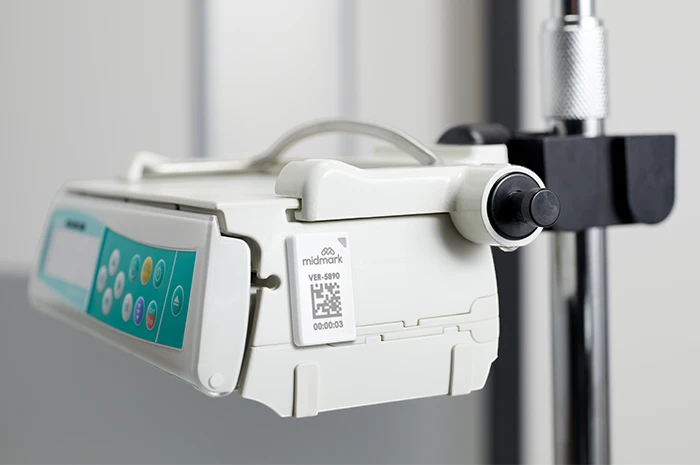
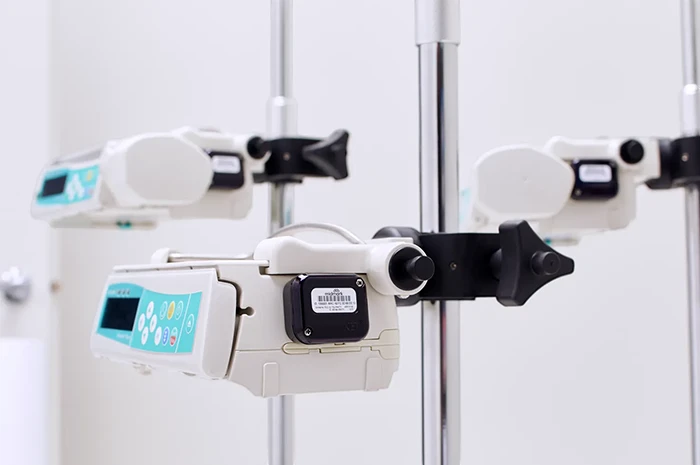
In specialized care areas like the OR, surgical delays were often caused by missing equipment, particularly IV pumps. With 33 new state-of-the-art operating rooms, and the need for large numbers of medical devices for each surgery, the cardiac OR team sought to better manage high-demand assets and reduce surgical delays. Using CareFlow to locate the needed assets, staff review pump availability each night and stage equipment for the next day’s cardiac surgeries. When this method was launched in 2016, on-time case starts improved by 25% for cardiac cases, reducing frustrations for staff, patients and waiting family members.
EVS DOUBLES PRODUCTIVITY FOR SERVICE CARTS
Prior to using CareFlow Asset Tracking, stocking environmental services (EVS) carts for an institution of this size was a stressful, time consuming task. Typically, one 8-hour shift was dedicated to finding and stocking 30 service carts. By affixing the carts with Midmark RTLS asset tags, staff gained clear visibility to cart locations, allowing more than 60 service carts to be stocked during the same 8-hour shift.
STAFF DURESS ENHANCES SAFETY IN EMERGENCY DEPARTMENT
Although violence against healthcare workers and patients could happen during any point in the care continuum, emergency departments tend be at a higher risk for acts of violence against staff. CareFlow Staff Duress gives medical staff the ability to send an urgent alert for help using the RTLS badges. When the badge button is pressed, security is immediately alerted, sending messages to wireless phones, computer workstations and email. The messages contain essential information including the name of the person needing help and exact location, allowing security and staff to respond immediately.
Our new home represents our vision for healthcare. It has the space and technology to match our researchers’ scientific knowledge, our faculty’s medical acumen and our staff’s clinical skills, but it also adds the patient experience as the fourth critical dimension in this equilibrium.
Dean of Medicine
RESEARCHERS USE RTLS TO MEASURE PATIENT AMBULATION FOR PEER-REVIEWED STUDY
Researchers revealed in a study that patient ambulation is accurately and automatically measured by CareFlow RTLS. Selected patients in the neuroscience inpatient unit wore RTLS badges during a two-minute walk test. Adhering to stringent study protocols, researchers found that CareFlow accurately captured two key mobility metrics with high accuracy: the distance traveled by the patient and the ambulation speed of the patient. While promoting ambulation during acute care hospitalization is critical to successful patient recovery and reducing readmission rates, traditional mobility measurements often rely on physical observations and manual recording. By leveraging the existing Midmark RTLS infrastructure, researchers established that clinicians can effectively and accurately support patient ambulation initiatives without burdensome manual methods.
OPTIMIZING PATIENT FLOW IN ONCOLOGY
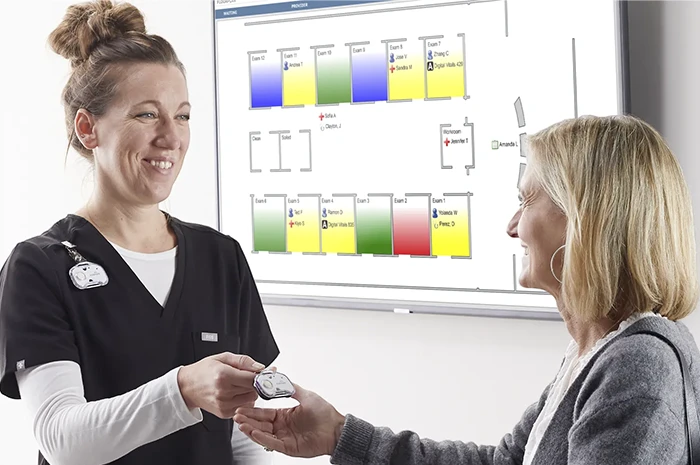
When the health system opened their outpatient cancer building, CareFlow RTLS was again expanded, this time to help coordinate oncology care. Providing in-the-moment visibility to patient location and cancer center operations, the CareFlow Patient Flow solution helps improve staff coordination and the patient experience.