MaRCH 17, 2026
Listening First: Why RTLS Innovation Must Start with the Customer
In nearly every conversation I have with healthcare leaders, a similar theme emerges.
A Chief Nursing Officer recently told me, “We’ve invested in RTLS before—but it feels fragmented. It isn’t deployed throughout the entire hospital, and it provides limited value to only one or two departments.” Another executive shared frustration about maintaining a siloed infrastructure that no longer meets expectations.
Hospitals today face rising workplace violence concerns, mounting cost pressures, clinician burnout and the urgent need to modernize infrastructure—without disrupting care. The stakes are high. Staff safety is non-negotiable. Operational efficiency directly impacts margins. And outdated, siloed systems only add friction to already complex environments.
At Midmark RTLS, we believe innovation starts by listening. We engage deeply with healthcare leaders to understand not just what they need today—but where they’re headed tomorrow. Our solutions evolve based on those insights, helping organizations move from fragmented point solutions to a scalable, enterprise-ready foundation for location intelligence.
What We’re Hearing: Healthcare Leaders’ Top RTLS Priorities and Pain Points
Through customer conversations, advisory sessions and frontline feedback, six priorities consistently rise to the top.
1. Scalable, Future-Proof Technology
Many hospitals are operating with legacy infrastructure that wasn’t designed to scale enterprise wide.
Pain Point: Fear of investing in technology that becomes obsolete or requires expensive rip-and-replace upgrades to expand.
Healthcare systems need RTLS platforms that can grow—across units, across campuses and across evolving use cases—without rebuilding every time priorities shift.
2. Cost-effective Precision
A major insight we consistently hear: “The technology we purchased supports only some of our goals.”
Many early RTLS deployments were designed around a single use case or level of accuracy, which can limit the ability to support additional workflows over time. Leaders don’t want to overspend for sub-room precision everywhere if near-room visibility will suffice for asset tracking or broad safety coverage. At the same time, they cannot compromise when room-certain accuracy is required for nurse call automation, alarm suppression or sending patient location to the EMR.
Pain Point: Historically, systems forced a tradeoff—either broad but imprecise, or highly accurate but prohibitively expensive.
3. staff safety + Security
Workplace violence is increasing, and leaders are under pressure to ensure rapid response capabilities across their facilities.
Pain Point: Existing duress systems are outdated, rigid or no longer fully supported. Some lack reporting visibility. Others can’t scale across the enterprise.
Healthcare leaders want staff duress solutions that are reliable, configurable and future-proof—tools that protect caregivers’ time and safety, not systems that feel like surveillance.
4. Asset Visibility Across teams
Many hospitals already have asset tracking technology in place—but access to that information is often limited to a single department, most commonly biomedical or clinical engineering.
When location data stays siloed, frontline teams like nursing, environmental services and transport may still spend valuable time searching for equipment—even though the data exists within the organization. Healthcare leaders increasingly want asset visibility that's accurate enough for staff across departments to quickly locate the equipment they need.
Pain Point: Asset tracking systems are often confined to biomed workflows, reinforcing siloed infrastructure and limiting the operational value of RTLS across the broader organization.
5. Seamless integration with existing systems
Healthcare executives don’t want another standalone dashboard. They want RTLS that integrates with:
— Nurse call systems
— Epic and other EMR/EHR platforms
— Alarm management
— Patient flow tools
— CMMS and biomed systems
RTLS becomes exponentially more valuable when integrated into the systems teams already use every day.
Pain Point: Complexity. Siloed systems. Duplicate investments. Integration headaches.
Leaders are clear: RTLS should unify workflows—not add another layer of operational friction.
6. Simplicity + Support
Decision fatigue is real. Healthcare leaders are evaluating dozens of technology investments at once. They want:
— Streamlined solutions
— Clear ROI pathways
— Trusted advisors—not just vendors
— Platforms that start fast, prove value early and scale with purpose
Above all, they want a partner committed to the long-term journey.
How Midmark Is Responding: Solutions Built on Customer Insights
Listening is only meaningful if it drives action. Here’s how Midmark RTLS is responding to what healthcare leaders are telling us.
The Hybrid BLE/IR Sensory Network
Perhaps the strongest message we’ve heard is this: hospitals shouldn’t have to choose between enterprise-wide visibility and room-certain automation.
The future of RTLS is hybrid. Our BLE/IR Hybrid approach is designed around a simple principle: the right technology for the right use case.
Room-Certain Precision Where It Matters
For these automation workflows, being “near” a room isn’t enough.
Affordable Near-Room Coverage Where It's Enough
Bluetooth® Low Energy (BLE) delivers clinician-usable near-room accuracy (about 3–5 meters)—ideal for:
— Asset tracking
— Staff duress
— PAR management
— Broad staff and patient visibility
BLE provides campus-wide visibility without traditional RTLS cost or heavy hardware requirements.
Built for Scalability and Simplicity
With Midmark CareFlow™ RTLS, there are two clear paths to hybrid—both designed to protect your existing investment while helping health systems move beyond siloed systems toward a more unified, facility-wide approach to location intelligence.
For organizations starting fresh, BLE acts as the foundation to quickly deploy staff duress and asset tracking solutions. When room-level certainty is required, you simply add wireless IR sensors in targeted locations—without installing a second locating system or rebuilding the backend.
For existing Midmark RTLS customers with IR for nurse call automation, the path works in reverse: you can layer on BLE to expand to facility-wide, near-room coverage—extending visibility across units, departments or campuses without replacing your current room-level infrastructure.
This flexible approach eliminates the historic tradeoff between scale and precision.
The result:
— Start with facility-wide BLE visibility and add room certainty where required
— Or expand existing IR deployments with BLE for broader coverage
— Keep all workflows unified in one RTLS ecosystem
That’s what a future-ready RTLS strategy looks like.
The Latest Midmark CareFlow RTLS Staff Duress Release
Staff safety remains a top priority—and our product enhancements reflect that.
Our latest Staff Duress release delivers:
— Streamlined incident resolution, including the ability to dismiss alerts without requiring full incident closure
— Built-in incident history, improving reporting, visibility and learning
— Full backward compatibility with CareFlow Reports and Enterprise View®
— Future-proof support, ensuring safety solutions stay current as needs evolve
This upgrade reflects direct feedback from healthcare leaders who needed more flexibility, clearer reporting and continued platform support—without replacing their entire system.
Epic Toolbox Integration and Staff Duress Advancements
Healthcare leaders consistently tell us that RTLS is most valuable when it works seamlessly within the systems clinicians already rely on—especially the EMR. That’s why we continue to deepen our long-standing integration with Epic and other EMRs to help streamline workflows and enhance patient care.
Through the CareFlow EMR Interface to Epic, we connect location intelligence directly with Epic workflows delivering real-time patient, staff and asset location updates and timestamps in the EMR, helping reduce clicks and manual entry for staff while improving workflow automation. Midmark CareFlow RTLS was the first RTLS vendor to join the Epic Toolbox, meeting Epic’s recommended practices for integration.
We are also advancing CareFlow Staff Duress, now Under Construction in the Staff Duress category in Epic Toolbox. When staff feel threatened, a simple button press on their Midmark RTLS badge will provide Epic with the staff member’s name and location. Epic will then notify designated security response and informational groups through its push notification framework to support timely response and coordination. Responders will be able to also acknowledge or decline alerts directly within Epic.

Together, these advancements bring RTLS insights directly into Epic workflows—helping care teams respond faster, reduce manual documentation and keep their focus on patient care.
Interoperability Subscription
Integration remains one of the most common challenges we hear about.
Our Interoperability Subscription simplifies interoperability across nurse call, patient engagement and CMMS systems—helping transform RTLS from a map into an operational engine that connects location data with everyday operational workflows.
RTLS is no longer just about finding things—it’s about:
— Automating documentation
— Improving patient flow
— Reducing alarm fatigue
— Backing staffing decisions with data
As highlighted in our eBook, RTLS enables automation of manual tasks, location-based safety alerts and operational analytics leaders can act on. By bundling interfaces and data tools, we reduce complexity while empowering leaders with actionable insights.
Building Lasting Partnerships Through Listening and Innovation
Our approach to RTLS innovation is shaped directly by the voices of healthcare leaders—from staff safety and integration pain points to cost-effective scalability and future-ready infrastructure. But delivering technology is only part of the equation. Our approach centers on long-term partnership and measurable customer success.
From the earliest planning conversations through deployment and optimization, Midmark RTLS works side by side with healthcare organizations to ensure RTLS delivers real operational value. Our teams help customers identify high-impact use cases, guide implementation and support adoption so staff experience the benefits in their daily workflows.
This collaborative approach helps organizations move beyond isolated technology projects and toward a strategic RTLS roadmap—one that protects caregiver time, improves safety and drives measurable operational outcomes. In the end, our goal is simple: to help hospitals modernize infrastructure, unify workflows and build a future-ready foundation for location intelligence.
The Path Forward
If you’re interested in learning how RTLS can scale with your organization while improving safety and simplifying integration, we’d welcome the conversation.
Let’s explore how Midmark RTLS can partner with your facility to solve your biggest RTLS challenges—and prepare for the future, together.
Epic is a registered trademark of Epic Systems Corporation.
Bluetooth is a registered trademark of Bluetooth SIG, Inc.

 Nurse Call AutomationAutomatic call cancellation to lighten the nurse workload and give more time back to the patient care experience.
 Staff SafetyDiscreet, accurate and real-time alerts through a wearable duress button that helps provide an efficient response and protect staff against workplace violence.
 Asset TrackingIn-the-moment equipment locating to support safe and timely patient care and controlled costs.
 Patient FlowEnhanced communication designed to optimize operations, enrich patient experiences and improve staff satisfaction.
 AnalyticsDerived from actionable insights at your fingertips, accurate location information drives informed decision making.
 Contact TracingQuick, accurate information at your fingertips for your contact tracing efforts.
 Temperature MonitoringA partnership of best-in-class solutions, available through an interface with Primex environmental monitoring.
 InterfacesA seamless architecture that exchanges data automatically between your RTLS and other enterprise applications in real time.
 RTLS TechnologyMidmark CareFlow™ RTLS uses multiple locating technologies designed to help guide your operations.
 Customer SuccessSeasoned clinical expertise—both in-house and from regionally certified System Integrators—to support your RTLS journey.
 RTLS SimplifiedSmarter RTLS starts with existing systems. Discover how CareFlow™ RTLS simplifies healthcare locating technology, providing reliable facility-wide visibility through a streamlined, scalable approach.

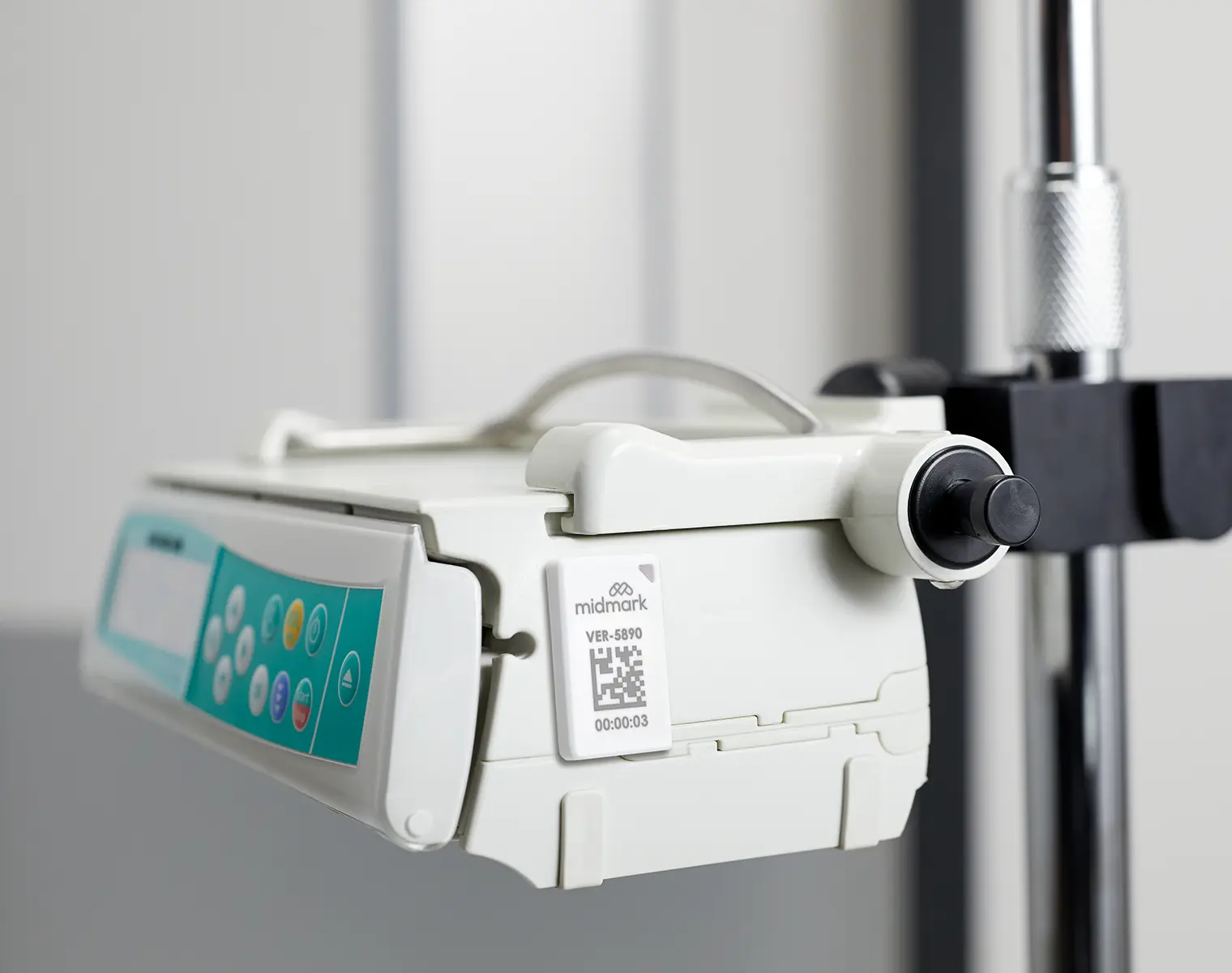



 RTLS System Integrator ResourcesDiscover our library of sales and marketing resources.
 Case StudiesSee how we’ve helped our customers design better, more efficient care.
 Webinars + PodcastsListen to the latest from Midmark RTLS here.
 BlogThink differently and solve problems with new ideas to enhance patient care.