


















University of Minnesota Health Clinics and Surgery Center Case Study
CAREFLOW™ PATIENT FLOW
The University of Minnesota Health Clinics and Surgery Center strives to provide an exceptional patient and care team experience. Designed with 40% less space than its former location, the center uses the Midmark CareFlow Real-Time Locating System (RTLS) to innovate care delivery with less patient waiting, better care collaboration and an empowered culture of continuous improvement.
LEANING ON PROCESS IMPROVEMENT FOR MORE CARE IN LESS SPACE
While planning the new medical office building, stakeholders looked at historical information to gain insight into space needs. Rodney Haas, vice president of operational excellence, explains, “We came to the realization that if we continued to implement process improvement initiatives, we could improve care delivery and the patient experience in a scaled-down facility.”
Within the smaller space, 178 exam rooms compared to 300 rooms at the prior location, expectations loomed to accommodate more than 2,400 patient visits daily. Additionally, practice leaders targeted 5 to 7 percent annual growth, making efficiency essential to success. Meeting these objectives required access to operational data to manage continuous process improvement.
Real-time and retrospective data from Midmark CareFlow RTLS—including patient wait times, room utilization, patient-provider interaction times and more—is being used by staff to create processes that reduce patient waiting and optimize exam room utilization and capacity.
CareFlow RTLS Applications
Interfaces
- Epic
Real Data, Real Improvements
- Exam room utilization improved 67%
- Patient time in exam room reduced 40%
DRAWING INSPIRATION FROM APPLE, PATIENTS ENJOY PERSONALIZED EXPERIENCE
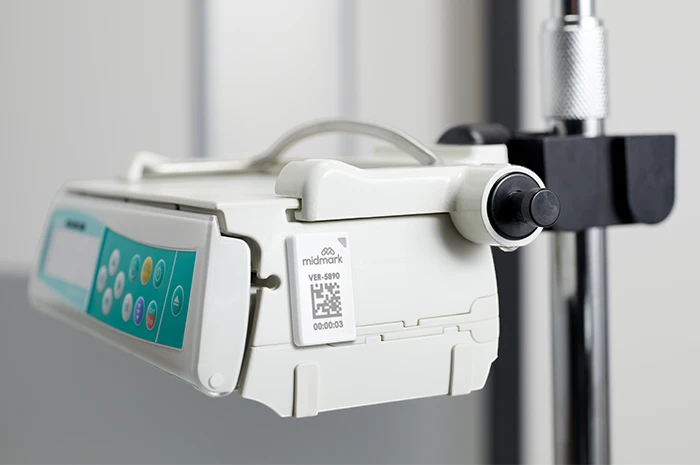
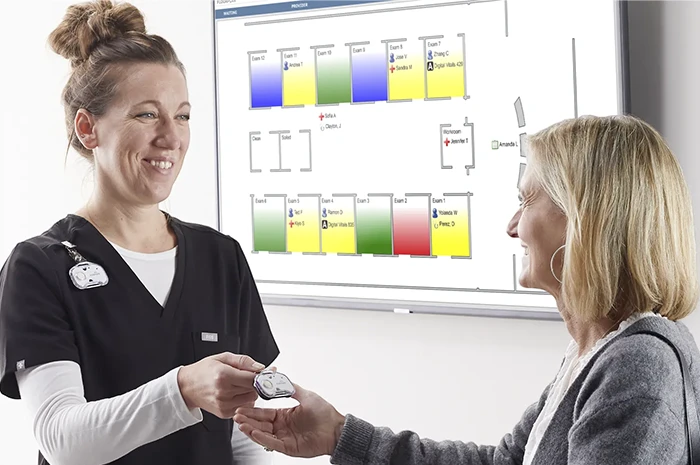
Arriving patients are greeted by a concierge who manages the registration process with an iPad rather than from behind a traditional registration counter. Additionally, each patient receives a discreet RTLS locator badge to wear during the visit. As part of a University of Minnesota Health-branded Care Connect program, the badges communicate real-time location information, enabling staff to find patients when it is time for their appointments.
“Midmark RTLS sends automatic alerts if patients have been waiting too long,” says Haas. These alerts let staff manage patient expectations in the moment, reducing frustrations for patients and waiting family members.
In addition to the real-time location of the patient, the CareFlow interface to Epic provides a photo from the patient record, so patients can be easily identified, greeted by name and escorted to the exam room.
We’re empowering staff to manage and distribute resources more effectively. Analyzing [CareFlow] RTLS data for continuous improvement aids our efforts to improve the experience for both patients and caregivers.
Rodney Haas
Vice President of Operational Excellence
REAL-TIME DATA AND DYNAMIC ROOM ASSIGNMENT MODEL MAXIMIZE PATIENT CARE RESOURCES
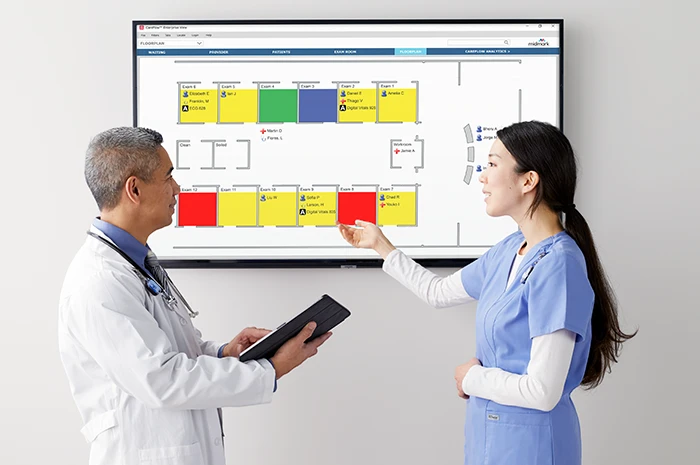
The Clinics and Surgery Center prescribes to a dynamic room assignment model with flexible exam room space, where providers are not assigned to specific rooms. Instead, staff use CareFlow RTLS to make more efficient decisions about room assignments, placing patients and providers in exam rooms based on real-time needs. With the CareFlow Enterprise View® List and Floorplan, staff access a bird’s-eye view of everything happening within the clinic, enabling them to determine how best to use space to manage capacity.
ACTIVE PRACTICE MANAGEMENT SUPPORTS STAFF COLLABORATION
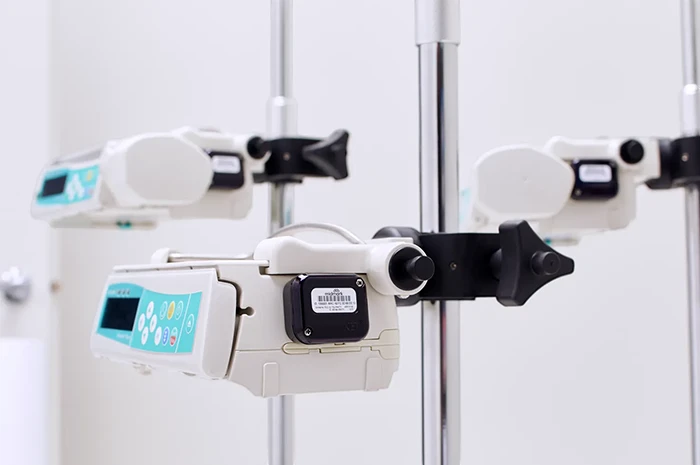
Using CareFlow to enhance caregiver communications and document interactions, providers and staff are actively managing this busy practice with data to reduce patient wait times and improve flow. The software shows at-a-glance which patient is next and in which exam room. It’s easy to see where resources are located, eliminating time spent searching for other staff or equipment. The clinic is also designed to support greater care collaboration. Rather than individual physician offices, physicians share open work spaces. “Instead of being in my own silo, I have all kinds of providers next to me. When I have questions about my patients, I can easily ask,” says Dr. Bradley Benson, an internal medicine physician.
CAREFLOW ANALYTICS SUPPORTS STAFF CULTURE OF CONTINUOUS IMPROVEMENT
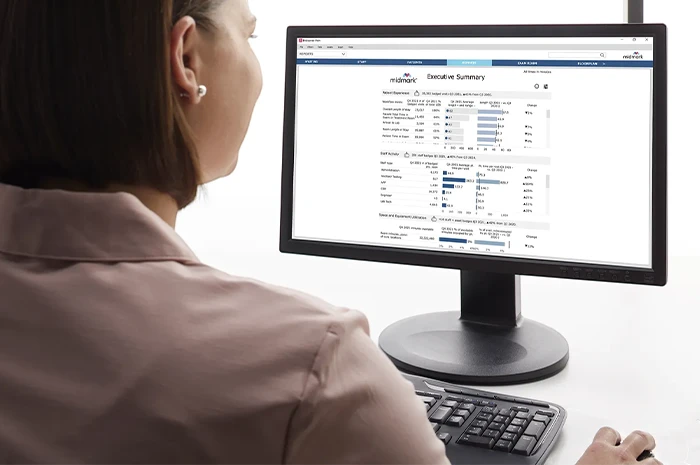
Managing process improvements like reduced patient wait times and increased capacity are only possible through accurate data. Staff members access data through CareFlow Analytics, where they use the information to adjust care activities. According to Haas, “An observation study at our old offices revealed that exam rooms were only utilized 30% of the time. After implementing a variety of process improvement initiatives, our utilization has increased to an average of 50%, a 67% improvement. As we continue to refine our workflows with data from [CareFlow] Analytics and EHR, we’ve purposefully created additional capacity, and today room utilization stands at 45%.”
In another instance, medical school residents felt they spent too much time waiting for patients. Data revealed that the patients were also waiting. By reorganizing who went into the patient room and when, the time patients spent in exam rooms was reduced by 40%. Data enabled physicians to identify the root cause, deploy a solution and measure results.
CareFlow makes it possible for performance improvement teams to automatically collect and aggregate data, as opposed to the months that it would take to cull data through manual methods alone. Haas believes the data makes it possible to support a culture of continuous improvement, saying, “It is my job to ensure that the organization continues to embrace Lean process improvement techniques, a long-term approach that seeks to achieve small, incremental changes to improve efficiency and quality.”
He adds, “We’re embarking on a process improvement initiative to determine where excess capacity is and how we can re-align capacity to better accommodate patient volumes. Because of these planned improvements, we expect that our facility will accommodate our growing needs as time goes on.”
Epic is a registered trademark of Epic Systems Corporation.